Joethemechanic
Senior Member
- Location
- Hazleton Pa
- Occupation
- Electro-Mechanical Technician. Industrial machinery
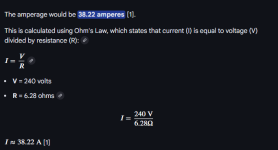
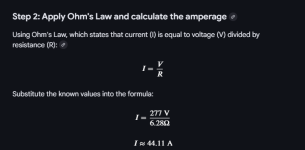
44.11/38.22 = 86.64%
Last edited:


or if I needed to make it work for a couple days.I don't see the manufacturer or model mentioned, but I'm sure they have a parts catalog. See what's different and anything that is different is needed if you want to literally go "by the book".
Now if I got it for free because some plumber installed it and it was wrong. And it was going in my building. I'd make it work
We must have attended different schools together!Actually " R" is known. 12,200 watts ÷ 277 volts = 44.042 ohms. That value remains constant no matter what the applied voltage is.


How about at 75% power?FWIW, I get 1.5 ohms difference from ambient air measurement of 64.1 ohms to 65.6 ohms after 115 volt is removed from a 200-watt, 115-volt heating element.
The few simultaneous water heater's I have seen all use two circuits. I remember because of how confused I was as to why two 10/2's would be going to the waterheater thinking someone mad a mistake.Well it was originally intended to be 44 amps at 277 volts actual load, so it was probably expecting to have a 60 amp breaker in the first place, a 50 amp breaker would protect it just fine.
This is no different than feeding a 240 volt water heater, oven, dryer, or air conditioner at 208 volts.
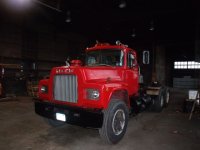
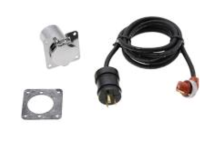
We bought 5 R Model Mack tractors off of either Matlack, or Chemical Leaman Tank Lines back in the day. So I never noticed they had 240 volt block heaters until it got cold out. All the rest of our trucks and equipment had the same 1500 watt block heaters, but they were 120.or if I needed to make it work for a couple days.
Over my 50 years I have wired in /replaced hundreds of mostly immersion heaters from 120 volt for boning room knife sterilizers , 240 & 480 vole single & three phase. Some were in colder rooms around 40 degrees & others in hot rooms over 100 degrees. I always took ampere readings and even with a 80 degree temperature difference the ampere readings were identical especially once heater came up to operating temperature. We were having trouble with immersion heaters having a short live span when used to heat thick mineral oil. Nice people at Chromalox told me that that most immersion heaters are designed for only heating water.We installed a much higher wattage heater rated for 240 volts and ran it on 120 volts and it did a good job. ( halve the applied voltage = 25% wattage ).But it will change with temperature. And the temperature will change with applied voltage. As Busman said, “is it enough to matter?” Without a R vs T curve of the element, we don’t know.
Once the heater is up to temperature room temperature has absolutely no affect on resistance, especially on PID temperature controllers.Actually " R" is known. 12,200 watts ÷ 277 volts = 44.042 ohms. That value remains constant no matter what the applied voltage is.
Yeah, oil is hard to do with immersion. Moves a lot less heat than water does.Over my 50 years I have wired in /replaced hundreds of mostly immersion heaters from 120 volt for boning room knife sterilizers , 240 & 480 vole single & three phase. Some were in colder rooms around 40 degrees & others in hot rooms over 100 degrees. I always took ampere readings and even with a 80 degree temperature difference the ampere readings were identical especially once heater came up to operating temperature. We were having trouble with immersion heaters having a short live span when used to heat thick mineral oil. Nice people at Chromalox told me that that most immersion heaters are designed for only heating water.We installed a much higher wattage heater rated for 240 volts and ran it on 120 volts and it did a good job. ( halve the applied voltage = 25% wattage ).
It went from ambient resistance of 64.3 to 65.5.How about at 75% power?
so like 1% change in resistanceIt went from ambient resistance of 64.3 to 65.5.
so like 1% change in resistance
So off of a pair of elements that present 6.28 ohms to the line we are talking about 0.06 ohms change
I meant to compare resistance at both operating temperatures; ambient isn't relevant here.It went from ambient resistance of 64.3 to 65.5.
99.7 volts at 1.51 amps.
Yes, heating oil requires an element with low watt density. Not only willcan element designed for water fail prematurely, as you saw, the surface temp of the element can be high enough to cause the oil to breakdown.Over my 50 years I have wired in /replaced hundreds of mostly immersion heaters from 120 volt for boning room knife sterilizers , 240 & 480 vole single & three phase. Some were in colder rooms around 40 degrees & others in hot rooms over 100 degrees. I always took ampere readings and even with a 80 degree temperature difference the ampere readings were identical especially once heater came up to operating temperature. We were having trouble with immersion heaters having a short live span when used to heat thick mineral oil. Nice people at Chromalox told me that that most immersion heaters are designed for only heating water.We installed a much higher wattage heater rated for 240 volts and ran it on 120 volts and it did a good job. ( halve the applied voltage = 25% wattage ).
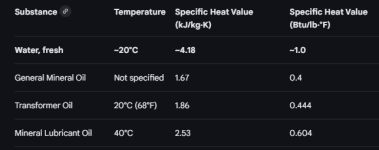
Worked at a large candy plant years ago and they had double walled stainless steel tubing. Inside the 2" tubing milk & dark chocolate ran thru and outer 3" tubing had temperature controlled water. Milk chocolate froze around 89 degrees.On short runs from a tempering tank to depositers I had it down pretty good. They purchased 500' rolls of a blue heat trace tape that ever 18" was a new connection point. To keep keep black schedule 40 pipe at a good temperature might install 6 turns every foot of pipe. Too many turns and they complained chocolate or pink, green, or white coating mixture was too hot. VP from the lab told us that candy coatings made with Palm oil should be avoided if your cholesterol is high. Saw that you have transformer oil listed. Just curious that I have not seen a new oil filled transformer for voltages under 15KV in 30 years. ( forget about the utility oil filled transformers that run so hot the gray paint turns dark ). At my first job we had halve a dozen oil filled transformers that were tested and usually at least two required running oil thru a press to reduce moisture content. Had GE 13,200 transformers and crack GE service department contaimaned one of the transformers with PCB'S when they used two long PCB oil filled hoses to reach transformer.Yeah, oil is hard to do with immersion. Moves a lot less heat than water does.
View attachment 2580980
Lot of problems keeping the oil lines hot at the KitKat Factory. Water jacketed but old, but then they switched from Palm Kernel Oil to Palm Oil. Not to mention installing a hot jacket water heating scheme that was open to air because it's all hoses and stainless (or so they thought). They couldn't do immersion because it's food, but there were all kinds of heating blankets wrapped around stuff for quite a while
Do you believe that the 6.28 ohm combined heating elements are going to change by like 1.2 ohms or something. Of course it works by percentages.It does not math like that.

For all of the heaters that I came across wired in troubleshoot etc for just heating water in food or even injection molding machines ( 500 ton plastic presses might have up to 8 or 10 heater bands on long nozzle. Even a two or three % change in resistance would not have any affect the PID or thermostat would keep temperature at set point. Yea thermostats are not as accurate.so like 1% change in resistance
So off of a pair of elements that present 6.28 ohms to the line we are talking about 0.06 ohms change