Differing Installation Methods by Region

Merry Christmas
Status
Not open for further replies.

Anon1

Member
Location
San Diego
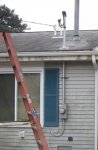
Hoping you guys can enlighten me. It's come to my attention that the normal method for installing overhead services in my area (southern California) might not be acceptable in a lot of AHJ. I attached a picture of an older combo meter main panel. It has a 100 amp service disconnect and bussing for breakers. The panel is flush mounted and the mast for the overhead service is inside the wall. Although it is an older installation, this method is still widely used in my region. My two questions are:
(1) Are combo panels with meters sockets, service disconnects, and breaker bussing uncommon in other regions?
(2) Are overhead services, including the mast and meter panel, typically always surface mounted in other regions?

 

Attachments

  • IMG_0937 (2).jpg
    IMG_0937 (2).jpg
    9.2 KB · Views: 1
I see inside the wall as a violation as the disconnect is not "nearest the point of entry of the service conductors".
 
Could you elaborate? Also, how would the installation be done in your area?

People have cut through the conduit on the un-metered side while being hidden from view accessing the illegally tapped conductors. From the weather head to the meter must be in plain sight. I tried to find an installation guide for you but couldn't. Typically meter sockets are surface mount with the mast surface mounted. It may penetrate the roof, but there are limits to that.
 
So the reason I posted this question here is because I have another post dealing with another question and there was some confusion from the people replying stemming from the fact that in their regions they did things completely different and had never seen the type of install I was talking about, an install that is super common in my area. Actually, if anyone viewing this thread would like to take a look at it I'd appreciate it. I'm not sure if cut and pasting the url will work but here it is
http://forums.mikeholt.com/showthread.php?t=194172

Also regarding the "nearest the point of entry of the service conductors" thing, I'm familiar with the section but I disagree that it forbids a short run from the point of entrance to the service disconnect equipment. The wording itself is vague and allows for interpretation. If "nearest" in this context was intended to mean that the service conductors have to immediately enter a service disconnect after entering a building then the code would definitely be worded that way. Instead, the wording has remained essentially unchanged for 30 years. So then, if it doesn't mean immediately, then some short distance is implicitly allowed. No maximum distance is specified so it is left up to either a reasonable judgment call or the AHJ to publish their own code addendum dictating some maximum length.

And I think it's important to mention that I'm speaking strictly in reference to the NEC, not regional AHJs. Often times when someone replies they will reference how it's done in their area, but that is region specific. I'm trying to reason only on the NEC because my AHJ does not have an addendum to the code.
 
That's the NEC violation. The POCO's have rules that also must be followed or they won't connect.
And in some cases it is explicitly stated that a mast which penetrates the soffit area of the roof, even an enclosed soffit, is not considered to be inside the building.

Some jurisdictions figure that a few feet inside the exterior wall (especially if only one story) is within the discretionary allowance of "close" to the point of entry.

Others allow as much as 20' of horizontal offset inside the building.

Sent from my XT1585 using Tapatalk
 
And in some cases it is explicitly stated that a mast which penetrates the soffit area of the roof, even an enclosed soffit, is not considered to be inside the building.

Some jurisdictions figure that a few feet inside the exterior wall (especially if only one story) is within the discretionary allowance of "close" to the point of entry.

Others allow as much as 20' of horizontal offset inside the building.

Sent from my XT1585 using Tapatalk

Here it differs before and after the meter. With the exception of going through an eave, no residential mast or cable feeding the meter can be concealed. After the meter is different, but a disco is required at around 5 feet of conductor ahead of the OCPD for the residence if the conductors enter the building.

I wish I could find the drawings. They better describe the situation than I do.
 
Here it differs before and after the meter. With the exception of going through an eave, no residential mast or cable feeding the meter can be concealed. After the meter is different, but a disco is required at around 5 feet of conductor ahead of the OCPD for the residence if the conductors enter the building.

I wish I could find the drawings. They better describe the situation than I do.

I'm curious, is the requirement that the mast or cable feeding a meter not be concealed a rule imposed by the AHJ or the Power Utility?
 
Do you have a code book?

230.6 Conductors Considered Outside the Building
Conductors shall be considered outside of a building or
other structure under any of the following conditions:

(1)Where installed under not less than 50 mm (2 in.) of
concrete beneath a building or other structure

(2) Where installed within a building or other structure in a
raceway that is encased in concrete or brick not less
than 50 mm (2 in.) thick

(3) Where installed in any vault that meets the construction
requirements of Article 450, Part III

(4) Where installed in conduit and under not less than
450mm
(18 in.) of earth beneath a building or other structure

(5) Where installed in overhead service masts on the out-
side surface of the building traveling through the eave
of that building to meet the requirements of 230.24

So you can see that the NEC's position on this is that unless you meet 1-5, no service conductors or cable (SE) is to be run within a building. But for practical purposes AHJs have allowed certain lengths in order to go from the outside into the panel. Here the unwritten rule is 5 feet, but don't abuse it by running it within a wall.

Note that the concern here is service conductors that have no OCP being run concealed within the structure where a fault before the main disconnect or breaker can case them to burn until something burns free. That's why the requirement for concrete encasement or buried. Nothing to do with theft of electric.

As for your situation, for what it's worth I've stated my opinion on outdoor recessed meters and panels several times. As far as I'm concerned the NEC should prohibit them. The meter belongs surface mounted outside, the panel inside. Maybe what you have works in sunny California, but really, your predicament doesn't get much sympathy from me.

-Hal


Do you have a code book?

230.6 Conductors Considered Outside the Building
Conductors shall be considered outside of a building or
other structure under any of the following conditions:

(1)Where installed under not less than 50 mm (2 in.) of
concrete beneath a building or other structure

(2) Where installed within a building or other structure in a
raceway that is encased in concrete or brick not less
than 50 mm (2 in.) thick

(3) Where installed in any vault that meets the construction
requirements of Article 450, Part III

(4) Where installed in conduit and under not less than
450mm
(18 in.) of earth beneath a building or other structure

(5) Where installed in overhead service masts on the out-
side surface of the building traveling through the eave
of that building to meet the requirements of 230.24

So you can see that the NEC's position on this is that unless you meet 1-5, no service conductors or cable (SE) is to be run within a building. But for practical purposes AHJs have allowed certain lengths in order to go from the outside into the panel. Here the unwritten rule is 5 feet, but don't abuse it by running it within a wall.

Note that the concern here is service conductors that have no OCP being run concealed within the structure where a fault before the main disconnect or breaker can case them to burn until something burns free. That's why the requirement for concrete encasement or buried. Nothing to do with theft of electric.

As for your situation, for what it's worth I've stated my opinion on outdoor recessed meters and panels several times. As far as I'm concerned the NEC should prohibit them. The meter belongs surface mounted outside, the panel inside. Maybe what you have works in sunny California, but really, your predicament doesn't get much sympathy from me.

-Hal


I've run across this before where someone asserts that 230.6 means that service conductors must be installed outside of a building. It's actually a prevalent opinion. However the code does not state that, although I admit that the wording can easily be misunderstood.

Consider this: At any single point along the length of the service conductors they can either have the property of being inside or outside a building (In this sentence I'm speaking literally, not about what is allowed by the NEC). The two properties are mutually exclusive, that is the conductors can, and must, possess one and only one of those properties at any single point along their length. 230.6 only states that if any of the 5 listed conditions is met then the service conductors "shall be considered outside" , that is they will be considered as having the property of being outside despite being physically inside. It doesn't say that service conductors must be outside, only that you can now consider them being as such. This is an important distinction.

You might ask what the purpose of this code would be if my interpretation is correct. There are at least two purposes this code fulfills. One is to offer clarification for situations that are questionable as to whether a location is inside or outside (one could easily imagine an inspector saying that a conduit buried 18" under a building is still inside said building). A second reason is to offer a remedy for situations where service conductors need to be ran through prohibited building interiors (see 230.3). By including item 2 in 230.6 it creates a solution for the scenario where service conductors supplying one building need to be ran through another.

There are additional codes that support this reasoning, but I would like to hear yours or anyone else's take on my argument.

I also want to make it clear that I'm not trying to be combative or confrontational. I enjoy these kinds of discussions and appreciate the exchange.
 
Anon, I agree 100%. You're employing basic grammar.

It's akin to "shall be permitted." The AHJ can't say no.
 
I'm curious, is the requirement that the mast or cable feeding a meter not be concealed a rule imposed by the AHJ or the Power Utility?

If you want an approved service connection, I would say its both.

If the utility has a specification, and you don't follow it, your likely not to get a connection from them, whatever anyone else thinks about it.

The AHJ has to enforce with the NEC and adopted local amendments, and the POCO requirements.

These two entities work in coordination to achieve a common goal, of the locally accepted method to produce a safe workable solution, that is mutually agreed acceptable.

Different regions have different needs due to climate, building methods, and past history. So it seems practical to me that there would naturally be variations on an intended theme. No one solution always fits everywhere and every case and every need. Reasoning would make you think that this is why the NEC section was written the way it is, and hasn't changed in years.

In fact in my area, that type of service is no longer allowed at all, as a general rule, by the utility. The AHJ or NEC doesn't prohibit it, but the utility now requires all new residential services, relocations or upgrades to be installed underground, unless you get prior permission for extenuating circumstances.

The AHJ will not approve something that will not meet the local utility requirements, and for good reason. Something as small as the exact model number of the meter can, can prevent you from getting energized, even though the AHJ and NEC approve. They all have a say, and they all incur some responsibility and liability in doing so, along with the installing contractor.

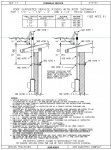
A local utility construction specification and generic installation example, that is now no longer accepted.
https://www.newlook.dteenergy.com/w...&CACHEID=b4a408e4-dc29-4906-ab35-99870702f7fd

OverheadSoffitSpec.jpg

OverheadSoffitService.jpg
 
230.6 tells you when the SEC's are considered outside of the building but it doesn't tell you that you need to run them outside of the building. It's 230.70(A)(1) that limits the SECs inside of the building. If they're not outside then they're inside.

230.70 General. Means shall be provided to disconnect all conductors in a building or other structure from the service entrance conductors.
(A) Location. The service disconnecting means shall be installed in accordance with 230.70(A)(1), (A)(2), and
(A)(3).
(1) Readily Accessible Location. The service disconnecting means shall be installed at a readily accessible location
either outside of a building or structure or inside nearest the point of entrance of the service conductors.
 
Hoping you guys can enlighten me. It's come to my attention that the normal method for installing overhead services in my area (southern California) might not be acceptable in a lot of AHJ. I attached a picture of an older combo meter main panel. It has a 100 amp service disconnect and bussing for breakers. The panel is flush mounted and the mast for the overhead service is inside the wall. Although it is an older installation, this method is still widely used in my region. My two questions are:
(1) Are combo panels with meters sockets, service disconnects, and breaker bussing uncommon in other regions?
(2) Are overhead services, including the mast and meter panel, typically always surface mounted in other regions?

The answer to question #1 is they are not uncommon at least in this area. There will be a meter/main with main breaker and space for breaker for service receptacle and A/C condensers . Then a breaker for an inside sub panel.

Answer to #2 is that everything is normally surfaced mounted. I don't know just how many utility companies there are in Georgia but it's my understanding that they don't like or even prohibit flush mounted metering equipment. If you wanted to use a separate meter then you could flush mount the panel.

It may not look as good surface mounted but when a tree falls on the service cables or mast and you need to replace certain items it's a lot easier. For some reason we have a lot of trees falling on things around here, it's probably because we have lots of trees.
 
If you want an approved service connection, I would say its both.

If the utility has a specification, and you don't follow it, your likely not to get a connection from them, whatever anyone else thinks about it.

The AHJ has to enforce with the NEC and adopted local amendments, and the POCO requirements.

These two entities work in coordination to achieve a common goal, of the locally accepted method to produce a safe workable solution, that is mutually agreed acceptable.

Different regions have different needs due to climate, building methods, and past history. So it seems practical to me that there would naturally be variations on an intended theme. No one solution always fits everywhere and every case and every need. Reasoning would make you think that this is why the NEC section was written the way it is, and hasn't changed in years.

In fact in my area, that type of service is no longer allowed at all, as a general rule, by the utility. The AHJ or NEC doesn't prohibit it, but the utility now requires all new residential services, relocations or upgrades to be installed underground, unless you get prior permission for extenuating circumstances.

The AHJ will not approve something that will not meet the local utility requirements, and for good reason. Something as small as the exact model number of the meter can, can prevent you from getting energized, even though the AHJ and NEC approve. They all have a say, and they all incur some responsibility and liability in doing so, along with the installing contractor.

A local utility construction specification and generic installation example, that is now no longer accepted.
https://www.newlook.dteenergy.com/w...&CACHEID=b4a408e4-dc29-4906-ab35-99870702f7fd

View attachment 21362

View attachment 21363

That looks almost exactly how Consumers requires installation over here on the west side of Michigan. Which part is no longer accepted?

Also, in Michigan, local amendments are no longer accepted. Everyone in the state must follow the same rules.
 
I've run across this before where someone asserts that 230.6 means that service conductors must be installed outside of a building. It's actually a prevalent opinion. However the code does not state that, although I admit that the wording can easily be misunderstood.

Consider this: At any single point along the length of the service conductors they can either have the property of being inside or outside a building (In this sentence I'm speaking literally, not about what is allowed by the NEC). The two properties are mutually exclusive, that is the conductors can, and must, possess one and only one of those properties at any single point along their length. 230.6 only states that if any of the 5 listed conditions is met then the service conductors "shall be considered outside" , that is they will be considered as having the property of being outside despite being physically inside. It doesn't say that service conductors must be outside, only that you can now consider them being as such. This is an important distinction.

You might ask what the purpose of this code would be if my interpretation is correct. There are at least two purposes this code fulfills. One is to offer clarification for situations that are questionable as to whether a location is inside or outside (one could easily imagine an inspector saying that a conduit buried 18" under a building is still inside said building). A second reason is to offer a remedy for situations where service conductors need to be ran through prohibited building interiors (see 230.3). By including item 2 in 230.6 it creates a solution for the scenario where service conductors supplying one building need to be ran through another.

There are additional codes that support this reasoning, but I would like to hear yours or anyone else's take on my argument.

I also want to make it clear that I'm not trying to be combative or confrontational. I enjoy these kinds of discussions and appreciate the exchange.

You must be from California.

-Hal
 
Status
Not open for further replies.
Top