
You are using an out of date browser. It may not display this or other websites correctly.
You should upgrade or use an alternative browser.
You should upgrade or use an alternative browser.
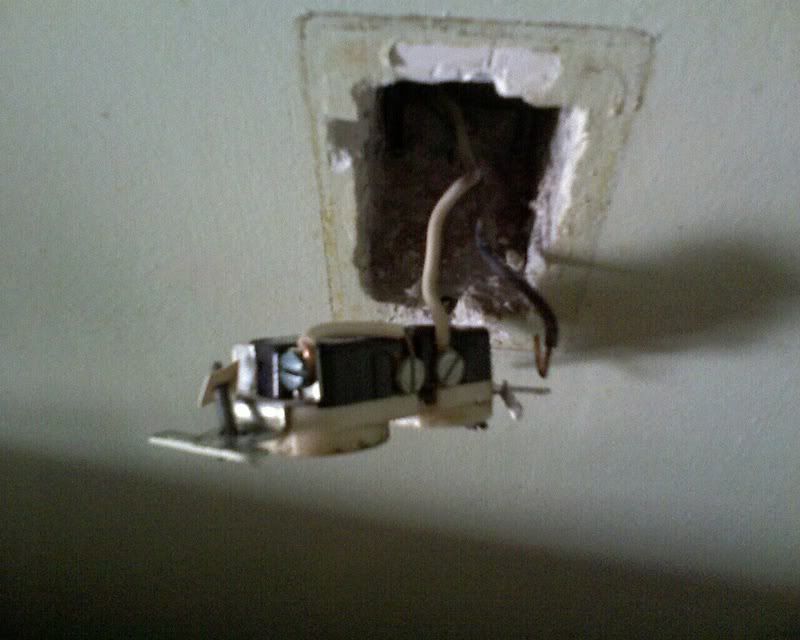
During a recent renovation....
- Thread starter mjaenke
- Start date

- Status
- Not open for further replies.
stretch12
Member
- Location
- taxachusetts
wow thats scary!
crossman
Senior Member
- Location
- Southeast Texas
So who knows what the major safety issue of that is?


- Location
- Logan, Utah
crossman said:So who knows what the major safety issue of that is?
The equipment grounding terminal is now a current carrying conductor. If you were to touch two grounded objects with that configuration you would be part of a parallel path for neutral current.
I found this configuration on a brand new home one time.

Chris
crossman
Senior Member
- Location
- Southeast Texas
raider1 said:The equipment grounding terminal is now a current carrying conductor. If you were to touch two grounded objects with that configuration you would be part of a parallel path for neutral current.
Yep... but as long as all the neutral connections/conductors are secure and low Z, there isn't all that much chance of a bad shock. However, lift a neutral or have a loose or corroded high Z neutral connection and all of a sudden the equipment grounds have become hot, including any grounded equipment plugged into the outlet.

brantmacga
Señor Member
- Location
- Georgia
- Occupation
- Former Child
i've had home inspectors request that be done "so it'll show up grounded on the tester." (head explosion in 5. . . ..4. . . . .3. . . . . . .)

Jim W in Tampa
Senior Member
- Location
- Tampa Florida
It was a cheap illegal way to make it look like a grounded receptacle.Ihope the guy that did it gets to pay for the fix.That kind of work is only done by hacks.

cschmid
Senior Member
- Location
- Northern cold country
man I have several pictures like that..
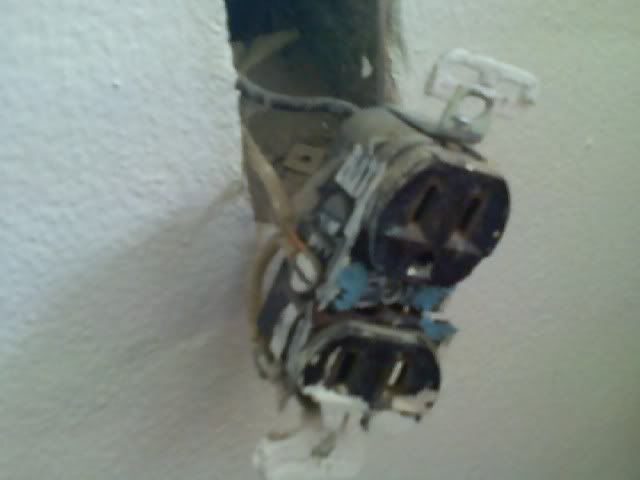
I agree it is only done by hacks but there was an inspection sticker on the service panel for the job..blew me away..
I agree it is only done by hacks but there was an inspection sticker on the service panel for the job..blew me away..
M_BROWNLOW
Member
- Location
- Atlantic Canada
brantmacga said:i've had home inspectors request that be done "so it'll show up grounded on the tester." (head explosion in 5. . . ..4. . . . .3. . . . . . .)
Jim W in Tampa said:It was a cheap illegal way to make it look like a grounded receptacle.Ihope the guy that did it gets to pay for the fix.That kind of work is only done by hacks.
Thanks for the thread mjaenke.
I wasn't aware this hack job was out there.
I gather from the quotes above that this illegal wiring would trick a basic 3-prong outlet tester into indicating a correct wiring.
Is there a non-invasive means (i.e., not removing the receptacle cover plate) that could pick up on the presence of this wiring technique? Perhaps a more advanced tester on the market?

joebell
Senior Member
- Location
- New Hampshire
cschmid said:man I have several pictures like that..
I agree it is only done by hacks but there was an inspection sticker on the service panel for the job..blew me away..
In my area it is very uncommon for the electrical inspector to remove plates during a final inspection. Typically they just insert the 3 prong tester to check for proper wiring of the receptacles. It seems this wiring would fool that tester.
So I can see how this may have passed an inspection.
Joe
cschmid
Senior Member
- Location
- Northern cold country
I can see how but our inspector will go through an pull out a random light switch and outlet just to make sure you are being honest..if you are not there he even reinstalls them..

GeorgeB
ElectroHydraulics engineer (retired)
- Location
- Greenville SC
- Occupation
- Retired
M_BROWNLOW said:Thanks for the thread mjaenke.
I wasn't aware this hack job was out there.
I gather from the quotes above that this illegal wiring would trick a basic 3-prong outlet tester into indicating a correct wiring.
Is there a non-invasive means (i.e., not removing the receptacle cover plate) that could pick up on the presence of this wiring technique? Perhaps a more advanced tester on the market?
As an engineer, not an electrician, I have read GEC to ECG voltage change with a moderately high load (we used an iron in the training session I taught on voltage drop concepts). If "there ain't none", a jumper is in place. I THINK that Ideal makes a tester which accomplishes this.

- Status
- Not open for further replies.