GFCI on Vending Machine

Merry Christmas
Status
Not open for further replies.
Hello, new member here. Hoping someone can shed some light on an ongoing headache we've been dealing with.....

We manufacture vending machines and are based out of the Chicago area. We have a customer down in Florida who is having an ongoing problem, so all of our testing and troubleshooting has been down with this customer over the phone. Therefore, I hope all of the info the customer has provided me with is accurate, but here it goes....

The vending machine has an in-line 15amp GFCI on the power cord. Ever since the customer has owned this machine (about 1-2 months now) the GFCI will trip out within an hour or so of the machine being powered on. The machine is just in normal standby mode meaning no motors or anything are running which would cause a higher amp draw. This is a non-refrigerated machine, so there is no high amp draw of a compressor in play here either.

First troubleshooting we did is had the customer run an extension cord and plug the machine into a different outlet on a different circuit breaker. Same issue, within an hour of being powered on the GFCI trips.

We then sent a new power cord with in-line GFCI to the customer. Again, same issue remains.

I then had the customer remove all of the outputs off of the power supply. Meaning the machine's control board, motors, LED lighting, etc. were all removed from the load. At this point it was just a power cord plugged into a power supply, with nothing else on the load.... Same issue, GFCI trips out.

At this point, seeing that a brand new GFCI was tripping out with only the power supply on the load, we sent out a brand new power supply..... Still, same issue.

At this point, the customer put one of the cheap $7 outlet testers on the outlet and there seemed to be an intermittent ground short being detected. When he first connected it, all read good. But as I was on the phone with him, about 10 minutes into the conversation a ground short showed...... So the customer then had his electrician out to the site and he ran a brand new dedicated line for the machine. But even with a brand new dedicated line, we have the exact same issue.

I then sent yet another GFCI power cord to the customer. This used a different make / model GFCI..... Yet we still have the same issue!

Just for the sake of testing, I finally asked the customer to take one of the power cords w/ in-line GFCI and one of the power supplies to his home and to plug it in at his home..... He did this and said the GFCI does NOT trip out in his home.

The location of the vending machine is a laundromat.

At this point, I am at a loss. It almost feels like the customer is not being honest with what he is telling me when we troubleshoot, because we have been through 3 GFCI power cords and 2 power supplies and still have the same issue. And this is with a new dedicated line being run for the machine.... I can't imagine anything inside of the vending machine itself is causing the GFCI to trip as we have completely isolated the GFCI and Power Supply so the rest of the machine should be completely irrelevant at that point.

Is there anything I could be overlooking here? I hate the fact that I am not local to this customer, because of course that has me wondering if I am getting inaccurate info from him. Any thoughts? The fact that a power cord / power supply run fun without tripping the GFCI at this person's home, yet those same items trip out at the laundromat location has me thinking this could be related to the electric panel at the laundromat, but would running that new dedicated line not have resolved that? Any feedback at all would be appreciated because I am at a complete loss.
 
It may very well be the GFCI is doing it's job and there is a fault somewhere in the vending machine. Laundromats have very high humidity, it may have caused corrosion in the machine.

What are the resistance readings between the hot and ground conductors?
 
It may very well be the GFCI is doing it's job and there is a fault somewhere in the vending machine. ...

If what's being relayed is right, it's done this with two different power supplies, with nothing but the power supplies connected during those tests, and did not trip when tested at a different location.

Could the power supply be faulting only when in a humid environment?

I'd ask the buyer for a picture of the installed location.
 
I think you should hire a local service electrician to troubleshoot the equipment and provide you with his/her findings.

I have done this for out of state companies and we always get the problems solved.

The customer probably isn't qualified to do much troubleshooting.
 
But by us having isolated the entire machine (minus the power supply) from the electrical load, wouldn't this have removed any machine failure from the equation?

The Power Supply has a 3 wire input connector where the AC cord's hot, neutral and ground plugs into. And then it has 3 outputs, 1 feeds the LED Lighting, 1 feeds the optional refrigeration system, and 1 feeds the master control board. There is no refrigeration system in play with this machine, so I had the customer disconnect the wiring for the other 2 outputs so the control board of the machine and all of the peripherals that the control board operates (motors, IR Sensors, etc.) are off of the load at that point.

At this point it is literally just the AC Cord, with the GFCI in-line on that cord, and a power supply. And the power supply does have some internal components that absolutely could be corroded or faulty, but the fact is we sent a replacement power supply so all of those internal components would have been changed out as a product of swapping the power supply.

3 power cords w/ in-line GFCI, 2 power supplies. Everything else in the machine removed from the load. Still the same issue, over and over and over again. GFCI will not stay on for more than an hour. Tested on multiple outlets / breakers with the current outlet / breaker being dedicated for the machine.

The only time the GFCI has not tripped is when the customer takes a power cord w/ in-line GFCI and a power supply to his home and plugs it in to his home outlets. No problems at all then. Stays powered on for a full 24 hours. He plugs them in to the laundromat though and within an hour the GFCI trips off.
 
If what's being relayed is right, it's done this with two different power supplies, with nothing but the power supplies connected during those tests, and did not trip when tested at a different location.

Could the power supply be faulting only when in a humid environment?

I'd ask the buyer for a picture of the installed location.

Your first sentence is 100% accurate. We actually manufacture these machines specifically for laundromats though, so the humid environment is nothing new for us. We've never encountered a problem like this before.

Possibly if there is a piece of laundry equipment directly next to the machine there could be some additional moisture being detected. I will look into that. Like you said, a picture would be helpful.

Is there any scenario in which something could be interfering with the GFCI. For as bizarre as it sounds I read in other forums about certain RF equipment causing GFCIs to trip. Sounded very bizarre to me, but at this point I'm grasping for any straws I can find.
 
If there's conductivity between the white & green wires inside the machine, an intermittent ground in the circuit feeding it could be the culprit. As long as the intermittent ground is open, there isn't any ground-fault current flowing, but there could be when there's a good ground available.

Measuring the resistance at the plug with multimeter is likely to be inconclusive. Leakage current that occurs at 120 volts AC might not show up at 9 volts DC.

The combination of high humidity and dirt -- the very definition of a laundromat anywhere, let alone in Florida -- could cause a leakage-current path, with or without corrosion. Does the customer's house have air-conditioning and humidity control?

There's no substitute for being there.
 
But by us having isolated the entire machine (minus the power supply) from the electrical load, wouldn't this have removed any machine failure from the equation?
Yes.

. . . and within an hour the GFCI trips off.
I see this as an important symptom. GFCI devices do not work the same way that circuit breakers work. If, for example, you pass 30 amps of current through a 20 amp circuit breaker, it will trip, but not right away. It takes some amount of time for the internal parts of the breaker to become sufficiently heated by the excess current for them to actuate the trip mechanism. But when a GFCI device sees a mismatch between the current in the hot leg and the neutral leg, it will trip immediately.

I don’t have an answer to offer you. But I suggest that the troubleshooting efforts concentrate on this question: Why is there an hour or so delay in the tripping of your GFCI device?

 
A little bit of additional info which may or may not be helpful regarding the environment of the machine....

To the left of the machine is a fairly large folding table. To the right of the machine is a dollar bill changer machine. So there is nothing that would produce any type of moisture, humidity, etc. The wall directly behind the machine is a common wall shared by the business next door (Dollar Tree) and they just have display shelving on their side of that wall.

There is a wireless router and a Grace Radio in the storage closet just to the right of the dollar bill changer. Per the customer, he estimates the router and radio are about 5 feet away from the machine. I'm not too familair with a Grace Radio, but from what the customer tells me it connects via WiFi to their router and they will either use it for internet radio at the location or when the customer is physically on site he will connect his phone to the radio via Bluetooth for music playback..... Unsure if this relevant at all, but like I mentioned I saw in another forum someone claimed that certain RF signal can trip a GFCI (again, sounds ridiculous).

He won't be back to site today, but I'm asking next time he's back on site to power down the wireless devices just to see if it changes anything.
 
Last edited:


But when a GFCI device sees a mismatch between the current in the hot leg and the neutral leg, it will trip immediately.


I don’t have an answer to offer you. But I suggest that the troubleshooting efforts concentrate on this question: Why is there an hour or so delay in the tripping of your GFCI device?


This was bizarre to me, too. In my experience working with these machines there would always be 1 of 2 scenarios which would cause the GFCI to trip.

1. If the GFCI tripped immediately, it was found to be a faulty GFCI. Simply replacing it solved the issue whenever we ran into that.

2. If the GFCI tripped at random time intervals, we found loose or corroded wire connections somewhere in the machine. I actually had a machine in our shop run into this intermittent GFCI issue a few weeks back and found a corroded connector inside of the power supply.

When the customer told me it was tripping at random times, I immediately tied that to scenario #2 and that is why I had him remove everything from the load figuring we would have removed any loose wiring in the process. When the problem still was occurring, I assumed the loose wiring was inside of the power supply. For safety purposes I opted send the customer a brand new power supply for I didn't have him poking around something he probably isn't qualified to poke around in. Brand new power supply though, exact same issue.

From what he told me, he can reset the GFCI and it will remain powered on for a period of time, but it never stays on for more than an hour. It will always cut back off anywhere from 30 minutes to an hour after the reset.
 
I may have missed it, but....

When the PS is at home, it's not mounted in the machine and it doesn't trip.

When the PS is at the laundromat, is it mounted in the machine or sitting isolated on a table? If it's mounted in the machine (and presumably connected to the chassis), you still have leakage paths through the cabinet/etc. Could be that there is just enough leakage (a loose wire that occasionally touches something else?) to trip when somebody mechanically jostles the machine.

There's also the remote possibility that both power supplies have more leakage than spec. I had a lot of PSs that would reliably trip a GFCI but were otherwise fine (IIRC had the wrong size MOV to ground or something like that).
 
Is there any scenario in which something could be interfering with the GFCI. For as bizarre as it sounds I read in other forums about certain RF equipment causing GFCIs to trip. Sounded very bizarre to me, but at this point I'm grasping for any straws I can find.

Yes, RF has been know to trip GFCI devices. A search returned 116,000 results. I definitely would try removing suspected RFI generators at this point. Some culprits generate RFI that don't even use wireless, so don't rule anything out. The change machine may have a power supply in it making all kinds of RFI.

Is it possible to move the vending machine 30 feet or so and see if that makes any difference?
 
When the PS is at home, it's not mounted in the machine and it doesn't trip.

When the PS is at the laundromat, is it mounted in the machine or sitting isolated on a table? If it's mounted in the machine (and presumably connected to the chassis), you still have leakage paths through the cabinet/etc. Could be that there is just enough leakage (a loose wire that occasionally touches something else?) to trip when somebody mechanically jostles the machine.

.

Hmmm. That is interesting. The PS is physically inside of the machine cabinet during all of the troubleshooting that we have done on-site.

Still though, by having the rest of the machine removed from the load, and therefore having no voltage / current going to it, wouldn't a loose wire in the machine itself be a moot point?

I'm a low-voltage guy by trade, so I will defer to the rest of you on this, but when all of the wiring in the machine itself is not connected to the line, shouldn't any loose connections at that point be irrelevant? The exception would be loose connections in the PS, but 2 different PS have been tried.

If I'm wrong, please let me know.
 
Yes, RF has been know to trip GFCI devices. A search returned 116,000 results. I definitely would try removing suspected RFI generators at this point. Some culprits generate RFI that don't even use wireless, so don't rule anything out. The change machine may have a power supply in it making all kinds of RFI.

Is it possible to move the vending machine 30 feet or so and see if that makes any difference?

Nothing is out of consideration at this point. The customer is starting to push for a new machine and calling this a "lemon" so finding a result here is crucial. Shipping a new machine to him costs a small fortune and on top of that, I don't believe it even fixes the issue. So I'm obviously looking to avoid that.

We are going to start by disconnecting the wireless devices. If the issue remains, we'll move to the change machine.
 
I think you should hire a local service electrician to troubleshoot the equipment and provide you with his/her findings.

I have done this for out of state companies and we always get the problems solved.

The customer probably isn't qualified to do much troubleshooting.

Neither is the vendor qualified, but the free internet advice must be exhausted!!

If you get them to fly you out there, I will personally give you a bonus.
 
Nothing is out of consideration at this point. The customer is starting to push for a new machine and calling this a "lemon" so finding a result here is crucial. Shipping a new machine to him costs a small fortune and on top of that, I don't believe it even fixes the issue. So I'm obviously looking to avoid that.

We are going to start by disconnecting the wireless devices. If the issue remains, we'll move to the change machine.

I would still move the machine before swapping it with a new one. Even if just to test. As I mentioned earlier, you may be getting RFI from a device you would never suspect. Ham radio operators have to deal with this all the time and you would be amazed at how many devices generate RFI. Power supplies and battery chargers are known troublemakers. Best to try to move the machine as far from the original location for the test. If the location is getting swamped with RFI, a new machine won't make a difference.
 
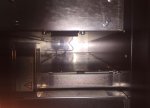
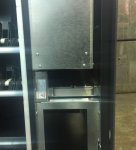
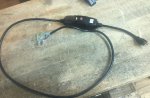
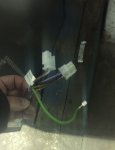
Would you post some pics of the power supply and how it sits in the machine, also of the power cord? (They don't need to be big pictures, just enough to see the connections and mountings.)

Here are a few pictures. Unfortunately, I don't have a power supply in stock. I had to pull one off an existing machine to send to this customer.

2 of the photos show where the power supply was pulled from. 1 closeup and 1 from a distance. The power supply is a metal enclosure with the internal components mounted inside of the enclosure.

The other 2 photos show the power cord w/ GFCI and then the connections that we removed from the power supply's outputs. 1 which feeds the LED lighting and 1 which feeds the control board.
 

Attachments

  • 1.JPG
    1.JPG
    54 KB · Views: 0
  • 2.JPG
    2.JPG
    40.1 KB · Views: 0
  • 3.JPG
    3.JPG
    88.5 KB · Views: 0
  • 4.JPG
    4.JPG
    25.6 KB · Views: 0
I would still move the machine before swapping it with a new one. Even if just to test. As I mentioned earlier, you may be getting RFI from a device you would never suspect. Ham radio operators have to deal with this all the time and you would be amazed at how many devices generate RFI. Power supplies and battery chargers are known troublemakers. Best to try to move the machine as far from the original location for the test. If the location is getting swamped with RFI, a new machine won't make a difference.


Yes. This is definitely our next step once the customer is back on site to try this.
 
... certain RF signals can trip a GFCI (again, sounds ridiculous) ...
Radio-frequency signals arriving over the air (radiated) seem improbable, unless perhaps you're next door to a large broadcasting station. (another possible explanation for the difference between the behavior in the 'mat and the behavior at home) But radio-frequency signals arriving over the power cord (conducted) could very well be responsible. If there's a low-pass noise filter in the power supply, it will shunt the high-frequency energy to from the hot & neutral to ground, which is the very definition of a ground fault.

A GFCI usually relies on a toroidal ferrite-core transformer to measure the difference between inbound & outbound current, which will make it less sensitive -- but not entirely insensitive -- to high frequencies than 60 Hz.

If there is radio-frequency energy on the powerline, it's probably the same on every circuit originating from the service panel.

I'm still stymied why it takes 30-60 minutes.

“Once you eliminate the impossible, whatever remains, no matter how improbable, must be the truth.”
- Arthur Conan Doyle, Sr. quotes (Scottish writer, creator of the detective Sherlock Holmes, 1859-1930)
 
Status
Not open for further replies.
Top