home brew no export

electrofelon

Senior Member
Location
Cherry Valley NY, Seattle, WA
Occupation
Electrician
Say you had an existing GT system where the inverters had no capability to do a no export function. Is there a simple off the shelf device that could do this? I am thinking all you would need is a CT and a simple circuit that PWMs a SSR to a dump load of come sort. The midnite classic charge contoller basically has that capability, but for DC sysems.
 
Why do you want that? If the POCO requires no export then you have no choice, but I have heard people say that they just don't want to give kWh to the utility, in which case it is probably not worth spending any money to accomplish that. Don't stick it to yourself trying to stick it to the man.
 
Why do you want that? If the POCO requires no export then you have no choice, but I have heard people say that they just don't want to give kWh to the utility, in which case it is probably not worth spending any money to accomplish that. Don't stick it to yourself trying to stick it to the man.
Sort of just a thought experiment, but could be a practical matter for me. I am adding to my existing solar system and for a variety of reasons I do not want to update the interconnect agreement. They probably won't notice the extra output, but if it comes to it I may want to cap the export to a maximum value.
 
If you need to be _strict_ with zero export, I don't think you could do anything line interactive and be absolutely sure you always have zero export.

A plausible 'home brew' approach for strict zero export would be an off grid PV system that uses mains power to charge the batteries in addition to PV; such a system could _never_ supply power to the grid, but would be less efficient for grid consumption since you always have AC-DC-AC conversion.

But in your case you don't need to be strict, since you have an interconnect agreement. You just want your revised system to have output that looks generally like your original system. For this you just need some amount of automated control that turns on optional loads whenever your PV production gets too high.

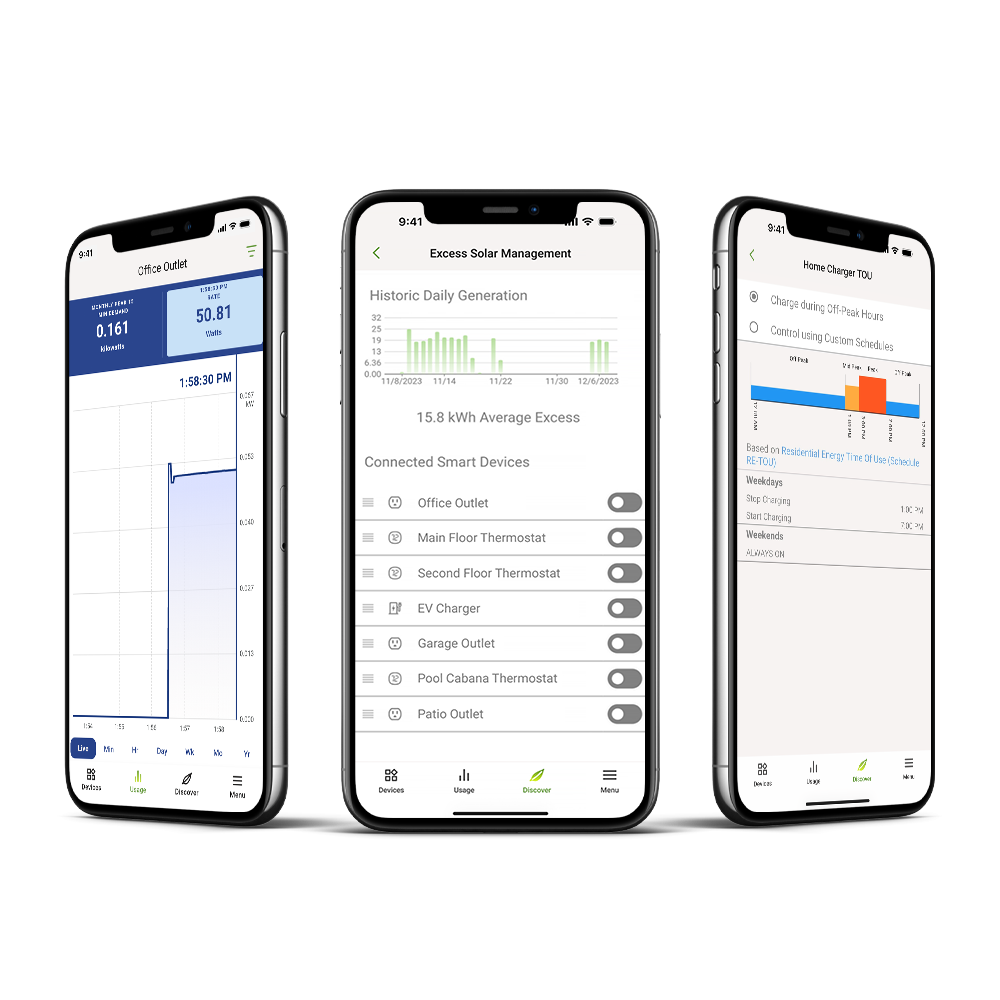
I think you could pull that off with 'home assistant'; monitor energy flow using an of a number of energy monitors that put CTs on the mains connection, and then control loads such as minisplits or water heaters or the like. I don't know if such a system would be quite stable enough, but it certainly is homebrew :)
 
.

I think you could pull that off with 'home assistant'; monitor energy flow using an of a number of energy monitors that put CTs on the mains connection, and then control loads such as minisplits or water heaters or the like. I don't know if such a system would be quite stable enough, but it certainly is homebrew :)
I wasnt aware those home energy monitors could do that. So they can be set up to turn on a load or fire a relay at a programmable current level?

One idea i had was to reconfigure a duct heater. I recently installed one and it is essentially a temperature sensor that PWMs a heating element as necessary to maintain a set temperature. Probably could reconfigure it with a current to voltage transducer (or whatever is needed).

Their are probably several ways to skin this cat, but initially im just going to go for it and see if i get a nasty gram.
 
I wasnt aware those home energy monitors could do that. So they can be set up to turn on a load or fire a relay at a programmable current level?

I wasn't suggesting the home energy monitor directly controlling the load, but rather separate automation responding to the energy monitor.

I currently use Home Assistant to measure temperature throughout my house, control some lights with inconvenient switches, and control my mini splits.

It should be pretty straightforward to say 'if this sensor exceeds this value turn on this device'.

It is pretty flexible but some of the integrations are clearly 'work in progress'. In my system I think the biggest problems are with devices connected via Wi-Fi, so for high reliability I'd recommend wired Ethernet to the critical sensors and controls.

I've not needed to integrate my energy monitor into my Home Assistant setup, but know others have done this.
 
I have SMA sunny boy but i Cant remember If I have US-40 or US-41's. I think maybe that started with the US-41's, but not totally sure about that either. I have to do a little more research.
I believe Sunny Boy supports modbus commands to control active power output. So, assuming you already have an interconnection agreement, it should be practical to use a consumer energy monitor to report export power and use something like HA to adjust the Sunny Boy output accordingly to stay below certain export power level. Note, this only works if you already have an interconnection agreement which typically allows up to a few seconds of transient export limit violation. If there is no interconnection agreement then I doubt the typical consumer energy monitors are fast enough to work since the smart meters can detect export limit violation in a small fraction of a second (I've seen reports of ~200ms).
 
Top