- Occupation
- Licensed Electrician
Last time I tried that I had to find a job in a different citySo you’re saying a GF I would be ok even if there is no ECG present within the circuit


Last time I tried that I had to find a job in a different citySo you’re saying a GF I would be ok even if there is no ECG present within the circuit


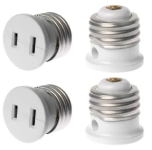
Just install the GFCI and tell him you installed a special "Bluetooth" grounding systemWell the buyer wants peace of mind

A GFCI does not need an EGC to operate. The current goes through the outlet on the "hot" side, and the outlet measures how much power goes out. If all of that power does not come back through the neutral side of the outlet, the GFCI knows that some of the power went somewhere it shouldn't and trips. The EGC is not involved at all.That still doesn’t protect the equipment though? There’s no EGC present
I encountered the same thing on a shop-vac I repaired. The cord had a ground in it, but it wasn't attached to anything inside the vacuum. All exposed parts are plastic, so the ground isn't needed except that OSHA guys get wound up if everything on the jobsite isn't three-prong. (Electricity is not necessarily their strong suit...)I had a bunch of old laptop chargers and printer power supplies that I cut open to see where the grounds went. Three wire plug and cord, grounds went nowhere. Not connected to anything
While I generally agree with the others you can in general use a GFCI to supplement two prongs in the majority of receptacles in a home, if your a licensed insured contractor and want to CYA I would pay attention to the list in 250.114, as I bet personal injury lawyers do.What can I do to ensure the buyer is protected and will be safe with his equipment
I thought 406.4(D) was an exception to 250.114, in other words I can put a residential fridge on a GFCI with no equiment ground?You can run an individual EGC to the boxes in question that absolutely need a ground (see 250.114 for a list of what must be grounded). See 250.130 for where you can connect that separate retrofit EGC for a circuit. Ask homeowner which things he has that actually have a ground prong on their power cord. So many things today do not. This could also be a case where you end up using all those "GFCI protected - No Equipment Ground" stickers that come in a GFCI receptacle box if you change his 2 prongers to 3.
I've had multiple houses from the mid 60's that had a mix of grounded and ungrounded NM cable. Many times the EGC was folded back behind the cable and outside of the box as Joe Villani indicated. The bugger was many electricians twisted those together so you can't pull them back into the box (or you can at least get a short bit of it before it breaks off). I only had to run EGC to a few boxes and was able to ground most things between the EGCs I could fish back into the box and running some #12 green to a few strategic boxes.
Also pay attention to 406.4(D) if you change out any receptacle. That change out requires the receptacle to be brought to current rules for AFCI, GFCI, TR, WR, etc.

The electrician can replace a non-grounding type receptacle with a GFCI receptacle BUT they must be "marked "GFCI Protected" and "No Equipment Ground," visible after installation."I thought 406.4(D) was an exception to 250.114, in other words I can put a residential fridge on a GFCI with no equiment ground?
That was very common in my area have seen that done all the time. Old timer told me at one time that thought it was safer to keep the ground outside the box LOLIf it's NM, check behind the cable clamps
In my area the practice at that time was to wrap the equipment ground around the cable sheath and place under the clamp

Peace of mind no problem he can have anything he wants if request is accompanied with check, cash, card, or money orderWell the buyer wants peace of mind
Whenever I hear customers or whoever talk aboup "peace of mind" it always means that they want to hire some idiot to put his fingers into something, and replace parts, components, or materials with substandard replacements, and have said hired idiot do a hack job of it.Peace of mind

Why not? I re-wire for new buyers all the time. If they want it, and it would be code compliant when completed and they are willing to pay for it give them what they want. I also will get them that want a pre-purchase quote that they will just use it for a reduction on the purchase price, so will charge them for the evaluation and quote.Obviously the home being built in 1966 is grandfathered in so I can’t do a whole home rewire to each outlet. What can I do?

This is exactly what I recommend for homes with knob-and-tube wiring, etc.My choice would be to run new circuits to the spots where he wants to plug something in that he insists has a need for an EGC and leave everything else alone.