Sealing Conductors

Status
Not open for further replies.

gadfly56

Senior Member
Location
New Jersey
Occupation
Professional Engineer, Fire & Life Safety
We have a university client experiencing corrosion at the terminals of heat detectors installed in a dormitory. The design (not ours) called for detector coverage in the community toilet/shower areas on each floor. A terrible idea, I know. The original work was done in 2008 and now we're going in to replace all the bases and detectors due to corrosion which has formed at the terminal screws and wire on the bases. We're trying to think of a product we could use to cover the connections (see red circles below), like silicone seal. I know that the acid in silicone caulks and the like aren't compatible, but does anyone have a suggestion for a suitable product?
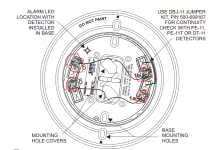
DB-11 Base.PNG
 
If the heat detectors lasted 16 years then I am not sure it is worth messing with them. I know smoke alarms are recommended to be replaced after 10 years but not sure about heat detectors.

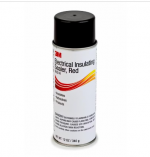
I think you can buy an isolation spray on product to protect the connection, but you would have to be certain it won't mess up the units functionality.

1716560135152.png
 
If the heat detectors lasted 16 years then I am not sure it is worth messing with them. I know smoke alarms are recommended to be replaced after 10 years but not sure about heat detectors.
I mentioned that once in a report and the fire alarm vendor came back and said that only applies to residential, commercial base mounted units last much longer. I didn't buy it, but i'm also not an expert on life expectancy.
 
I mentioned that once in a report and the fire alarm vendor came back and said that only applies to residential, commercial base mounted units last much longer. I didn't buy it, but i'm also not an expert on life expectancy.
The enhanced content in NFPA 72 says:
14.4.5.8
Combination smoke/carbon monoxide alarms shall be replaced when the end-of-life signal actuates or 10 years from the date of manufacture, whichever comes first, unless otherwise provided by the manufacturer's published instructions.
(enhanced content below)
FAQ Does the requirement to replace smoke alarms every 10 years apply to system smoke detectors?

The 10-year replacement requirement applies only to smoke alarms, not smoke detectors, in any occupancy type. If the manufacturer provides a means for an extended life beyond 10 years, the 10-year replacement requirement does not apply.
Smoke detectors are connected to a fire alarm control panel. Smoke alarms are the individual or interconnected ones typically used in dwellings and small commercial occupancies.
 
I mentioned that once in a report and the fire alarm vendor came back and said that only applies to residential, commercial base mounted units last much longer. I didn't buy it, but i'm also not an expert on life expectancy.
Commercial detectors are almost all photoelectric, and as long as you don't gunk up the photo chamber, they should last as long as the LED's they use. Fifty years? Most residential smoke detectors are the ionization type, and the 241Americium used in them declines in potency in 10 years or so to the point where you can get false alarms. Yes, you can get residential photoelectric detectors, but they are usually about $40 a pop as opposed to $8 each for photoionization detectors.
 
Thanks to Dennis and Strathead for your suggestions! And dang, that stuff is expensive!!
 
You can also use a conformal coating (once the screws are torqued down, not before).
RectorSeal GulfCoat Circuit Shield 72000

And use drywall compound or whatever to seal any gaps into the framing. You don't want any unnecessary airflow
through the area as the building breathes.

Relocating the detectors to a wall may also help with corrosion, but probably not worth it now.
I agree with the original designers that bathrooms are a place where fires can start. If it's working and your only problem is a bit of corrosion over that timeframe, then just put them on a maintenance schedule.
 
Status
Not open for further replies.
Top