
You are using an out of date browser. It may not display this or other websites correctly.
You should upgrade or use an alternative browser.
You should upgrade or use an alternative browser.
Split, Slip or Repair?
- Thread starter laketime
- Start date
- Status
- Not open for further replies.


- Location
- New Jersey
- Occupation
- Journeyman Electrician (retired)
Sounds like you need two slip couplings for each pipe run.

Knuckle Dragger
Master Electrician Electrical Contractor 01752
- Location
- Marlborough, Massachusetts USA
- Occupation
- Electrical Contractor
Cantex makes a 4" slip on repair coupling it's about 6" long or so.

- Location
- New Jersey
- Occupation
- Journeyman Electrician (retired)
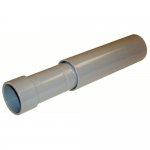
An expansion coupling will also work.
I like that idea. Can they be used underground?

Coppersmith
Senior Member
- Location
- Tampa, FL, USA
- Occupation
- Electrical Contractor
Customer just called and has (4) 4" sch 40 pvc that need to be connected. One side is waterproofed going through a concrete wall and the other side is buried in a trench. What product or technique do you use to connect two fixed pvc pipes?
You didn't say how far apart they are or if they are aligned.
Cow
Senior Member
- Location
- Eastern Oregon
- Occupation
- Electrician
I like that idea. Can they be used underground?
Sure, we use expansion fittings all the time for repairs underground.

- Occupation
- Licensed Electrician
Sure, we use expansion fittings all the time for repairs underground.I like that idea. Can they be used underground?
Me too, also. I don't know of a better way to do it and I don't know of anything that says you can't.
Knuckle Dragger
Master Electrician Electrical Contractor 01752
- Location
- Marlborough, Massachusetts USA
- Occupation
- Electrical Contractor
I am assuming that when referring to using an expansion coupling to join two pieces of underground PVC coduit that they mean expansion repair coupling.
I am assuming that when referring to using an expansion coupling to join two pieces of underground PVC coduit that they mean expansion repair coupling.
No, just a regular expansion coupling.

LarryFine
Master Electrician Electric Contractor Richmond VA
- Location
- Henrico County, VA
- Occupation
- Electrical Contractor
They're used in conduit runs that are long enough to be affected by temperature swings, and across building expansion joints, to prevent breaking or buckling.No, just a regular expansion coupling.
They're used in conduit runs that are long enough to be affected by temperature swings, and across building expansion joints, to prevent breaking or buckling.
They also work as a repair coupling underground where a damaged PVC needs to be repaired after the wire is removed.
Knuckle Dragger
Master Electrician Electrical Contractor 01752
- Location
- Marlborough, Massachusetts USA
- Occupation
- Electrical Contractor
They also work as a repair coupling underground where a damaged PVC needs to be repaired after the wire is removed.
I never new it was listed for direct burial use. to each his own.
I wouldn't trust the two O rings to be water tight, especially if I were directly entering a foundation at trench depth.
I never new it was listed for direct burial use. to each his own.
I wouldn't trust the two O rings to be water tight, especially if I were directly entering a foundation at trench depth.
I have never seen an underground PVC conduit that didn’t have water in it.
No one stocks slip couplings or split repair duct, so I wouldn’t hesitate to use an expansion coupling underground for a repair.
And for those that say that you would never use a product in conflict with its listing, you are full of it.
There are even people that think an expansion coupling is required underground on long runs the same as above ground.
I never new it was listed for direct burial use. to each his own.
I wouldn't trust the two O rings to be water tight, especially if I were directly entering a foundation at trench depth.
Schedule 40 and 80 PVC conduit and fittings are rated for direct burial.
https://standardscatalog.ul.com/standards/en/standard_651_8
[h=3]1.1 General[/h]1.1.1 These requirements cover Schedule 40, Schedule 80, Type EB and Type A extruded rigid PVC (polyvinyl chloride) electrical conduit and fittings. These requirements also cover elbows, couplings, adapters, expansion, expansion-deflection, or deflection joints, and similar fittings that are constructed at least in part of rigid PVC. The designations "Schedule 40", "Schedule 80", "Type EB", "Type A" refer to USA trade sizes of conduit having iron pipe-size outside diameters and specific wall thicknesses. Couplings, adapters, expansion, expansion-deflection, or deflection joints, and similar fittings are intended to be used with Schedule 40, Schedule 80, Type EB and Type A rigid PVC conduit, and elbows in accordance with the National Electrical Code (NEC), NFPA 70.
[h=3]1.2 Schedule 40 and 80 conduit and fittings[/h]1.2.1 Schedule 40 rigid PVC conduit and fittings are for aboveground use indoors or outdoors exposed to sunlight and weather, and for underground use by direct burial or encasement in concrete. Schedule 40 rigid PVC conduit, elbows, that are specifically marked for underground use are suitable for use underground only by direct burial or encasement in concrete.
Knuckle Dragger
Master Electrician Electrical Contractor 01752
- Location
- Marlborough, Massachusetts USA
- Occupation
- Electrical Contractor
I have never seen an underground PVC conduit that didn’t have water in it.
No one stocks slip couplings or split repair duct, so I wouldn’t hesitate to use an expansion coupling underground for a repair.
And for those that say that you would never use a product in conflict with its listing, you are full of it.
There are even people that think an expansion coupling is required underground on long runs the same as above ground.
Well I guess you have never run across any of my underground conduit runs.

I didn't say never I said I don't trust it.
Just because something is listed for an application that doesn't mean it the best product for the job. example the PVC two hole conduit straps hold up like crap when used out doors especially where exposed to direct sun light.
Like I said to each his own.
Cow
Senior Member
- Location
- Eastern Oregon
- Occupation
- Electrician
I never new it was listed for direct burial use. to each his own.
I wouldn't trust the two O rings to be water tight, especially if I were directly entering a foundation at trench depth.
Conduit is not pressure rated, it is not intended to be water tight.
If you were concerned about directly entering a foundation and the possibility of water intrusion, an expansion fitting installed in the run should be the least of your concerns.
You should already have another method to mitigate water. Such as a drain hole, slope the run the other direction, polywater foam sealant, etc.
Knuckle Dragger
Master Electrician Electrical Contractor 01752
- Location
- Marlborough, Massachusetts USA
- Occupation
- Electrical Contractor
Conduit is not pressure rated, it is not intended to be water tight.
If you were concerned about directly entering a foundation and the possibility of water intrusion, an expansion fitting installed in the run should be the least of your concerns.
You should already have another method to mitigate water. Such as a drain hole, slope the run the other direction, polywater foam sealant, etc.
Two concerns I have when installing and underground conduit run is standing water in conduit and water entering switch gear or home via a conduit run.
The "drain hole, slope the run other direction" when done properly sounds like a good solution to preventing both those concerns.
Last edited by a moderator:
Well I guess you have never run across any of my underground conduit runs.
I didn't say never I said I don't trust it.
Just because something is listed for an application that doesn't mean it the best product for the job. example the PVC two hole conduit straps hold up like crap when used out doors especially where exposed to direct sun light.
Like I said to each his own.
I agree, I mentioned using this as an option.
Personally, I would use regular couplings and heat up a piece of conduit and noodle it in place.
- Status
- Not open for further replies.