Tap Live

Status
Not open for further replies.

Alwayslearningelec

Senior Member
Location
NJ
Occupation
Estimator
Being asked to do LINE side tap on a 100A disconnect fed from a 100A 480v breaker.
Can/should this be done LIVE or should the 100a breaker just be turned off?
 
I understand that sometimes we have to work energized, but won't your install be safer to turn it off?
 
I understand that sometimes we have to work energized, but won't your install be safer to turn it off?
Yes absolutelty. But they are asking if wd can do it live. And we may need to chage out lugs in the disconnect so I think it could be dangerous. Well that's what I'm asking.....is it dangerous?
 
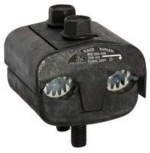
I have used Ilsco Kup-L-Taps on live conductors, but never on 480v.

Yes, it's dangerous in my opinion because of increased arcing energy.
 
Questions I would ask:

First and foremost why is it necessary to do this work energized?

What is the available fault current at this disconnect?

What kind of PPE is going to be utilized?

Is your employer using NFPA 70E as a guideline for electrical safety?

If your supervision can’t competently answer these questions I think you know the answer.

Edit: I see your profile says you are an estimator. Schedule a shutdown. Your men and your insurance company will thank you.
 
Last edited:
I agree with the "shut it off" comments. There is no reason to not shut it off.
 
Being asked to do LINE side tap on a 100A disconnect fed from a 100A 480v breaker.
Can/should this be done LIVE or should the 100a breaker just be turned off?
I would ask them if they would be willing to take a chance on having power off for an extended amount of time due to an accidental short circuit (arc blast) that could destroy the equipment ….not to mention severely burn or kill you. A planned shut down will ensure that you will have them back up and running in a timely manner. Not worth taking a chance on it. If something goes wrong you don’t get a do over!
 
Per NFPA 70E, there are only three conditions where energized work is permitted:

1. Greater Hazard
2. Infeasibility
3. Less than 50 V

I'm guessing this situation doesn't meet any of those.
There are many things I did 40 years ago that I would never even consider doing now (or ask anyone else to do).
 
Per NFPA 70E, there are only three conditions where energized work is permitted:

1. Greater Hazard
2. Infeasibility
3. Less than 50 V

I'm guessing this situation doesn't meet any of those.
There are many things I did 40 years ago that I would never even consider doing now (or ask anyone else to do).
Yep.
People will often try to push the 'infeasible' exception, but it is for those rare situations where energizing is not physically possible such as with a PV array.

Economically impractical is not a valid reason. In my opinion, if the source is not a UPS the system can tolerate an outage, because I know of no utility service that is guaranteed and there is always a delay before generators start.
 
Last edited:
Per NFPA 70E, there are only three conditions where energized work is permitted:

1. Greater Hazard
2. Infeasibility
3. Less than 50 V

I'm guessing this situation doesn't meet any of those.
There are many things I did 40 years ago that I would never even consider doing now (or ask anyone else to do).
Thank you
 
Just for the mental exercise, just how would this be done without interrupting the circuit anyway? Maybe skin the insulation off and slip a split bolt with a tap conductor and then insulate? Maybe rig a fused jumper from the line side to wherever the load conductor goes and then slip the tap conductor in the bottom of the breaker along with the load conductor (if allowed)?
 
They're referring to the tap conductors you're adding, not the line being tapped.

They don't want current flowing through the device until it has been tightened.
The way I read it, it applies to all of the conductors and would require that you eliminate the current on the supply conductor before making the connection. There is nothing to suggest that it applies only to the tap conductor and not the run conductor.
 
The way I read it, it applies to all of the conductors and would require that you eliminate the current on the supply conductor before making the connection. There is nothing to suggest that it applies only to the tap conductor and not the run conductor.
Why would they specify load (i.e., current) rather than voltage? They don't say to de-energize.

What difference would it make whether there is current on the through conductor?
 
Status
Not open for further replies.
Top