Looking for a logger.

If it doesn't have to be a portable instrument with leads, check out eGauge. They make a core model and a pro model.enough no volatile storage for a year of data, has a local web server or you can access via an Internet portal. Can measure or calculate just about any value having to do with power or energy, and can capture waveforms for a brief period. The pro has 64 channels.
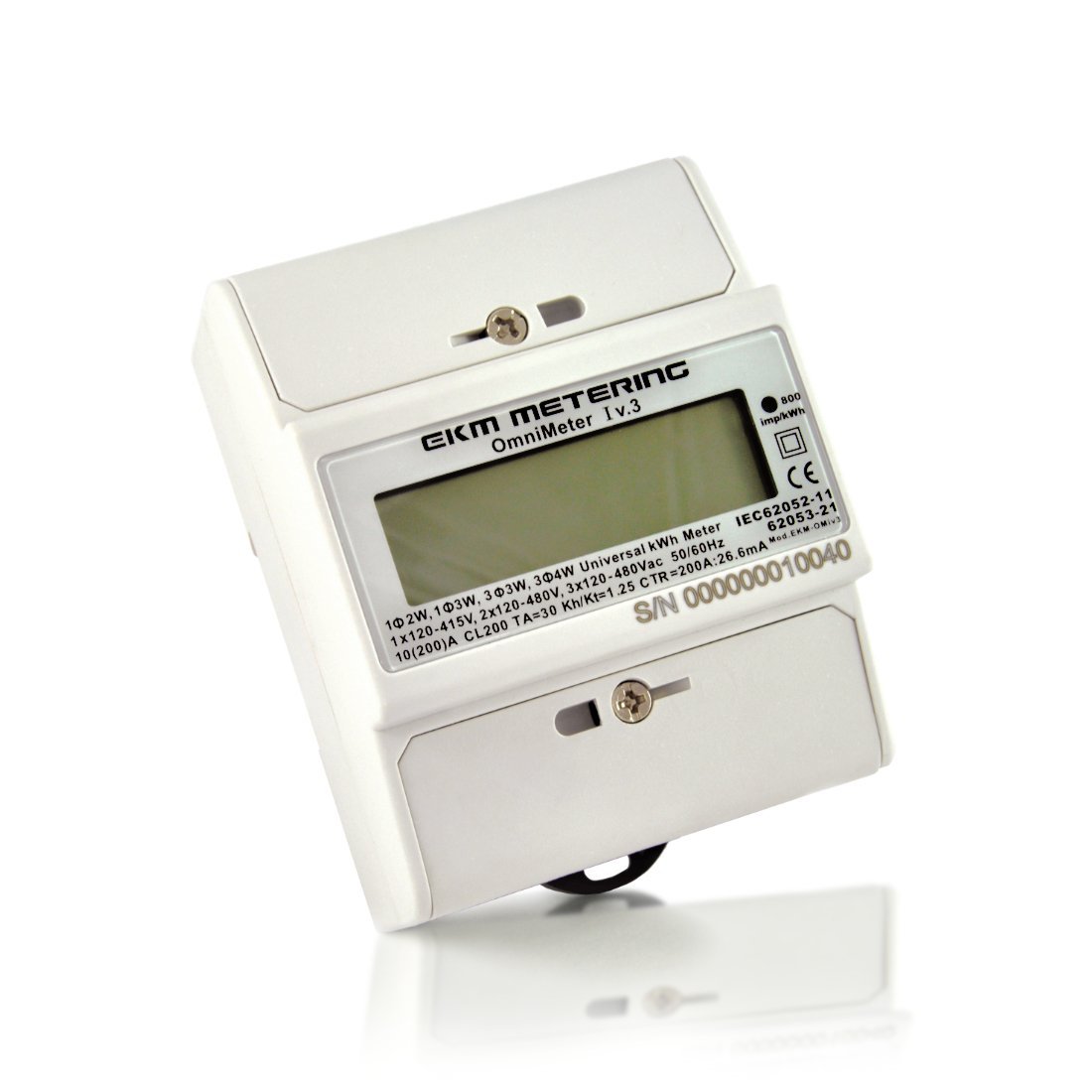
Those look cool, kind of similar to the ekm meters that I mentioned earlier.
 
Emporia isn't a bad system. I have seen them a couple of times.

I like Power Monitor Inc. Their white papers and set up help is nice. It is a tad more complicated than just simple install, leave, and collect data.
 
Well i got that 435. I dont have it yet but its on the way. Paid about $2300 with tax delivery etc. seems like a good deal based on what i see them for on ebay. Should do everything i need and more. I still think the EKM omnimeter is probably the best deal if you dont need any PQ capability and just max mins and demand. I do have one of those set up at a client, and it will probably just live there
I have another set up i want to incorporate into an old amprobe logger case i have to make it more field use friendly..

 
I used eGauge on a project last year. Tons of issues. Had to send one back it was not responding. There are too many different CTs for each module. Not a fan from personal experience. Made me and my guys look really bad.
 
It's been a while since I used my Fluke 43B but from what I remember it is a line disturbance analyzer used for transients and fast response. Different from a data logger for measuring slow current and voltage changes as for panel load studies [Correct me if I am wrong.] The 43B can be used as a hand held oscilloscope to spot transients as well as logging data over time.
 
It's been a while since I used my Fluke 43B but from what I remember it is a line disturbance analyzer used for transients and fast response. Different from a data logger for measuring slow current and voltage changes as for panel load studies [Correct me if I am wrong.] The 43B can be used as a hand held oscilloscope to spot transients as well as logging data over time.
I think it would depend on how you set it up but I’m sure there are better and easier.

FWIW, I’ve gotten mine out and was going to log some operational data of a malfunctioning rice cooker. I’m having to go back to a Windows 98 laptop.
 
I run Emporia View's, one in my own home to get familiar with it, and one commercially, because it was the only 3Ø option on the market when I needed it to watch a friends restaurant. I used it to help determine true load over a period of time to see if we could add an additional larger load to that panel. On another commercial project, I run a Sense device, that I have moved around several houses and commercial buildings that are 1Ø. The Sense is by far the superior measuring device, when compared to the Emporia Vue. The Sense shows PQ anomalies and I don;t think, or can't figure out if the Vue does. The Vue also mislabels measurements types and gives no indication of if Wattage is per phase, or averaged. I've been round and round wit their offshore "engineers." However, either device only works if wifi is up and running; this has not been a major issue, but has been a nuisance at times. Professionally, spend the $2k +++, if you need accountable data. But for the cost, go buy a Vue or Sense and use it on your own home to learn it. I have an 800 Amp TED set up in a box that will never get used. I'm sure it is good, and may be better than the other options mentioned. I ended up not proceeding with that project, and didn't;t feel like gettin ethernet to it in the remote location.
 
I run Emporia View
I run several Vue units, both Gen 2 and Gen 3.

As you note they have no local storage, so you must have reliable WiFi.
And the online graphing is all but useless: you have request data and then get an email with a CSV file.
You can easily put on different CTs (and scale them yourself).
Rogowski coil option with complicated cabling, but OK.
Best for one time setup, not very portable.
And totally dependent on Emporia staying in business and still offering free cloud services.


What I'd like to have is is a unit meeting all these specifications:
  1. Battery powered device, but also able to run via USB-C. Compatible with NiMh
  2. Minimum 100,000 points captured
  3. Three CT inputs with a scaling factor built in for at least 100 200 400 600 and 1200 amps
  4. Three Voltage inputs.
  5. Internal power and wiring so use of Rogowski coils is easy (even if a battery killer, see #1 above)
  6. No proprietary software, just bluetooth or USB storage so just download a CSV file. No lock in.
  7. Ethernet/WiFi option.

The REED R5003 comes close but falls down on very poor battery life, proprietary software, no RW coil option, no support above 200A, proprietary power cord (no USB option), only two inputs.
 
The Vue devices are based on the ESP-32 microcontroller. I believe that people have 'reflashed' them to talk locally with open source systems such as 'Home Assistant'. Might be a fun platform to hack to achieve what you want. Ya know, in your copious free time :) :)
 
I was looking for a logger as well.
My research ended with
Shelly pro 3EM . 3 phase 120A. (They also have 400 amp CTs available)
@ 118$ on Amazon

I am able to download .csv file with max amp per phase in 1 min intervals. Much more other data too.
It stores up to 3 months data without internet connection.
It has live data thru app as well, remote access thru internet. And it actually works - No bugs or freezes.
I am unable to figure out time and date of the events but somebody smarter would be able to
 
my fluke 289 sounds like it's in your price range and will do the simple single-phase logging that you're looking for. it does a pretty good job of logging whatever input regular intervals you tell it to log, as well as logging any ±3% variance as an 'event'. the software comes with pre-made forms for logging on it's software CD. i got a CT system to go with it, but it runs on mV-ampere conversions. not that difficult to chart and read, once you're used to it. i can't remember the nomenclature, but can look at shop if you're interested.

add to edit: CT unit is a i410.
 
Micro-review:

I found the Reed R5003 to be convenient, as an all in one unit compared to tangle of wires involved in even single channel monitoring with an Emporia.
However it cuts out below 7A making a very gappy ugly graph for the circuits I measured.
No CT clamps are available to extend the range above 200A.
No Rogowski coils are available.
The device takes NiMh rechargeable batteries just fine, but the low battery indicator does NOT work properly then.
The design and software are dated.

A proprietary Windows only binary is required to read the data THOUGH it's just a serial interface.
You can probably write your own for Linux, Mac or Android.

 
View attachment 2582200
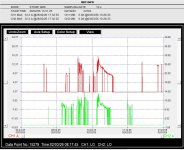
Example R5003 data capture (Single family home, 200A main service, spring, solar and EV on the property).
For a 200A single-family with solar and an EV, just make sure you’re logging the main service rating, total demand load, PV backfeed breaker size, and EV charger load. Spring is a good time to capture data since peak HVAC loads are usually lower, so it gives a realistic baseline.
 
For a 200A single-family with solar and an EV, just make sure you’re logging the main service rating, total demand load, PV backfeed breaker size, and EV charger load. Spring is a good time to capture data since peak HVAC loads are usually lower, so it gives a realistic baseline.
The nice thing about the Reed R5003 is we just clipped it to the SE conductors at the freaking weather-head, capturing most of what's important.
The thing said it was waterproof....

(If the numbers were even close, I could follow up with an Emporia measurement clipped to the backfeed / charger / main load, it would just take longer).
 
Top