
See the one line below.
The 75A elevator fuse coordinates with the 150A XT4N breaker and the 1200A A4BQ fuse. However, the 150A XT4N and the 500A XT5N breakers do not coordinate with the 1200A A4BQ fuse.
Does this comply with 620.62?
Based on the code language, it appears to comply. However, if a fault occurs on the load side of the 500A XT5N breaker, both elevators may lose power.
My question is: Do the 150A and 500A breakers need to coordinate with the upstream 1200A fuse?
Where more than one driving machine disconnecting means is supplied by a single feeder, the overcurrent protective devices in each disconnecting means shall be selectively coordinated with any other supply side overcurrent protective devices.
Selective coordination shall be selected by a licensed professional engineer or other qualified person engaged primarily in the design, installation, or maintenance of electrical systems. The selection shall be documented and made available to those authorized to design, install, inspect, maintain, and operate the system.
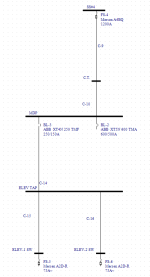
The 75A elevator fuse coordinates with the 150A XT4N breaker and the 1200A A4BQ fuse. However, the 150A XT4N and the 500A XT5N breakers do not coordinate with the 1200A A4BQ fuse.
Does this comply with 620.62?
Based on the code language, it appears to comply. However, if a fault occurs on the load side of the 500A XT5N breaker, both elevators may lose power.
My question is: Do the 150A and 500A breakers need to coordinate with the upstream 1200A fuse?
620.62 Selective Coordination
Where more than one driving machine disconnecting means is supplied by a single feeder, the overcurrent protective devices in each disconnecting means shall be selectively coordinated with any other supply side overcurrent protective devices.
Selective coordination shall be selected by a licensed professional engineer or other qualified person engaged primarily in the design, installation, or maintenance of electrical systems. The selection shall be documented and made available to those authorized to design, install, inspect, maintain, and operate the system.
