#4 ser in a conduit

olly

Senior Member
Location
Berthoud, Colorado
Occupation
Master Electrician
I have to pipe across a garage and then enter an attic, will #4 SER cable fit in a 1" conduit by code? I believe #4 SER is 3-#4's with a bare #4 so 4 #4's total plus insulation I hate to have to set a j box, splice than switch to SER if I were to use THHN in the conduit. The conduit will have 2 90's plus a kick. Thank you in advance
 
You have to use the diameter of the SER to find the equivalent single conductor size. You cannot just use 3-#4's and the table fill value for 1". The fill for a single conductor is 53%. So if your SER is equivalent to say a 750 kcmil single conductor then you use the 750 value when searching the table. For example if your SER diameter equals 1-750 kcmil and you were using EMT the 1-750 kcmil conductor would require a 1½" raceway from Table C1. Otherwise you'll need to do the long hand calculation with 53% fill.
 
I have to pipe across a garage and then enter an attic, will #4 SER cable fit in a 1" conduit by code? I believe #4 SER is 3-#4's with a bare #4 so 4 #4's total plus insulation I hate to have to set a j box, splice than switch to SER if I were to use THHN in the conduit. The conduit will have 2 90's plus a kick. Thank you in advance
Remember you have to treat a cable as a single conductor with 53% fill. Also pretty sure #4 SER has a #6 EGC. Based on a quick and dirty calc its super close, depending on who spec you use for cable OD. You could strip it and with individual conductors you will be well within fill.

(didnt notice Rob had posted, what he said....)
 
will #4 SER cable fit in a 1" conduit by code?
Yes,
According to Southwire SPEC 10041 Table-1, Stock# 131003◊, #4,4,4,6 = 0.757" Aprox.OD
CONSTRUCTION:
1. Conductor: Class B compact stranded bare aluminum Alumaflex

* Compact conductor diameters in NEC Chapter 9, Table 5A, for #350 XHHW = 0.760. Closest match to 0.757"
* NEC Appendix C, Table C.1(A)* — Electrical Metallic Tubing (EMT), #350 XHHW fits 1" EMT
* Where this table is used in conjunction with Tables C.1 through C.13, the conductors installed must be of the compact type
 
Yes,
According to Southwire SPEC 10041 Table-1, Stock# 131003◊, #4,4,4,6 = 0.757" Aprox.OD
CONSTRUCTION:
1. Conductor: Class B compact stranded bare aluminum Alumaflex

* Compact conductor diameters in NEC Chapter 9, Table 5A, for #350 XHHW = 0.760. Closest match to 0.757"
* NEC Appendix C, Table C.1(A)* — Electrical Metallic Tubing (EMT), #350 XHHW fits 1" EMT
* Where this table is used in conjunction with Tables C.1 through C.13, the conductors installed must be of the compact type
Good luck attempting to pull #4 SER thru 1" conduit especially if it has a 90 degree bend , offset or kicks. Only time that I sleeved SER was from the top.of a meter can to 10' off the ground ( my old inspector said to only go 8' ).
 
Sleeves do not require a fill calculation. FWIW the title of this thread says conduit.
Yes sleeves do not require a fill calculation, but with elbows in the run you may still want to follow such calculation or it may be very difficult of a pull through it or even damage the cable if excessive force is needed to pull it.
 
A snowy day here in Tulsa, I will show how to do the math for this cable or any cable.
It will get kinda long, sorry.

The NEC don't give a lot of assistance here on how to do the calculation, however does provide rules which will yield an answer. Then some common sense should be applied as not to possible damage to the cable from frustration of the installation. What be worse is a non code compliant installation or AHJ red tag.
I have to pipe across a garage and then enter an attic, will #4 SER cable fit in a 1" conduit by code? I believe #4 SER is 3-#4's with a bare #4 so 4 #4's total plus insulation I hate to have to set a j box, splice than switch to SER if I were to use THHN in the conduit. The conduit will have 2 90's plus a kick. Thank you in advance
So let's start here with the OP.
What we know:
#4 SER cable ( 4-4-4-6)
J- box in Attic
Straight run section with 2-90's and a kick

What one (I) would assume.
Based on the kick, I would say EMT.
Based on 90's,kick and j box it may or may not be a sleeve. Most likely not a sleeve so a calculation should be done to be compliant as well not damage the cable during installation if in a sleeve.

The OP question is 1" compliant.
So I would ask 1" what, assume EMT.
This is where we head to chapter 9 tables.
Table 1, number of conductors or cables. *Read entire heading
1= 53% of cross sectional area.
Then look at note 9 for tables. Attention to the words based on diameter. Again read the entire note.

Still no clear way of calculation. The clue is the tables for percentage of fill. There in mms² or in². So the note says use diameter of the cable and the fill is in in². At this time I will just say take note of table 2 for later in the discussion as it related to article 338 (SE cable).

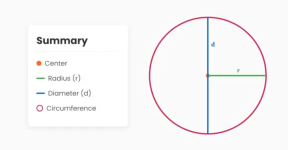
This means we must take diameter and turn it into in² or area in square inches. Since we're electricians we pretty familiar with a circle the whole 360 thing. If not here is a reference.1000005225.png
As you can see the diameter is the measurement straight across the circle. This means we can simple measure this or use the mfg OD (outside diameter) of the cable. The mfg for one of these cables is .757 inches. Remember we're calculating in inches. So if we were to measure this cable as noted in note 9 it measures 3/4" that would be .75 (3 divided by 4= .75) however we're going to use mfg listed OD.
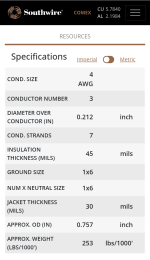
1000005232.png
Now we need to change this OD to Area in square inches or d ( diameter) to in² (area square inches. There is couple different ways to do this, π r² or d²*.7854.
For the first one π r². It pie x.radius² ( radius x radius). Radius is half the diameter as shown in the circle picture. The d listing for the cable is .757 divide that by 2 or .3875 and times it by its self or square the number.(²).
Pie(π) is 3.141592653589793 or just use 3.141592. now you can use you calculator and this is what it looks like. 1000005234.png
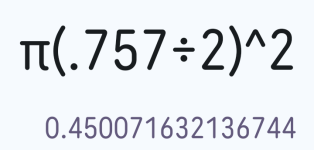
So you area in Square inches is .45 with this can go the tables for your raceway choice look at 1-wire 53% to size. Since we're using EMT arrival 358. It would be 1" at .458 allowed. A short cut I like is take that .45 and dives it be the % or .53. 1000005236.png
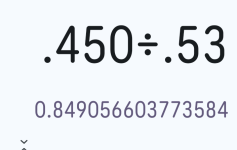
This give you the area for minium size of race way at 100% in in². Which is .864 for a 1" emt.
Now for the second way, d²*.7854. diameter squares or d x d x .7854Screenshot_20260124-130110.Calculator~2.png
You may ask where did the .7854 come from it's π/4.

Now you can size the minium raceway required for any cable. If your using a NM flat cable as noted 9 says measure the diameter of the fastest part and use that for d. You can also use this for multiple cables of the same or different sizes.

For fun fact now about the table 2 noted at beginning. In 338 it states five time diameter for bending radius inner edge for a minimum of .757*5= 3.78. 1" in table 2 is 5.75 center line for one shot. Just a fun way of seeing how the code articles work together.

So choosing the size depends on what is compliant and how easy you want the job to be. I would never us 1" for that job even though you can. Hope this helps others if so I would put the 2 formulas in you book on chapter 9.

Please some one check my math. Thanks.

 
For a single cable in a conduit, you can compare the cable diameter and conduit inner diameter and then just square it. For a 0.757" diameter cable in 1" EMT with nominal inner diameter 1.049", the diameter ratio is 0.757 / 1.049 = 72.16%.

Now area varies as the square of the diameter (or radius, or perimeter, or any other linear measure of a circle), so we square that to get an area ratio of 52.1%. Which is less than the 53% allowed by Chapter 9 Table 1, so it would be allowed.

This works as long as the inner (cable) and outer (conduit) regions have the same type of cross-sectional area, a circle here. Any constants you need to go from square diameter to area (pi/4 in this case) will cancel when you take the ratio of areas.

For multiple wires/cables, you can just add up the square diameters and then divide by the conduit square diameter.

Cheers, Wayne
 
I hate to have to set a j box, splice than switch to SER
I agree I hate adding splices, I had a similar situation recently seemed impossible and upon further investigation by my helper was able to weasel into the attic, and we got conduit ran the whole way went pretty quick.
 
Top