ELA,
The NFPA may never define permanent in any of their documents. In referring to a standard that does not pussy-foot around try the NASA technical standard 4003 that defines the five classifications of bonding and clearly states detailed requirements for permanent and semi-permanent 'bonding' methods in 5.1 Bonding Methods.
"Equipment and structure with metal-to-metal joints that are joined by processes that transform the mated surfaces into one piece of metal, such as welding or brazing, are considered permanent and inherently bonded.
Semi-permanent joints are held together by screws, rivets, clamps, etc. Semi-permanent mating surfaces shall be cleaned of all insulating material before connection to provide a good electrical bond. Clamping pressure across a joint shall be adequate to assure a secure mechanical connection. Fasteners or their threads shall not be used as primary bonding paths. A good dc connection will not exeed the 2.5-milliohm limit for Class "R" bonds."
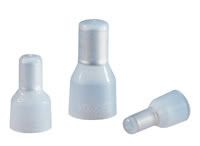
Well, Std-4003 doesn't say anything about wirenuts relative to permanent bonding either and neither does the Ideal Full Line Catalog. Ideal does refer to the 410's as "Designed for making fast, 'permanent', pressure-type connections" that are UL listed to 486C and CSA certified to C22.2 #188...if that helps. There does not appear to be other references to "permanent" for any other terminations including wirenuts in Ideals catalog.