converting three phase machine to single phase

Merry Christmas
Status
Not open for further replies.

electrofelon

Senior Member
Location
Cherry Valley NY, Seattle, WA
Occupation
Electrician
Saw something very odd the other day. Went to hook up two machines (something for biotech stuff, no idea what they do - I heard "magnet, isotope, inert gas...."). I think they were European in origin. Didnt have any documentation but the label said three phase, 230V +/- 10%. The machines were used and I did have some pictures of the previous installation. The way they were hooked up previously the three phases were all connected common to a single line. The machine takes a neutral as well. I assume either someone didnt have three phase and/or didnt know what they were doing. I assume all the machines components utilize line to neutral and there are no 220 or three phase loads since as far as I know the machines worked fine at their previous home. The machine is quite complicated and powers several other remote components so it was completely impractical for me to try and reverse engineer the thing. I had to make a decision about how to connect them. What would you have done? I ended up connecting them to a single phase, as they were previously. My thinking was there was a chance something had been modified or changed to be connected like that and that connecting it with separate phases was more likely to fry something due due to introducing 208 volts between conductors instead of 0.
 
Saw something very odd the other day. Went to hook up two machines (something for biotech stuff, no idea what they do - I heard "magnet, isotope, inert gas...."). I think they were European in origin. Didnt have any documentation but the label said three phase, 230V +/- 10%. The machines were used and I did have some pictures of the previous installation. The way they were hooked up previously the three phases were all connected common to a single line. The machine takes a neutral as well. I assume either someone didnt have three phase and/or didnt know what they were doing. I assume all the machines components utilize line to neutral and there are no 220 or three phase loads since as far as I know the machines worked fine at their previous home. The machine is quite complicated and powers several other remote components so it was completely impractical for me to try and reverse engineer the thing. I had to make a decision about how to connect them. What would you have done? I ended up connecting them to a single phase, as they were previously. My thinking was there was a chance something had been modified or changed to be connected like that and that connecting it with separate phases was more likely to fry something due due to introducing 208 volts between conductors instead of 0.
I would have hit Enter a few times before I posted. :p

Other than that I would have done things the same way. Always go with your gut.
 
I'd probably have done the same thing. Reaching back into the deep memories, lots of 60's and 70's era larger computers (I'm thinking of DEC and IBM) were supplied by 3 phase 4 wire, but other than the 3-phase motors in some disk drives, everything was internally connected line-neutral.
 
Saw something very odd the other day. Went to hook up two machines (something for biotech stuff, no idea what they do - I heard "magnet, isotope, inert gas...."). I think they were European in origin. Didnt have any documentation but the label said three phase, 230V +/- 10%. The machines were used and I did have some pictures of the previous installation. The way they were hooked up previously the three phases were all connected common to a single line. The machine takes a neutral as well. I assume either someone didnt have three phase and/or didnt know what they were doing. I assume all the machines components utilize line to neutral and there are no 220 or three phase loads since as far as I know the machines worked fine at their previous home. The machine is quite complicated and powers several other remote components so it was completely impractical for me to try and reverse engineer the thing. I had to make a decision about how to connect them. What would you have done? I ended up connecting them to a single phase, as they were previously. My thinking was there was a chance something had been modified or changed to be connected like that and that connecting it with separate phases was more likely to fry something due due to introducing 208 volts between conductors instead of 0.

Three phase, 230V +/- 10% is not common in EuropeI. Three phase is nominally 400V. So maybe not of European origin. Japanese maybe?
 
Saw something very odd the other day. Went to hook up two machines (something for biotech stuff, no idea what they do - I heard "magnet, isotope, inert gas...."). I think they were European in origin. Didnt have any documentation but the label said three phase, 230V +/- 10%. The machines were used and I did have some pictures of the previous installation.

What would you have done?


I would not have hooked up the equipment. To many unanswered questions.
 
'biotech stuff'

'assume'

I'd not assume anything. Would have insist on more documentation to be able to make an intelligent decision or get a written statement you are not liable for equipment damage.

'Biotech' infers sufficient budget to provide a single phase to 3 phase VFD to hookup per nameplate. Does the nameplate give any frequency information?

Sounds like you hooked it up as described and everything ran OK?
 
Three phase, 230V +/- 10% is not common in EuropeI. Three phase is nominally 400V. So maybe not of European origin. Japanese maybe?

'biotech stuff'

'assume'

I'd not assume anything. Would have insist on more documentation to be able to make an intelligent decision or get a written statement you are not liable for equipment damage.

'Biotech' infers sufficient budget to provide a single phase to 3 phase VFD to hookup per nameplate. Does the nameplate give any frequency information?

Sounds like you hooked it up as described and everything ran OK?

Good point about the voltage. Maybe it was made in europe for the american market, or maybe its not european at all.....

It does state that it takes 60hz

I dont think they have it hooked up and are ready to go yet. It may be a few weeks. There is a lot of setup. Its a tough situation: even if you call the manufacturer and they say "yes just connect to normal three phase", you dont know if it was hooked up the odd way for some reason and somebody changed stuff around to make it work that way....unless maybe the company says "yes you can do it the odd way its pretty common people do it all the time" or something...It was running before on single phase so Im inclined to just leave it like that.
 
The machine takes a neutral as as far as I know the machines worked fine at their previous home.

It was running before on single phase so Im inclined to just leave it like that.

How would you know if it was working fine since you don't even know what it does?

Just because the last people had it hooked up single phase doesn't mean it actually worked
( a picture isn't always worth a thousand words ).

I had a machine that they said would work on single phase a few years ago. Heck it still had three phase cooling fans so I knew they wouldn't work on single phase.

If I have seen something with my own eyes I tend to trust it but I never trust what people tell me. Some people will lie to you and others are just full of it.
 
I'd not assume anything. Would have insist on more documentation to be able to make an intelligent decision or get a written statement you are not liable for equipment damage.

"Liable for equipment damage". That's what bothers me. Since the equipment is used it may not be in working condition at the present.

There has to be someone , somewhere, that knows enough about this equipment to test and repair it. They would be the one's to know if it's possible to run the equipment on single phase.
 
How would you know if it was working fine since you don't even know what it does?

Just because the last people had it hooked up single phase doesn't mean it actually worked
( a picture isn't always worth a thousand words ).

I had a machine that they said would work on single phase a few years ago. Heck it still had three phase cooling fans so I knew they wouldn't work on single phase.

If I have seen something with my own eyes I tend to trust it but I never trust what people tell me. Some people will lie to you and others are just full of it.

Its just not that type of situation. This thing probably cost tens of thousands of dollars, was probably run by a phd scientist. I think he came with the machine, or is at least training them on it. This isnt a welder off craigslist.
 
Saw something very odd the other day. Went to hook up two machines (something for biotech stuff, no idea what they do - I heard "magnet, isotope, inert gas...."). I think they were European in origin. Didnt have any documentation but the label said three phase, 230V +/- 10%. The machines were used and I did have some pictures of the previous installation. The way they were hooked up previously the three phases were all connected common to a single line. The machine takes a neutral as well. I assume either someone didnt have three phase and/or didnt know what they were doing. I assume all the machines components utilize line to neutral and there are no 220 or three phase loads since as far as I know the machines worked fine at their previous home. The machine is quite complicated and powers several other remote components so it was completely impractical for me to try and reverse engineer the thing. I had to make a decision about how to connect them. What would you have done? I ended up connecting them to a single phase, as they were previously. My thinking was there was a chance something had been modified or changed to be connected like that and that connecting it with separate phases was more likely to fry something due due to introducing 208 volts between conductors instead of 0.

Having waded through this thread makes me wonder what really makes a master electrician. I hope it
is not just pulling wires and connecting them with wire nuts. LOL

After analyzing your post (and others)—it became obvious that the three-phase motor has been
converted to function as ROTARY CONVERTER.

The motor is a dual-voltage 230V 3P/460V 3P. The 3 phase wires that you noticed—that were connected together is telling you that the connections of the internal winding were altered.

It is also possible that this is the way it's been wired before the equipment was relocated.

It is not something that requires a PhD degree to figure how to convert a three-phase motor to function as a “replacement” for a single-phase motor.

Perhaps it is best to think that a three-phase motor acts like transformer. The difference is, the core is rotating (dynamic) while a generic transformer-- the core is static.

There are several advantages of making a motor serve as converter. The most notable is: improving the efficiency factor. You can also manipulate the three-phase output to feed a VFD.
It is usually done by converting the output to DC and even modifying the frequency by using crystal oscillators—during the inverting process.


The fear of making a BOO-BOO and therefore frying something is borne out of sheer misguidance or to be harsh – ignorance. (sorry)

No one seems to have displayed the experience – judging from the seemingly helpful comments of other members. This conversion is common in some industrial environments.

The following sites will give you some ideas on how this conversion can be achieved:

http://www.northamericaphaseconvert.../NAPCES-Online-Rotary-Installation-Manual.pdf

and this:

https://www.practicalmachinist.com/...8846953-rotary-phase-converter-set-up-rpc.jpg


And also this:


http://machineryequipmentonline.com...rity-between-induction-motor-and-transformer/


I have to agree that not all electricians have worked in electric motor mfg and repairing. . . it nevertheless is a part of being an electrician.

This is common in industrial environment-- and thus enable the tradesman to acquire useful knowledge in gaining the skill to handle this type of problem.

Now, if you ask me if connecting this to a single phase source is OK. . . well. . . the ball is on your side in making this decision.


Since you are absolutely sure that you are connecting it the same way it used to be, there would be no quibble. . . would it not?


Here comes the lynching mob. :)
 
Having waded through this thread makes me wonder what really makes a master electrician. I hope it
is not just pulling wires and connecting them with wire nuts. LOL

After analyzing your post (and others)—it became obvious that the three-phase motor has been
converted to function as ROTARY CONVERTER.

The motor is a dual-voltage 230V 3P/460V 3P. The 3 phase wires that you noticed—that were connected together is telling you that the connections of the internal winding were altered.

It is also possible that this is the way it's been wired before the equipment was relocated.

It is not something that requires a PhD degree to figure how to convert a three-phase motor to function as a “replacement” for a single-phase motor.

Perhaps it is best to think that a three-phase motor acts like transformer. The difference is, the core is rotating (dynamic) while a generic transformer-- the core is static.

There are several advantages of making a motor serve as converter. The most notable is: improving the efficiency factor. You can also manipulate the three-phase output to feed a VFD.
It is usually done by converting the output to DC and even modifying the frequency by using crystal oscillators—during the inverting process.


The fear of making a BOO-BOO and therefore frying something is borne out of sheer misguidance or to be harsh – ignorance. (sorry)

No one seems to have displayed the experience – judging from the seemingly helpful comments of other members. This conversion is common in some industrial environments.

The following sites will give you some ideas on how this conversion can be achieved:

http://www.northamericaphaseconvert.../NAPCES-Online-Rotary-Installation-Manual.pdf

and this:

https://www.practicalmachinist.com/...8846953-rotary-phase-converter-set-up-rpc.jpg


And also this:


http://machineryequipmentonline.com...rity-between-induction-motor-and-transformer/


I have to agree that not all electricians have worked in electric motor mfg and repairing. . . it nevertheless is a part of being an electrician.

This is common in industrial environment-- and thus enable the tradesman to acquire useful knowledge in gaining the skill to handle this type of problem.

Now, if you ask me if connecting this to a single phase source is OK. . . well. . . the ball is on your side in making this decision.

There are no motors on the machine (at least not that I could see. If there are they would be very small single phase). And thanks for the glowing opinion of my qualifications :roll:


Since you are absolutely sure that you are connecting it the same way it used to be, there would be no quibble. . . would it not?

Correct. That was my thinking
 
Its just not that type of situation. This thing probably cost tens of thousands of dollars, was probably run by a phd scientist. I think he came with the machine, or is at least training them on it. This isnt a welder off craigslist.
Did you ask the PHD that came with it how it should be connected?
 
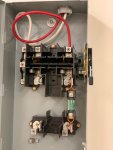
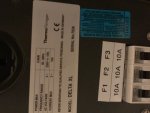
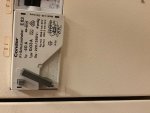
Ok, the saga continues. Got a call today from the guy who is going to be running these machines. He said those machines need 240V single phase. After some further discussion, he claims one of the supply conductors need to be a neutral. I really dont see how that is possible, unless the machines were modified. I am attaching a few pictures, sorry they arent the best. Recall when I looked at it, it seemed that it had three phases and took a neutral, and that all loads were single phase line to neutral. Is there anything I could be missing or assuming wrong?
 

Attachments

  • IMG_0063.jpg
    IMG_0063.jpg
    72.2 KB · Views: 1
  • IMG_0061.jpg
    IMG_0061.jpg
    67.1 KB · Views: 1
  • IMG_0059.jpg
    IMG_0059.jpg
    87.8 KB · Views: 1
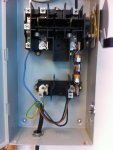
A few more pics of the previous installation just came in. Note the disco is labelled 240 volts phase to neutral, whether that was correct or not I cant be certain.
 

Attachments

  • AAA.jpg
    AAA.jpg
    139.5 KB · Views: 1
  • AAB.jpg
    AAB.jpg
    206.2 KB · Views: 1
Ok maybe I have it figured out. If its european, they typically have 230/400, so it makes sense if it needs 230 line to neutral. That all makes sense other than the one data plate. I guess it doesnt say "phase", its a weird call out, they must mean "3 lines" or something.
 
Ok maybe I have it figured out. If its european, they typically have 230/400, so it makes sense if it needs 230 line to neutral. That all makes sense other than the one data plate. I guess it doesnt say "phase", its a weird call out, they must mean "3 lines" or something.
I was thinking 230/400 volt was what it was designed around. May not actually be any 400 volt loads in your equipment, so you can either tie all three input leads together on same phase to neutral or connect them to three phases and the neutral and it works either way. Unless neutral needs to have a ground reference for some reason, connect it line to line on typical North American 120/240 single phase system and it still will likely work.
 
Ok maybe I have it figured out. If its european, they typically have 230/400, so it makes sense if it needs 230 line to neutral. That all makes sense other than the one data plate. I guess it doesnt say "phase", its a weird call out, they must mean "3 lines" or something.


It certainly could be European.

If it is European beware of wire color codes as they are not the same as ours. White is no longer a neutral but it used to be so it's important to know when something was wired.

Again, I would not hook this up without some written documentation on what power source it really needs.
 
Status
Not open for further replies.
Top