Contracts based on foreign currencies
To escape the mark's volatility, contracts were often tied to more stable foreign currencies, primarily the US dollar or the British pound. A debtor might be required to repay the mark equivalent of a specific amount of dollars on the day of payment.
Contracts based on stable commodities
Another common method was to write contracts based on the value of a stable commodity, such as:
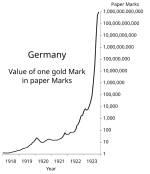
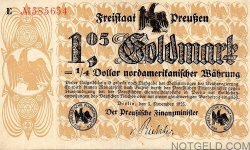
- Gold or silver: The price of gold was a common anchor for long-term agreements, like mortgages and bonds. For example, a contract might specify a repayment of a certain number of gold marks.
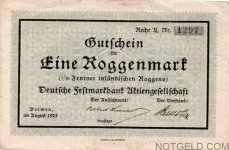
- Agricultural products: A novel currency called the "Roggenmark" (rye mark) was introduced, which was backed by the value of rye. Contracts could be written to promise the value of a specific quantity of rye, providing a more stable basis for trade than the plummeting paper mark.
Floating-price clauses
In shorter-term agreements, contracts included clauses that allowed for frequent price adjustments to keep up with inflation.
- Daily or hourly adjustments: As the inflation accelerated, workers were sometimes paid twice daily so they could shop at midday before their wages lost more value. While not technically a contract clause, this practice highlights the need for a mechanism to adjust to prices on a more frequent, often hourly or daily, basis.
- "Hot potato" effect: In commercial transactions, goods might be priced in a floating manner. In the later stages of hyperinflation, the value of goods often changed in the time it took to travel from the market to home, turning any paper money into a "hot potato" that people wanted to get rid of quickly.