Driving panel screws into wires

VirutalElectrician

Senior Member
Location
Mpls, MN
Occupation
Sparky - Trying to be retired
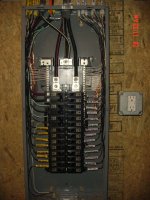
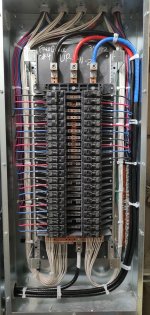
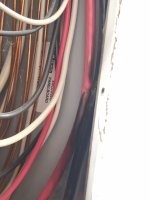
This panel design flaw has bothered me for decades.

We have to make sure our wires are in the middle of the studs, or we have to use nail plates, but right here in the panel, we can drive a screw right into the wires.

Even Leviton, who just put out their new panel about 10 years ago didn't even bother to address this issue.


Pictures stolen from a FB group.
1000024726.jpg1000024727.jpg
 
On inspections I would find that potential problem fairly often. Normally I could find a piece of construction material I could slip along the edge of the panel forcing the wires further back into the panel.
As often as I have seen it, I agree I'm surprised NEMA or whomever doesn't require the panel manufacturers to address the issue.
 
This panel design flaw has bothered me for decades.

We have to make sure our wires are in the middle of the studs, or we have to use nail plates, but right here in the panel, we can drive a screw right into the wires.

Even Leviton, who just put out their new panel about 10 years ago didn't even bother to address this issue.


Pictures stolen from a FB group.
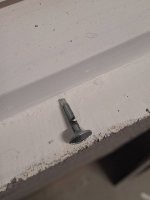
View attachment 2581654View attachment 2581655
I’ve seen it before. Might have even be guilty.
 
This exact problem here leaves my OCD in shreds standing and staring putting on the cover and back off until I realize there’s nothing there even though I know there is not.
 
Wire ties aren't a sure fire solution. Wires can still be positioned close to that screw. They also make trouble shooting and future work in a panel a pain in the ass.
The panel is at least 3 1/2" deep. With or without cable ties if a sparky can't keep the wires an inch away from the screw holes he's doing hack job.
 
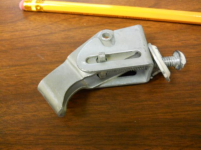
Yes, I'd MUCH rather have the old swing-out wings that clamp to the panel's front lip! Especially on large, commercial panels!
😒🤨
View attachment 2581656
Talk about scary memories :) It's difficult to recall how many times I had one of those critters grab a branch circuit and just as I tightened... POW!
 
Talk about scary memories :) It's difficult to recall how many times I had one of those critters grab a branch circuit and just as I tightened... POW!
I agree, I remember many of those panels back in the 80's. Half of the clips were broken or stripped. A terrible design which is why they're no longer used.
 
I never use ties, but my panels are always dressed neatly, to the point that they almost look empty.

There is no reason for the wires to be that near to the front of the panel.


DSC00852.JPG
 
I never use ties, but my panels are always dressed neatly, to the point that they almost look empty.
Nice work Larry, and this is kind of to the point I made earlier that there is no reason why the wires need to be close to the screw holes other than being sloppy and/or lazy. The one exception may be if you're using all stranded conductors but then the installer should spring for a bag of cable ties. IMG_20221011_111159568.jpg
 
Last edited:
Panels should have a little brackets on the side that stick off the wall 1//2” and can tuck the wires into and not worry about any of this.

Just like they do the small wireway portions on vertical switchgear/MCCS
I'm on your side. While I agree that good workmanship would tie those wires back, I can't account for the last guy who worked in the panel before me. I don't carry zipties with me when I open a panel just to take pictures. (Maybe I should, but sheesh.) Meanwhile we are now prohibited from having multiple service disconnects in an enclosure, even on single phase resi installations. I'm not sure why that was more of a priority than this, based on counting my personal witnessing of incidents of both kinds.
 
I'm in the camp of "better designed panels".

Sure if you're making up a new panel, you can be careful with your wire layout so it's not a problem. But let's be honest the code addresses specific concerns otherwise they would cut out 90% of the text and replace it with "All installations must practically safeguard persons and property from hazards arising from the use of electricity".

You could easily design them in such a way that either the screws are inherently incapable of coming in contact with the wires or design a built in wire retention system that holds them back. Even loops for zip ties like you see in residential structured media panels would be better. If nothing else they could sell it as a feature to set themselves apart from other brands.

Rob G
Seattle
 
Instead of a dedicated wireway being manufactured and installed, some spot welded screw hoop protection pockets would be just as effective and less expensive, and take up less wiring space. The hoops could also include a means to attach a tie wrap to train the internal wiring with.
 
Top