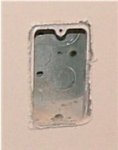
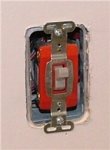
Installing devices on rough in

Status
Not open for further replies.
I don't think there is a code that would prevent this. However why would you want to expose your devices to drywall mud, plaster, paint and such.
Besides how can a competent drywall job occur. :happysad:
 
I havent tried it but had heard of it..
I went to a little biddy 6 plug wall rough. It was outside of my usual drive in miles but I thought if I put the devices in now, im already standing here and it passes inspection then my next trip it ll save me some time.

Sent from my SPH-D710BST using Tapatalk
 
The drywallers will smash them into the boxes, then install the drywall and use their router to cut the opening...I would not expect that there would be a usable device left after they finish.
 
I've done this where we used deep metal boxes and single gang rings. Shoved the device in the back of the box and placed tape over it. Still had to come back and fiddle , at least 25% of the devices got some damage. Never did that again.
 
I was not on any of these jobs but the company I work for has done some large apartment buildings. They prefabed a lot of things and yes the devices where installed before the drywall.

I have no idea how the drywall was installed after but as far as I know it worked for us and they would do it again.
 
I don't think there is a code that would prevent this. However why would you want to expose your devices to drywall mud, plaster, paint and such.
Besides how can a competent drywall job occur. :happysad:

I don't think there is a code preventing some one from doing it but 110.12(B) could be costly to the contractor and a possible rejection inspection at final. If I saw the roughin had trim devices prior to drywall certainly an inspection note of that would initiate a unusual type final inspection.
 
I was not on any of these jobs but the company I work for has done some large apartment buildings. They prefabed a lot of things and yes the devices where installed before the drywall.

I have no idea how the drywall was installed after but as far as I know it worked for us and they would do it again.

I have done a ton of this and it works great as long as the rough in team pays attention to what they are doing. If the boxes are not installed correctly you end up spending more time fixing crooked and or upside down devices than you save by prefabbing. There are several options available for device covers that are "roto zip resistant" that would go on during install.

Again this is only a net gain if the installers on the first go round actually care about their craft. Rework ends up costing more than it is worth.

For commercial work I recommend using an adjustable mud ring that can move in our out to flush up with the wall after mud and paint.

Prefabrication is the future of our industry.
 
On a rough in inspection in resi its not so easy to see if the grounds are made up and in cases with multiple devices , that there is a ground for each device. In commercial green screws sticking through the box usually satisfies the inspector.
It does seem time consuming to strip in a house only to go back and crawl across the floor again cause the plugs are horizontal 1 block off the bottom plate. Ugh.

Sent from my SPH-D710BST using Tapatalk
 
I guess it is.
When we had to start grounding switches, we would leave the hot in , ground long enough to wrap from one switch to the next. Didnt fly.
In a 4g its 10 grounds and a blue wirenut.

Sent from my SPH-D710BST using Tapatalk
 
have you ever.

1/2" rock use 5/8" mudring
5/8" rock use 3/4" mudring.


JAP>
 
have you ever.

1/2" rock use 5/8" mudring
5/8" rock use 3/4" mudring.

All the time as I feel that is the correct way.

I am sure you know this part, it is more for others. If you measure a ring you find a 1/2" ring is 1/2" overall so the raised section is less than that.

Going hunting for some pictures.
 
All the time as I feel that is the correct way.

I am sure you know this part, it is more for others. If you measure a ring you find a 1/2" ring is 1/2" overall so the raised section is less than that.

Going hunting for some pictures.

The sheetrock hits the 8/32's that hold the rings on, which is roughly 1/8", making the ring finish out more flush if they are 1/8" deeper than the rock.

JAP>
 
The sheetrock hits the 8/32's that hold the rings on, which is roughly 1/8", making the ring finish out more flush if they are 1/8" deeper than the rock.

JAP>

That is part of it not all of it, the other part of it is the thickness of the flat part of the ring.

Grab a ring and mesure it, you will see what I am taking about. :)
 
Status
Not open for further replies.
Top