

Joethemechanic
Senior Member
- Location
- Hazleton Pa
- Occupation
- Electro-Mechanical Technician. Industrial machinery
FWIW, I started with on an old flat nosed Chevy van,

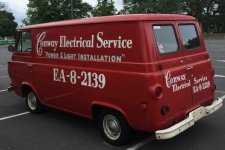
Almost, except this is the ford version

FWIW, I started with on an old flat nosed Chevy van,
Enough to cover 6 months of personal living expenses. That’s over and above what you need to get the business going.How much of a nest egg do you guys think is reasonable to save for before jumping ship? Would 10k be enough or should I shoot for 20k? I have 10k emergency fund and then I’m saving for a separate business starting fund that would be at least 10k as well.
Yeah that sounds more like what I am thinking as well. My wife works 24 hours a week (2 12 hour shifts) and can cover our mortgage by herself. I need to sit down and get our finances a little more down pat because we spend a lot on stuff we don’t need.Enough to cover 6 months of personal living expenses. That’s over and above what you need to get the business going.
Yeah I’ve seen his videos. He’s doing very well for his first year. He’s busting his hump doing residential which I would like to avoid.This kid on You Tube Jacob Palmer has some videos out. He is like 23 years old and just does residential and started his own business as soon as he got his license. Doing well, I guess.
Yeah you have to know your numbers well. That’s not the fun part but if you don’t you’ll lose.Most important also is to CHARGE ENOUGH and get the bills out or get paid ASAP. Stay away from GCs that jerk you around.
That's right.remember nowadays safety is watching everything hard
I remember decades ago getting a free new water heater at the lake house, because the plumber never sent a bill. After 12 months we stopped asking for it.Most important also is to CHARGE ENOUGH and get the bills out or get paid ASAP.
Yes, I have found it is most definitely worth it. It's not easy, and you will constantly need to learn a lot of stuff. When I started I had a few side jobs while working and a few big jobs lined up before I quit my previous career, and made enough to buy a used truck and trailer and more tools. My goal was to never go into debt, figuring if I didn't make it, I could close up and get a job again without much negative consequence. The biggest challenge for me has been hiring employees. It's a completely different story than being solo. I'm in Ohio as well.I am gearing and studying to go on my own as a solo commercial contractor. I know it’s a common discussion whether or not it makes sense for someone to stay an employee vs the stress and complexity of starting your own business. I would just like to know how possible it is to hit the ground running and how lucrative it can be. What is achievable take home pay for one man doing small commercial jobs a year? I’m in Ohio which is a very good market.
Wow that’s pretty uncanny. I also don’t want to go into debt for the same reasons.Yes, I have found it is most definitely worth it. It's not easy, and you will constantly need to learn a lot of stuff. When I started I had a few side jobs while working and a few big jobs lined up before I quit my previous career, and made enough to buy a used truck and trailer and more tools. My goal was to never go into debt, figuring if I didn't make it, I could close up and get a job again without much negative consequence. The biggest challenge for me has been hiring employees. It's a completely different story than being solo. I'm in Ohio as well.


I believe that. I've seen it where "Joe and Mary" see the numbers that private equity are making off of residential HVAC and try to go do it on their own. Good luck. LOLI believe hvac companies are the single most commonly failed business ventures, as well as the single most commonly started ventures. We can draw our own conclusions from that fact.
My company is a solar business, residential, commercial, off-grid, and starting to get into larger systems more toward utility scale. It has not been that hard to find customers and win contracts, but with the solar tax credit changes, we shall see. Some jobs have included extra electrical work beyond the solar PV and battery systems, I may try to pursue more of that work depending on how things go.How hard is it to line up work? Do you do commercial contracts or residential or both?
Ohio seems to be a great state to be in our industry. Where abouts are you? I’m in Dayton.My company is a solar business, residential, commercial, off-grid, and starting to get into larger systems more toward utility scale. It has not been that hard to find customers and win contracts
I should stop complaining. One losing bid, and I quit commercial.Big jobs come and go. I have spent 2-3 months without much work, spending most of my time hustling and bidding, driving, cold calls, etc.
I'm in Northeast Ohio, Akron-Cleveland area.Ohio seems to be a great state to be in our industry. Where abouts are you? I’m in Dayton.
It is better to rule in hell than serve in heaven.have spent 2-3 months without much work, spending most of my time hustling and bidding, driving, cold calls, etc.