Looking to buy a machine from China

Status
Not open for further replies.

encoad

Member
Location
Ottawa, Canada
Occupation
Computers
Yes, I know, China bad. But I can't find any North American versions, nor can I even find a Chinese company with experience exporting to North America.

It is a 4-head carbon fiber CNC machine with water cooled spindles inside of an enclosure with dust extraction.

It is rated for AC220V (with Neutral and Ground wires), 50/60z, 5kz.

I am not an electrician, and I have have consulted a few over this and they have no idea.

Can anyone offer any advice?
 
We are allowing this thread, the OP is only asking for advice on where to possibly find a product.
 
1) As @roger alluded to, we are not able to assist you with any sort of 'DIY' electrical work. Our answers will be limited to giving you advice on what to watch out for in the equipment you are purchasing, and what to ask your electrician when you are getting the equipment installed.

2) Do you already have a piece of equipment picked out? Can you provide a link to the specifications?

3) Do you know if the machine is single phase or three phase? Do you know the power rating?

-Jonathan
 
Can you post the electrical info from the manufacturer? Is it something made for the North American market? Anything that mentions Delta or WYE and a ground bonding. And what do you have for building power?
 
Don't worry, I won't be wiring anything myself, but I'd like to obtain the right stuff.

Here's all the electrical specifications provided. Unfortunately I cannot hot really understand machines or electricity. Based on the conversations with the local electricians, they are willing to wire it up if I tell them what to do and if what I say doesn't sound unsafe.


This unfortunately just says what I mentioned above. AC220V (with Neutral and Ground wires), 50/60z, 5kw
 
I think you need to consult some other electricians, setting up a 220 volt source for 25 amps should be really simple. One thing you'll run into is that some/many locations required NRTL* listed equipment, and that won't be.

*nationally recognized testing lab (e.g. UL or othere)
 
Don't worry, I won't be wiring anything myself, but I'd like to obtain the right stuff.

Here's all the electrical specifications provided. Unfortunately I cannot hot really understand machines or electricity. Based on the conversations with the local electricians, they are willing to wire it up if I tell them what to do and if what I say doesn't sound unsafe.


This unfortunately just says what I mentioned above. AC220V (with Neutral and Ground wires), 50/60z, 5kw

Sorry that should say that "they cannot really" understand machines or electricity.
 
I think you need to consult some other electricians, setting up a 220 volt source for 25 amps should be really simple. One thing you'll run into is that some/many locations required NRTL* listed equipment, and that won't be.

*nationally recognized testing lab (e.g. UL or othere)

Thanks for the reply.

I've worked for other factories and UL was never a consideration, in fact most of the specialized machinery was no UL listed. (encapsulation machines, packaging machines, sorting machines etc...) So I'm going to go with that.

220v is not an issue. But as I understand it, it's 220v on one leg. If I recall correctly from my time in China if I measure from hot to ground I get 220v. Here if I measure from Hot to ground I get 120v. And if I measure from Neutral to ground, I get 120v. And from Hot to Neutral, I get 240v. I guess I'm trying to figure out if this matters, which I think it does, and if so what type of device do I need to solve for this. (for someone else to wire in)
 
So I can understand why even an experienced electrician might be hesitant to do this installation. It is not standard, and non-standard brings up non-standard failure modes. There is also the question of what the _cheapest or most efficient_ installation would be, and that engineering is more expensive than the cost of the installation itself.

OP: Assuming you have a single phase 240v supply, and assuming that the machine requires 220V 'hot to neutral', and that the machine can be protected by a 30A breaker:

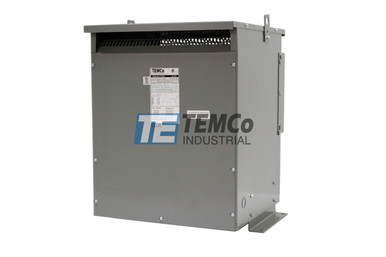
Your electrician will need to install a transformer such as this one:

The transformer will require primary protection, secondary grounding, and possibly secondary protection. Wiring will probably be 10ga, but the electrician will figure that out. If the machine has 'inrush' requirements then the transformer may need to be larger.

If the machine can work with 220V split phase then it might be possible to use a less expensive buck/boost transformer arrangement. But this will require more coordination with the manufacturer and more design effort on the part of the electrician, to use less expensive hardware. Only worth it if the manufacturer is really good at communicating.

-Jonathan
 
220v is not an issue. But as I understand it, it's 220v on one leg. If I recall correctly from my time in China if I measure from hot to ground I get 220v. Here if I measure from Hot to ground I get 120v. And if I measure from Neutral to ground, I get 120v. And from Hot to Neutral, I get 240v. I guess I'm trying to figure out if this matters, which I think it does, and if so what type of device do I need to solve for this. (for someone else to wire in)

Exactly. The US uses 'split phase' to give 120V H-N 240V H-H. Most of the world uses 230V (ish) H-N, For _most_ equipment it really doesn't matter which you use, but unless you can get reliable information you don't _know_. So you either spend lots of time getting information from the manufacturer and analyzing the schematic, or you just use a transformer to supply 2xxV H-N.

FWIW I bet this machine uses variable speed drives and would actually be better off with a split phase supply, but good luck getting that documented from the manufacturer.
 
Ok, I think you guys have answered my questions. It sounds like *maybe* just connecting Canadian 240v in the traditional sense will work.

If it doesn't, a Temco isolation transformer (or similar) will do the job, though it might make sense to oversize it a bit. My machine only has quad spindles, so I do not foresee inrush being an issue. $1700 is affordable on a fairly expensive machine that I can't seem to find anywhere else.
 
I think the biggest risk in using US/Canadian split-phase is not the variable speed drives, but any control and interface circuitry the machine may have. As Jonathan indicated, a schematic checked out by someone knowledgeable in electronics would be necessary to insure that using split-phase would not damage something. Even then, the schematic might include electronic modules or boards with insufficient detail to make the call.
 
That manufacturers info just said 220v +/_ 5%, 50-60hz

I couldn't see anything about the number of phases or anything like that.

What market was this thing built for? I'm guessing by the tag some part of Asia, but that's a big place.

Maybe for the NK market lol
 
My 2 cents, based on experience with a lot of overseas control over the years:

220V hot to neutral means it is designed for single phase power. It does not matter if it is hot-to-neutral or hot-to-hot as we have here in North America, it really only matters that it is 220V. The entire “split phase” issue is generally irrelevant, don’t get bogged down in that. So installing it here electrically is not a big problem.

We cannot, however, tell you if it being designed for 220V is compatible with the 240V you will find here, that is an issue of “design tolerance” for whomever made the machine. All we can say is “it’s probably fine” simply because it is GENERALLY a good practice to design machines to be used in as many parts of the world as possible, and the “average” voltage around the world is actually 230V; ie Japan is 200V, China is 220, Europe, Africa, South America and much of the rest of Asia is generally 230, North America is 240. But we can’t speak to what THAT MANUFACTURER decided to do. If it is CNC with high speed spindles, they will be powered off of power supplies (called “drivers”) that convert the AC power to DC and then use it in some form for powering the spindle motors electronically. GENERALLY those drivers just convert the AC to DC and therefore don’t care about frequency of the incoming AC, but they may care about the voltage level. So you MIGHT have to get what’s called a “buck-boost transformer” to get the standard 240V closer to the 220V rating. But again, we (electricians) cannot determine that for you, it has to come from the manufacturer. An electrician can only implement whatever it takes.

You are in Canada eh? That issue of the lack of an NRTL listing is likely not as casual as you seem to think. I’m not Canadian but I have done work there and not having a listing from CSA or other accepted NRTL is generally a show stopper for having an electrician install anything. I will say though that CSA is a bit more reasonable with regard to on-site field inspections than UL is. So good luck with that…
 
Status
Not open for further replies.
Top