
You are using an out of date browser. It may not display this or other websites correctly.
You should upgrade or use an alternative browser.
You should upgrade or use an alternative browser.
motor generator vs nonmotor generator welders
- Thread starter jes25
- Start date

- Location
- Illinois
- Occupation
- retired electrician
Nope they both can do either.Does anyone know how to tell the difference in these two types of welders for applying Table 630.11A?
My gut is a nonmotor generator is a "stick" welder and motor generator is wire feed type but I'm just guessing.

Joethemechanic
Senior Member
- Location
- Hazleton Pa
- Occupation
- Electro-Mechanical Technician. Industrial machinery

That's a Motor/Generator Welder. You won't find them around much anymore unless you have someone doing heavy DC stick welding, hard facing, arc gouging, etc. They are almost always 100% duty cycle. Very smooth machines as far as welding goes. I think that one is smoother than my Lincoln SA-200 Redface
My gut is a nonmotor generator is a "stick" welder and motor generator is wire feed type but I'm just guessing.

kwired
Electron manager
- Location
- NE Nebraska
- Occupation
- EC
Probably more common before rectifier driven types became more popular? The higher the current rating the more common even when there were some rectifier driven types out there?View attachment 2581243
That's a Motor/Generator Welder. You won't find them around much anymore unless you have someone doing heavy DC stick welding, hard facing, arc gouging, etc. They are almost always 100% duty cycle. Very smooth machines as far as welding goes. I think that one is smoother than my Lincoln SA-200 Redface
What's the basic operating principle of a motor generator welder?Probably more common before rectifier driven types became more popular? The higher the current rating the more common even when there were some rectifier driven types out there?
Joethemechanic
Senior Member
- Location
- Hazleton Pa
- Occupation
- Electro-Mechanical Technician. Industrial machinery
Yeah well I'd estimate the GE one I posted is 1930's to 1940's era and still welds beautiful.Probably more common before rectifier driven types became more popular?
I have two others out in the back. One operates, and the other one was apart when I got it and I never messed with it
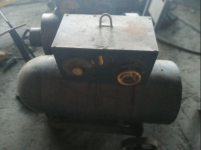
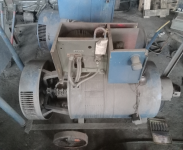
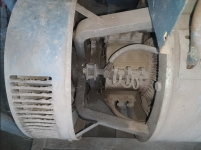
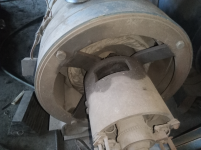
The blue ones are a little more modern, I think 1960's maybe
The higher the current rating the more common even when there were some rectifier driven types out there?
Yeah high current/high duty cycle work all the mining companies used them. Not to mention they are really smooth to weld with. All the guys doing really heavy welding love them. And they are tough as nails
Eddie702
Licensed Electrician
- Location
- Western Massachusetts
- Occupation
- Electrician
@Joethemechanic
Had one at the shop I worked at. They did a small job for a guy, and he didn't pay but gave the shop the Lincoln welder. Worked great.
I sent it to a job once and was going to go and wire it but the pipefitter called me back and said the electrician on site said he would hook it up.
Then they called me and said it wouldn't work and sent it back to the shop.
Nothing wrong with it. The electrician had cut our cord cap off and hardwired it.
He had the rotation wrong
Same generator used on the Lincoln gas drives AFAIK
Had one at the shop I worked at. They did a small job for a guy, and he didn't pay but gave the shop the Lincoln welder. Worked great.
I sent it to a job once and was going to go and wire it but the pipefitter called me back and said the electrician on site said he would hook it up.
Then they called me and said it wouldn't work and sent it back to the shop.
Nothing wrong with it. The electrician had cut our cord cap off and hardwired it.
He had the rotation wrong
Same generator used on the Lincoln gas drives AFAIK
Joethemechanic
Senior Member
- Location
- Hazleton Pa
- Occupation
- Electro-Mechanical Technician. Industrial machinery
@Joethemechanic
Had one at the shop I worked at. They did a small job for a guy, and he didn't pay but gave the shop the Lincoln welder. Worked great.
I sent it to a job once and was going to go and wire it but the pipefitter called me back and said the electrician on site said he would hook it up.
Then they called me and said it wouldn't work and sent it back to the shop.
Nothing wrong with it. The electrician had cut our cord cap off and hardwired it.
He had the rotation wrong
Same generator used on the Lincoln gas drives AFAIK
That one I posted first is a General Electric. My buddy has a GE gasoline welder powered by a Flathead Ford V8 that uses the same generator head. Smaller Flathead like a 60ish HP but still impressive for a gas powered welder especially from the 30's or 40's
But you got to remember they were working on equipment like this. The Anthracite King. Something breaks and you got guys burning rod 24 hours a day until the job is done, no safe spaces, no excuses,
zbang
Senior Member
- Location
- Roughly 5346 miles from Earls Court
Like any M-G set, the motor turns the generator to make a different voltage/current than the line. For welding there's a DC generator with specific characteristics to power an arc (constant current), not provide constant voltage. These were also common in movie theaters to power the arc lights on projectors and in spotlights.What's the basic operating principle of a motor generator welder?
An M-G can also produce a different frequency or phases if that's needed (e.g. 400Hz for aircraft or 415Hz for some mainframe computers), check out the wikipedia article about them.

hbiss
EC, New York NEC: 2017
- Location
- Little Falls, New York NEC: 2017
- Occupation
- EC
DC generator driven by either an electric motor or gasoline/diesel engine.What's the basic operating principle of a motor generator welder?
-Hal
Joethemechanic
Senior Member
- Location
- Hazleton Pa
- Occupation
- Electro-Mechanical Technician. Industrial machinery
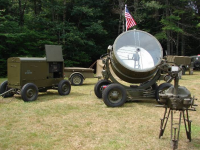
arc lights
zbang
Senior Member
- Location
- Roughly 5346 miles from Earls Court
My kind of arc lights-

Joethemechanic
Senior Member
- Location
- Hazleton Pa
- Occupation
- Electro-Mechanical Technician. Industrial machinery
Not an arc light or a projector, but I burned my arm bad on running a Strong Trooperette following a funny looking ballerina during a performance of The Nutcracker in 1976. "Pain at first site". I have to hit her with that when she calls tonight.My kind of arc lights-
View attachment 2581252
That burn scar was gone after a couple years, not so sure about the other scars
kwired
Electron manager
- Location
- NE Nebraska
- Occupation
- EC
When I questioned them being even more common long time ago - was because DC rectifiers were not so common at higher capacity like they can be now, or even about 1955-60 or so. If you wanted high level DC current from an AC source might been easier or less cost at one time to drive a DC generator with an AC motor. Today with more availability of high power solid state stuff it is less expensive,lighter weight and more overall efficiency to rectify via solid state components.What's the basic operating principle of a motor generator welder?
- Location
- Illinois
- Occupation
- retired electrician
A lot of old elevators also used motor generators to supply the DC power for the drive motors for the same reasonIf you wanted high level DC current from an AC source might been easier or less cost at one time to drive a DC generator with an AC motor.
Joethemechanic
Senior Member
- Location
- Hazleton Pa
- Occupation
- Electro-Mechanical Technician. Industrial machinery
For power it was either M-G units or mercury rectifiers. I remember a steel warehouse in philly that was still running DC cranes on mercury vapor in the 80'sA lot of old elevators also used motor generators to supply the DC power for the drive motors for the same reason
kwired
Electron manager
- Location
- NE Nebraska
- Occupation
- EC
I would guess where more precision was needed in varying motor speeds it was once common to do so with DC motors. And the more power needed the more likely the DC source would have been a motor generator up until solid state rectification at higher power levels became more common.A lot of old elevators also used motor generators to supply the DC power for the drive motors for the same reason
Now there is probably more AC drives out there than DC drives, for more simple speed control applications Seems the DC motors are usually on older equipment that is still in use but newer equipment has an AC drive or even the more hybrid designs of stepper motors when even higher precision is needed with speed and directional control.
Side notes:: while an apprentice at a large slaughter house our maintenance shop had what old timers called a " Jazz Box ". Was just a transformer and a wheel for adjusting well current. I never wore gloves and they had a 100' welding cable leading up to roof. Had to help a welder hold part a together on the roof and that jazz box always gave you a nice shock. Had a couple of MG welders that did not give big shocks.. Later on we had compact Lincoln red head welders on three wheels. Best thing before we finally made all if the the three phase welding receptacles the same phasing did not need reversing drum switches on them. If you turned single turning wheel side ways you could determine uf welder was running in the correct direction. Appears for lighter welding jobs guys prefer welders with automatic wire feed and several bottles of different gas mixes.