I'm looking at three screens to follow part of this conversation, so I figure putting it all together in one post may help others on this one. It's as much so I can get it all together as I compile it, as it is to help anybody else, actually.

NEC-2005 210.4(C) Line-to-Neutral Loads. Multiwire branch circuits shall supply only line-to-neutral loads.
Exception No. 1: A multiwire branch circuit that supplies only one utilization equipment.
Exception No. 2: Where all ungrounded conductors of the multiwire branch circuit are opened simultaneously by the branch-circuit overcurrent device.
Mike Holt's Graphic text:
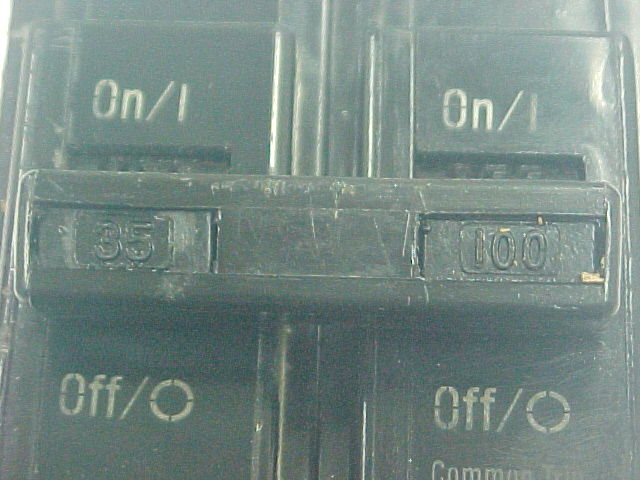
A multiwire circuit can supply both line-to-line and line-to-neutral loads providing that a common trip circuit breaker is used to protect the circuit.
Mike Holt commentary:
Ex 2: A multiwire branch circuit is permitted to supply both line-to-line and line-to-neutral loads if the circuit protection device opens all ungrounded conductors of the multiwire branch circuit simultaneously under a fault condition (multipole circuit breaker with common internal trip). Figure 210-1
milwaukeesteve said:
I would like to see Mike's justification for wording his Exception 2 like he did in his graphic. That wording is not the wording in the NEC, and would have needed some kind of supporting code rules or something else to make that assumption.
Now that I've got them all lined up, I can see how Mike came to his interpretation, I think. The rule is, "A MWBC
shall supply
only line-to-neutral loads."
If we stop reading there, then we have now officially lost permission to use a MWBC on line-to-line loads. My question would be, "What use is a MWBC to a line-to-line load anyway? The neutral is not required to make it work."
Clarification comes by reading Exception 1. Now, we are made aware that a single utilization equipment (such as a range or dryer) were considered line-to-line loads using MWBCs. If it's one appliance, it's got a "Get Out Of Jail Free Card", and this is the exception we're using to escape the rule.
If exception 1 applies to one appliance - better put, if this exception applies to
all single appliances, then the only sense exception 2 would make is if more than one appliance existed, wanting to use a MWBC. The group would not be able to use exception 1. They would need an exception as a group, or break apart into single appliances to be able to use exception 1.
Which is how I come to the conclusion that Mike Holt concludes that this exception is pertaining to a group of loads. Sorry for the long long post, I was figuring it out (I think) as I went.