hillbilly1
Senior Member
- Location
- North Georgia mountains
- Occupation
- Owner/electrical contractor
They didn’t accidentally grab a foot pound torque wrench instead of an inch pound? 180 inch lbs is only 15 foot lbs. shouldn’t be all that tight.


That’s a thought.They didn’t accidentally grab a foot pound torque wrench instead of an inch pound? 180 inch lbs is only 15 foot lbs. shouldn’t be all that tight.

Agree. I use the Ilsco ones. Copper/Aluminum works great. Use heat shrink to insulate.I use the 7 connector H taps all the time. 2 dies and 7 connectors will do everything from a 250 to a 250, down to like a #2 to a #14. They are bulletproof and dirt cheap.
Bin-go. And thank you.They didn’t accidentally grab a foot pound torque wrench instead of an inch pound? 180 inch lbs is only 15 foot lbs. shouldn’t be all that tight.

I wondered how they were getting anything accurate with that check.Let's get back to the "check the torque" thing... was someone really going back with a TW and trying already-tightened fasteners???? There's no way to get an accurate reading doing that unless the screw was well under torque; many previous (ahem) threads about this in the forums.


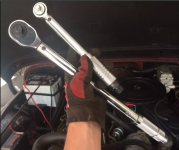
Unfortunately there are a number of inspectors in the SF bay area that insist all connections in electrical panel be re-torqued in their presence. I have argued many time that your are not supposed to re-torque connections.Let's get back to the "check the torque" thing... was someone really going back with a TW and trying already-tightened fasteners???? There's no way to get an accurate reading doing that unless the screw was well under torque; many previous (ahem) threads about this in the forums.
If you know that, purposely under torquing would have an advantage.Unfortunately there are a number of inspectors in the SF bay area that insist all connections in electrical panel be re-torqued in their presence. I have argued many time that your are not supposed to re-torque connections.
I believe the former PA inspector that was book smart but had zero field experience started this.
i had an inspector in Virginia, I believe, that checked the torque on every connection I made in a 3000 amp transferswitch at 5:00 in the morning, before he would let the poco reenergize it.Unfortunately there are a number of inspectors in the SF bay area that insist all connections in electrical panel be re-torqued in their presence. I have argued many time that your are not supposed to re-torque connections.
I believe the former PA inspector that was book smart but had zero field experience started this.
Yes but, if then you drew the inspector that did not insist on "in his presence", then you have a whole bunch of questionable connections to remember to torque finally.If you know that, purposely under torquing would have an advantage.
Yes, exactly.Yes but, if then you drew the inspector that did not insist on "in his presence", then you have a whole bunch of questionable connections to remember to torque finally.
True that.Unfortunately there are a number of inspectors in the SF bay area that insist all connections in electrical panel be re-torqued in their presence. I have argued many time that your are not supposed to re-torque connections.
I believe the former PA inspector that was book smart but had zero field experience started this.
Anyone here do make up entire panel, "tight".Tighten, wiggly, finish torque.
Standard torque values take normal building wire stranding relaxation into account.(Note I'm not a big fan of the torque once approach. Stranded conductors relax. I think that you get better with the tighten, wait, torque method).
The wiggle always gets me more rotation angle than if I had not wiggled.Tighten, wiggly, finish torque.