VD in huge greenhouse 277v

Status
Not open for further replies.

Strombea

Senior Member
I have a commercial job that the grow lights are at the longest 300’ away from my contactors which are 100’ feet away from the branch bolt on breakers, which are 200’ away from SES which is 100’ from transformer. I have ran #8 to the contactors from 30 amp breakers (100’) (3” pvc UG), and #10 from contractor to the 1000 watt light (300’ max) (3/4” EMT), each circuit got its own neutral, 277/480Y, 6 lights per circuit @ 6,000w / 277 = 22 amps.
I’m not too worried but my questions are:
- is voltage drop usually calculated from transformer, or SES for 5%?
- is there such a buck boost that could do 277v to say 300 v?
- I can't fit #8 in 3/4” emt so what would you guys do? 4 lights per circuit
- do you find these new ballasts operate at a wide range voltage even when it simply says 277v?
 
Right now you are hovering between 4 and 6% VD (I simply assumed all the lights at 300' away from the contactors, which is worst case, and got about 6%), so this is likely not a problem.

As LarryFine says, if you change your design to MWBC you substantially reduce voltage drop. You basically eliminate the half of the voltage drop caused by the neutral. On top of this you can supply more lights with the same pipe/wire: with isolated neutral 4 wires means two circuits, with shared neutral 4 wires means three circuits.

The downside is that you now lose 3x the lights if a circuit fails or needs to be shut down, and loss of a neutral connection could cause excessive voltage on your lights.

You might pencil in putting 9 lamps on a 15A 3 phase MWBC using #14 wire for everything from the breakers. 2x the number of breakers and contactors, but much less copper. I estimate <4% voltage drop using this approach.

You can certainly use BB transformer arrangements to get 277V up a few %. This is generally not a good solution to voltage drop issues because when the load is off the voltage is excessive.

-Jon
 
Using MWBCs would greatly reduce voltage drop and conductor quantities.
When doing a voltage drop calculation for a MWBC with these circumstances, for voltage you would put 480v rather than 277v correct (square root of 3 as well) ?
 
Last edited:
I have a commercial job that the grow lights are at the longest 300’ away from my contactors which are 100’ feet away from the branch bolt on breakers, which are 200’ away from SES which is 100’ from transformer. I have ran #8 to the contactors from 30 amp breakers (100’) (3” pvc UG), and #10 from contractor to the 1000 watt light (300’ max) (3/4” EMT), each circuit got its own neutral, 277/480Y, 6 lights per circuit @ 6,000w / 277 = 22 amps.
I’m not too worried but my questions are:
- is voltage drop usually calculated from transformer, or SES for 5%?
- is there such a buck boost that could do 277v to say 300 v?
- I can't fit #8 in 3/4” emt so what would you guys do? 4 lights per circuit
- do you find these new ballasts operate at a wide range voltage even when it simply says 277v?


Single # 8 impedance per 1000 feet PVC conduit-

XL= 0.052 R=0.78


Single #10 impedance per 1000 feet EMT conduit-

XL= 0.063 R=1.2

Panel to contactor 100 feet Z, NEC section 250.122 (B) tells us the EGC must be upsized as well for VD-

XL= 0.0104 R= 0.156

Contactor to furthest fixture 300 feet Z-

XL= 0.0378 R=0.72

Using:

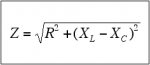
1615979281273.png


Z= 0.767376 + 0.00232324 = 0.76969924 square root = 0.87732504808 or 0.88 ohms

I=V/R gives use 314 amps at 277 volts.

Going by this time current curve and a 30 amp OCPD you end up with a 2 second disconnection time vs the required 0.4 seconds.


However, the same time current as applicable to a 20 amp breaker will hit the instantaneous trip region before 300 amps giving you enough room to take the impedance between the transformer and final panel board all the while tripping well below 0.4 seconds .

Use the wire size you have now but with 20 amp breakers. You could upsize the wire further and stick with the 30s, but the prior would be the easier option.
 
When doing a voltage drop calculation for a MWBC with these circumstances, for voltage you would put 480v rather than 277v correct (square root of 3 as well) ?

If you use an MWBC, then in essence you are operating at 480V rather than 277V, at least when you have a balanced 3 phase load. So in your case you could calculate the power usage of 18 lamps at 480V using the 3 phase calculation. _or_ you could calculate 6 lamps on a 277V circuit but you don't have to count the voltage drop on the neutral. Both are valid ways of looking at it so pick whichever is easier for you to calculate.

Since your loads are distributed (some near, some far), a detailed calculation would also take that into account. For most purposes you simply assume all the loads are at maximum distance and check that you don't have too much drop, but that is just a rough estimate.

-Jon
 
Going by this time current curve and a 30 amp OCPD you end up with a 2 second disconnection time vs the required 0.4 seconds.


However, the same time current as applicable to a 20 amp breaker will hit the instantaneous trip region before 300 amps giving you enough room to take the impedance between the transformer and final panel board all the while tripping well below 0.4 seconds .

Use the wire size you have now but with 20 amp breakers. You could upsize the wire further and stick with the 30s, but the prior would be the easier option.

Where does the 0.4 second trip requirement come from? Is this a code requirement or a preferred design?

What will be damaged if 300A flows in this circuit for 2 seconds?

Could the requirement be met by using ground fault detection rather than overcurrent detection?

-Jon
 
Where does the 0.4 second trip requirement come from? Is this a code requirement or a preferred design?

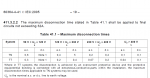
Technically a code requirement. 250.4 A 5 requires an effective ground fault current path for the operation of an over current device during a ground fault while 250.90 requires that bonding safely withstand the fault current imposed. Since the NEC does not numerically define an effective ground fault current path we have turn to 90.1(C) giving insight NFPA-70 is emulating the basic protection principles as theoretically (abstractly) expounded in IEC-60364. IEC-60364 takes us to "IEC-60364-4-41 Protection Against Electrical Shock" which stipulates that maximum safe OCPD opening time for final circuits 32 amps (and under) at 277 volts is 0.4 seconds on a solidly grounded system.


1615994688465.png


What will be damaged if 300A flows in this circuit for 2 seconds?

Increased incident energy and EGC heating aside, when a fault occurs the relatively equal impedance between the live and grounding conductor form a resistive divider. Because a fault at the far end of a 30 amp branch circuit is not likely to significantly pull down the voltage at the utility transformer the X1 to X0 voltage will remain close to 277 volts. This means the faulting light, equipment, j-box, conduit, ect will be 139 volts relative to earth as long as the fault persists.

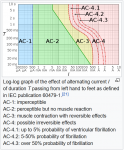
Given the human body is about 600-900 from left hand to foot, 139 volts at 900 ohms produces about 150 ma of current which is in the range of ventricular fibrillation if the body is subjected to this current for a long enough duration.


1615995585588.png

That duration is determined by the table IEC-604791, which is where Table 41.1 derives its maximum values from.


1615995920551.png

Going by the above, 150ma of current in the 20ms time range pings in the AC-2 region meaning no permanent or dangerous physiological response. However, at 2 seconds we actually fall out of the AC-4.3 regions which at minimum states over a 50% chance of ventricular fibrillation.

Remember that a greenhouse is technically a wet environment and as such 900 or fewer ohms hand to foot is not an unrealistic assumption.
 
Could the requirement be met by using ground fault detection rather than overcurrent detection?

-Jon

The way the NEC itself is written you could technically meet the requirements with GFPE or GFCIs. In fact much of the expansion of GFP, GFCI and SPGFCIs is based on scenarios where the engineer or electrician does not have an adequate effective ground fault current path. But thats a discussion for another day.

However, personally, I would not go that route. GFPE and GFCI breakers have electronics which can fail, and in this case the long run by itself is likely to cause nuisance tripping.

Nothing beats a decently sized EGC.
 
Technically a code requirement. 250.4 A 5 requires an effective ground fault current path for the operation of an over current device during a ground fault while 250.90 requires that bonding safely withstand the fault current imposed. Since the NEC does not numerically define an effective ground fault current path we have turn to 90.1(C) giving insight NFPA-70 is emulating the basic protection principles as theoretically (abstractly) expounded in IEC-60364. IEC-60364 takes us to "IEC-60364-4-41 Protection Against Electrical Shock" which stipulates that maximum safe OCPD opening time for final circuits 32 amps (and under) at 277 volts is 0.4 seconds on a solidly grounded system.

While I am not sure if the indirect link to the IEC spec makes a 0.4s clearance time for a bolted fault a code requirement, I appreciate your analysis as good food for thought.

You make a good argument that clearance times for ground faults should be of shorter duration. This goal could be met by low sensitivity residual current detection, for example electromagnetic residual current detection. A breaker with 30A 'instantaneous trip' on residual current would not be a GFCI or GFPE, but it would greatly mitigate the shock issue you describe without requiring sensitive electronic components.

-Jon
 
While I am not sure if the indirect link to the IEC spec makes a 0.4s clearance time for a bolted fault a code requirement, I appreciate your analysis as good food for thought.

You make a good argument that clearance times for ground faults should be of shorter duration. This goal could be met by low sensitivity residual current detection, for example electromagnetic residual current detection. A breaker with 30A 'instantaneous trip' on residual current would not be a GFCI or GFPE, but it would greatly mitigate the shock issue you describe without requiring sensitive electronic components.

-Jon

Well, ask yourself this: at what point does a breaker begin to take so long to trip as it no longer affords protection? Would you define a 1.5 minute trip time as meeting practical safeguards?


Consider that modern breakers already come with a magnetic trip function (1 and 1/2 cycle trip time) which in some ways is actually faster than GFP in that the electronics must first get enough of a sine wave or two then go ahead make a trip decision. Magnetic does not wait for this, the pole piece moves in real time as the current rises.
 
Well, ask yourself this: at what point does a breaker begin to take so long to trip as it no longer affords protection? Would you define a 1.5 minute trip time as meeting practical safeguards?

A 1.5 minute trip on a mild overload is presumably perfectly safe and the very reason for having a 'thermal trip' characteristic. Your analysis shows that this same current level might present a significant hazard as a ground fault.

Consider that modern breakers already come with a magnetic trip function (1 and 1/2 cycle trip time) which in some ways is actually faster than GFP in that the electronics must first get enough of a sine wave or two then go ahead make a trip decision. Magnetic does not wait for this, the pole piece moves in real time as the current rises.

Yes. I was suggesting a magnetic trip on residual current, the way the original (without electronics) ground fault detection worked. Not as sensitive as the GFCI with electronics, but as reliable as any other magnetic trip mechanism.

-Jon
 
Thanks for the input, and yes I totally agree about the MWBC but customer had issues with shared neutrals
There can be issues with harmonics on those HID lights.
Another thing you can do is upsize a shared neutral a size.
If your on the 2020 Code you'll save money on GFCI breakers.
 
...
- is there such a buck boost that could do 277v to say 300 v?
...
If the problem is delivered voltage too low for equipment, a buck boost can resolve that problem. If there is only one load (set of loads) that is entirely on or entirely off, then the higher unloaded voltage will not be an issue.
But if you are trying to meet the VD requirements (suggested only in NEC but mandatory in some other codes) then IMHO using a boost transformer will not help you, since the energy loss in the conductors and the limitation of peak current into a bolted fault will not be affected.
 
A 1.5 minute trip on a mild overload is presumably perfectly safe and the very reason for having a 'thermal trip' characteristic. Your analysis shows that this same current level might present a significant hazard as a ground fault.

Right, mild overload instead of a ground fault. 650 feet of #10 on a 30 amp breaker at 120 volts would take about 90 seconds to open for a ground fault, 1,500 feet at 277 volts.

While the argument could be made the requirement of opening an OCPD as required and going by 250.4 (A) 5 alone was fulfilled, would you want to be in contact with any object energized at 60 or 139 volts for 90 seconds...? Especially in a wet environment?

Yes. I was suggesting a magnetic trip on residual current, the way the original (without electronics) ground fault detection worked. Not as sensitive as the GFCI with electronics, but as reliable as any other magnetic trip mechanism.

-Jon


Not a bad idea, it would work. However, keep in mind you'd have a bulkier, more expensive breaker.

When voltage drop is taken into account up sizing the wire ends up being a better option in the long run.
 
... would you want to be in contact with any object energized at 60 or 139 volts for 90 seconds...? Especially in a wet environment? ...
Keep in mind all cord and plug connected horticultural (greenhouse/warehouse) lighting is now required to be GFCI protected for this exact reason, even 277 V. 2020 NEC 410.184
 
Keep in mind all cord and plug connected horticultural (greenhouse/warehouse) lighting is now required to be GFCI protected for this exact reason, even 277 V. 2020 NEC 410.184


Doesn't say the GFCI must be at the panel board or at the begining of the branch circuit.

A fault in the fixed wiring in conjunction with a poor effective ground fault current path would still place voltage on exposed metal despite having a GFCI receptacle.

In any case electronics can fail, especially when its known that equipment may be in service for 60 years or more.
 
Doesn't say the GFCI must be at the panel board or at the begining of the branch circuit.

A fault in the fixed wiring in conjunction with a poor effective ground fault current path would still place voltage on exposed metal despite having a GFCI receptacle.

In any case electronics can fail, especially when its known that equipment may be in service for 60 years or more.
Good point, I have never seen a 15A 277 Volt GFCI device, and then they probably would not be listed for a 30 amp circuit.
let me explain;
A typical 1000W HPS grow light, has a ballast nameplate of around 4.75 amps @277V, so after you figure for a continuous load, you end up with 5 ballasts per 277V 30Amp 2 wire circuit, or 15 on a 480/277 MWBC
And considering these lighting HID circuits are often run on a 30A circuit with 15 Amp twistlocks per 410.62(C) and exception in 210. 21(B)(3) Exception 2, it will probably be very cost effective to provide that GFCI protection at the panel.
 
Good point, I have never seen a 15A 277 Volt GFCI device, and then they probably would not be listed for a 30 amp circuit.
let me explain;
A typical 1000W HPS grow light, has a ballast nameplate of around 4.75 amps @277V, so after you figure for a continuous load, you end up with 5 ballasts per 277V 30Amp 2 wire circuit, or 15 on a 480/277 MWBC
And considering these lighting HID circuits are often run on a 30A circuit with 15 Amp twistlocks per 410.62(C) and exception in 210. 21(B)(3) Exception 2, it will probably be very cost effective to provide that GFCI protection at the panel.


Yup. What you describe was typical in warehouses and stores that used HID lighting minus the GFCI.
 
Status
Not open for further replies.
Top