Wall Oven Whip

Status
Not open for further replies.

infinity

Moderator
Staff member
Location
New Jersey
Occupation
Journeyman Electrician (retired)
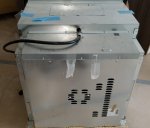
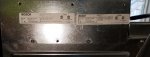
Looking at this wall oven which came from the supplier with a cord and plug connection. I can't recall seeing this type of oven with a cord and plug only hardwired with a factory whip. Looking at the way it's installed (a strap that is large enough for a FMC whip) it's my guess that someone removed the factory whip and installed the cord. Factory whips usually have higher temperature conductors than cord sets and these ovens are not designed for cord an plug. Opinions?
Walloven1.jpg

Walloven2.jpg
 
Last edited by a moderator:
Looking at this wall oven which came from the supplier with a code and plug connection. I can't recall seeing this type of oven with a cord and plug only hardwired with a factory whip. Looking at the way it's installed (a strap that is large enough for a FMC whip) it's my guess that someone removed the factory whip and installed the cord. Factory whips usually have higher temperature conductors than cord sets and these ovens are not designed for cord an plug. Opinions?

View attachment 20501

View attachment 20502


Vendor data shows fixed connection, no plug.
 
Flex is an armored cable (i.e MC or AC cable).


Or FMC (flexible metal conduit)-- flex is a metallic conduit with no conductors in it. Of course, there are conductors in the flex coming from the back of the range but as Trevor stated the wires are usually a higher temperature conductor.
 
At first glance it looked like a single wall oven which in most cases would require a 30A circuit. However, looking at the KW rating on the nameplate it's 6.4 KW. 6400 divided by 240V = 26 A. 80% of a 30A circuit would be 24A. So, you'll have to go to the next trade size and use a 40A circuit. That being said, I don't know if you'll have the room to mount a 50A receptacle behind the oven. If not, I'd cut the plug off, wire it direct and drop the JB inside the wall.
 
At first glance it looked like a single wall oven which in most cases would require a 30A circuit. However, looking at the KW rating on the nameplate it's 6.4 KW. 6400 divided by 240V = 26 A. 80% of a 30A circuit would be 24A. So, you'll have to go to the next trade size and use a 40A circuit. That being said, I don't know if you'll have the room to mount a 50A receptacle behind the oven. If not, I'd cut the plug off, wire it direct and drop the JB inside the wall.

I don't think an oven Is a continuous load.
 
Or FMC (flexible metal conduit)-- flex is a metallic conduit with no conductors in it. Of course, there are conductors in the flex coming from the back of the range but as Trevor stated the wires are usually a higher temperature conductor.
Thank you both. Always an education here. This for us would be flexible cable or flex.


Wrong colours but you get the idea.
The lead that plugs into a receptacle for for something like a table lamp would also be called a flex.
 
At first glance it looked like a single wall oven which in most cases would require a 30A circuit. However, looking at the KW rating on the nameplate it's 6.4 KW. 6400 divided by 240V = 26 A. 80% of a 30A circuit would be 24A. So, you'll have to go to the next trade size and use a 40A circuit. That being said, I don't know if you'll have the room to mount a 50A receptacle behind the oven. If not, I'd cut the plug off, wire it direct and drop the JB inside the wall.

The prints call for a 1 phase, 208 volt, 30 amp circuit with a 4-wire receptacle behind the unit. Someone else is buying the ovens and they're being delivered as pictured with cord and plug which IMO is not permitted because of the temperature rating of the cord conductors and the listing instructions.
 
Thank you both. Always an education here. This for us would be flexible cable or flex.


Wrong colours but you get the idea.
The lead that plugs into a receptacle for for something like a table lamp would also be called a flex.

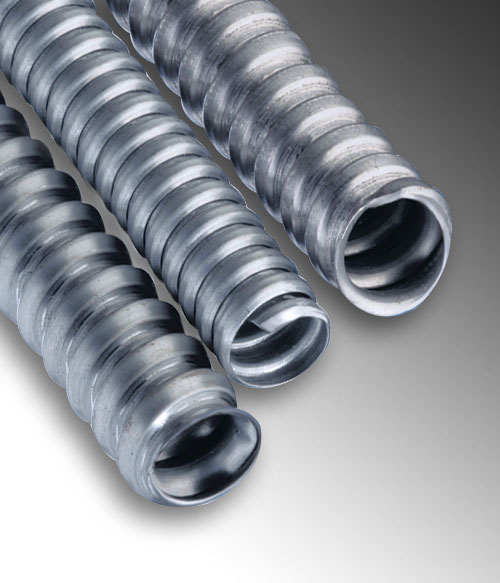
Many cables, cords etc are flexible but for some reason the term flex came to mean FMC. There is flexible non metallic conduit etc but the one pictured below is what has been termed flex in most areas that I have been in.

flex-product.jpg
 
The only built in ovens I regularly work with that have factory installed cords are Miele. They do this for ease of installation and service by their technicians.
In order to get full warranty coverage Miele employee technicians are supposed to install all of their appliances.
 
Many cables, cords etc are flexible but for some reason the term flex came to mean FMC. There is flexible non metallic conduit etc but the one pictured below is what has been termed flex in most areas that I have been in.

flex-product.jpg
I have seen that used but not in a long while. Oddly the last time was on the connection to the drive motor on a a machine manufacturing Kopex. Kopex is flexible metal conduit.
 
I don't think an oven Is a continuous load.
I'm not sure I agree and I'm not understanding why that would come into play with this unit. If your wife decided to slow cook something for several hours wouldn't that be considered a continuous load?
 
The prints call for a 1 phase, 208 volt, 30 amp circuit with a 4-wire receptacle behind the unit.
See if you can find the installation instructions on-line before the unit arrives. Maybe it will tell you exactly where to locate the receptacle.
Someone else is buying the ovens and they're being delivered as pictured with cord and plug which IMO is not permitted because of the temperature rating of the cord conductors and the listing instructions.
If it comes shipped in that way from the factory then that's not your concern, it's the manufacturer's. If they got it through UL with that cord then away we go.
 
I'm not sure I agree and I'm not understanding why that would come into play with this unit. If your wife decided to slow cook something for several hours wouldn't that be considered a continuous load?

An oven is not considered a continuous load because it doesn't use full power for 3 hours. The thermostat kicks it on/off enough that the load is not continuous.
 
See if you can find the installation instructions on-line before the unit arrives. Maybe it will tell you exactly where to locate the receptacle. If it comes shipped in that way from the factory then that's not your concern, it's the manufacturer's. If they got it through UL with that cord then away we go.

From what I've read these units are only to be used with the factory whip. Someone, probably the store selling them, is re-wiring them with a cord and plug. We're looking a few hundred units that already have a 30 amp receptacle roughed in that are IMO all incorrect.
 
It looks like someone was trying for a 422.16B3, but may have not paid attention to the last paragraph.....

(3) Wall-Mounted Ovens and Counter-Mounted Cooking Units.
Wall-mounted ovens and counter-mounted cooking units
complete with provisions for mounting and for making electri‐
cal connections shall be permitted to be permanently connec‐
ted or, only for ease in servicing or for installation, cord-and-
plug-connected.
A separable connector or a plug and receptacle combination
in the supply line to an oven or cooking unit shall be approved
for the temperature of the space in which it is located.

~RJ~
 
Status
Not open for further replies.
Top