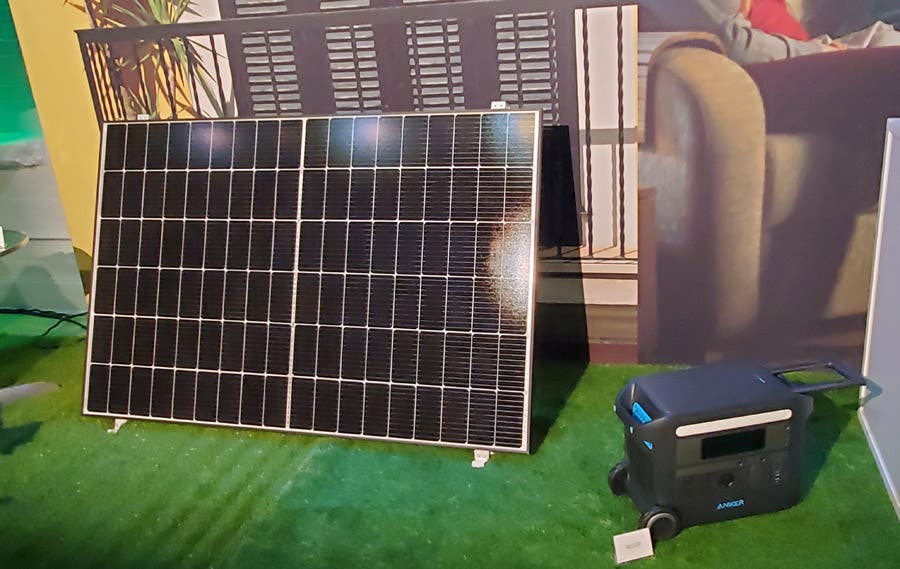
Plug in solar and GFIs

peatmoss

Member
Location
CA
Occupation
IT
I'm seeing a lot of ads for plug in solar these days. The companies that promote it are saying plug your system into a GFI outlet. There is an old thread on here but its not really conclusive. https://forums.mikeholt.com/threads/can-you-back-feed-a-gfci-breaker-in-a-sub-panel.92576/

The schematic of a GFI shows there is a current sense coil over both hot and neutral lines. The way they work is if there is current outside these lines on return a current is generated in the coil. If you backfeed a GFI I don't see how it knows the difference as long as there is no current leakage.
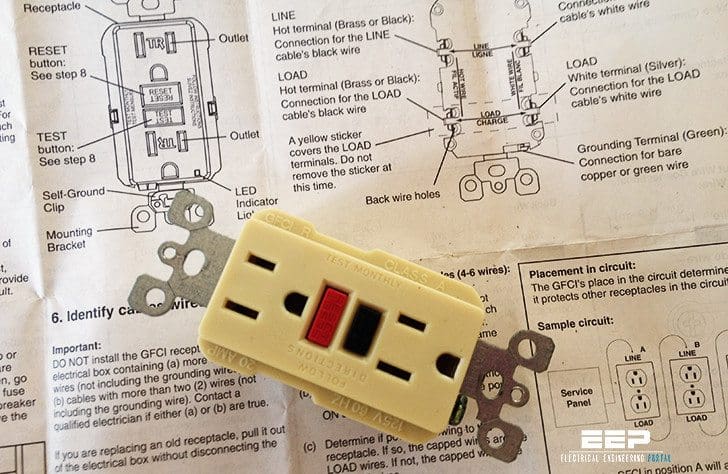
Anyone have experience or thoughts on this? How about GIF breakers?
 
I don't believe plug-in solar is actually legal anywhere in the US under utility rules, notwithstanding what ads might tell you. It's legal in parts of Europe, maybe it should be here too, but it's not.

As far as backfeeding a GFCI, there has long been the requirement in the NEC that circuit breakers be suitable for backfeed. (705.30(D) in the 2026 NEC). GFCIs have not typically been suitable for backfeed and a manufacturer's instruction that runs afoul of the NEC in this way is prohibited by the NEC and may not pass an inspection.

There are other safety issues that would make safe plug-in solar not really plug-in, as well.

The products you are looking at, do they say they're listed to UL1741? I have heard of some plug-in products maybe getting listed but I'm honestly a bit baffled at how that can be.
 
Thanks for the reply. It appears the new NEC requires it to specifically state it can be backfed.

Here is where I cam across it brightsaver.org/net-metering-expansion-backyard-solar

Their inverters are UL1741.
 
Last edited by a moderator:
I don't believe plug-in solar is actually legal anywhere in the US under utility rules, notwithstanding what ads might tell you. It's legal in parts of Europe, maybe it should be here too, but it's not.

Utah has apparently passed a law that requires utilities to allow 'plug in solar'. I don't know the details. Press article:
 
The GFCI doesn't know which direction flow is coming from, it is only monitoring whether what current goes out on one conductor is coming back on other conductor(s) that are also protected.

GFCI's that have line/load reversal lockout (which is a listing standard for receptacle types AFAIK) usually will still function with it reversed but once tripped will not reset if supply volts is not on the actual line side.
 
  • Like
Reactions: Zee
The GFCI doesn't know which direction flow is coming from
If it violates GFCI listing, or trips, there are duplex outlets without GFCI under most windows
There are other safety issues that would make safe plug-in solar not really plug-in, as well.
Without supplemental OCP, like reset button on most power strips, device or fixture wiring must be rated for 15A, or 20A branch circuits

If device uses a NEMA 5-15, any adapters to 2-prong outlets will violate listings, and NEC 250.114

If fire marshals find listing or safety code violations among the ashes, insurance Non-Renewal & Cancellation may result in total loss
 
  • Like
Reactions: Zee
Honestly my biggest worry about plug-in solar, especially at scale, is not electrical. It's loose solar panels flying around in windstorms.

(And yes, I'm a bit resentful because of all the engineering we have to provide to get approval for some rooftop solar. But installing to standards should ensure the panels stay on the roof.)
 
How much power do these things actually deliver; is it enough to make a significant reduction to a typical residential energy bill? Do people who buy them understand that they will not provide power for them during a grid outage?
 
I've used small portable hoists plugged into GFCIs and during the lowering cycle I know they were back feeding as evidenced by quite a few times when the brake was insufficient (Out of adjustment) and the motor becoming an induction generator keeping the load from running away.
 
How much power do these things actually deliver; is it enough to make a significant reduction to a typical residential energy bill? Do people who buy them understand that they will not provide power for them during a grid outage?
Since they plug in to a 5-15, the theoretical max is 1.8 KW. I could see one generating 100 kWh per month or so, depending on a lot of factors.
 
I've used small portable hoists plugged into GFCIs and during the lowering cycle I know they were back feeding as evidenced by quite a few times when the brake was insufficient (Out of adjustment) and the motor becoming an induction generator keeping the load from running away.
And the current through the GFCI was balanced regardless which "direction" power was flowing and it never tripped, right?
 
Since they plug in to a 5-15, the theoretical max is 1.8 KW. I could see one generating 100 kWh per month or so, depending on a lot of factors.
Unless you have agreements with your POCO, you may get away with some backfeed into grid and they never say a thing, but if you have rather low usage history to begin with and suddenly start coming up with negative energy usage - they are going to likely want to know why, and most are going to want some sort of contract that you will produce a certain amount to put back into grid, particularly if you are typically going to put more in than you take out on regular basis.

With the ease of really simple plug and play many average consumers might find this out the hard way.

I also see potential for many burned up plugs and receptacles like is commonly seen on other 5-15 and 5-20 applications with heavy continuous loading involved. 1.8 kW is going to heat those up regardless which way the energy transfer is going.
 
How much power do these things actually deliver; is it enough to make a significant reduction to a typical residential energy bill? Do people who buy them understand that they will not provide power for them during a grid outage?
For an NEM1/2 expansion in California, a 1kW system could potentially save $600/yr give or take, if you have the true up to offset. Not bad for a product that might sell for under $1500.

If you're on a less generous net-metering program, the self-consumption issue could make payback a real wild card. I'd be curious what the Utah law requires utilities to pay for exports, if anything.
 
And the current through the GFCI was balanced regardless which "direction" power was flowing and it never tripped, right?
Yeah as long as the current carrying conductors balanced out everything was fine. I've seen big hoists like on bridge cranes run away bad when they lost power and the brake didn't hold. If you are lifting and the brake is a little iffy, you can stop and hold the load. Going down is a whole different thing. brake lets loose, and the only thing you have holding you back is the motor that is now a generator
 
Yeah as long as the current carrying conductors balanced out everything was fine. I've seen big hoists like on bridge cranes run away bad when they lost power and the brake didn't hold. If you are lifting and the brake is a little iffy, you can stop and hold the load. Going down is a whole different thing. brake lets loose, and the only thing you have holding you back is the motor that is now a generator
regenerative braking should still have balance when it comes to GFCI protection. High frequency losses like you have with the carrier wave of a VFD is where you can have some losses due to capacitive leakage that causes GFCI trips when using VFD's in combination with GFCI's.
 
regenerative braking should still have balance when it comes to GFCI protection. High frequency losses like you have with the carrier wave of a VFD is where you can have some losses due to capacitive leakage that causes GFCI trips when using VFD's in combination with GFCI's.
Yeah, balanced, maybe distorted a bit because the induction gen can only supply active power and needs it's reactive from the line, but I don't see how the circuitry in a GFCI would notice a symmetrical distortion and trip. BTW keep in mind all my experience with bridge cranes and stuff goes back to banks of resistors and big cabinets that went click and clunk. We had a really old Cleveland in one place that had carbon piles for rotor resistors, and that was a conversion from DC done in like 1920 something

Two hoists each on their own trolly on one massive bridge, and the cab moved with one of the trollies, so you were always right over top of your pick with the main hoist. You should have seen all the span wire going across that bridge.

So needless to say, if you are talking about something more modern where you have incompatibility of electronics caused by a load/source, it's something I've never had to deal with. All my more modern experience has been where there was a clearcut divide between load and source.
 
.

I also see potential for many burned up plugs and receptacles like is commonly seen on other 5-15 and 5-20 applications with heavy continuous loading involved. 1.8 kW is going to heat those up regardless which way the energy transfer is going.
Thats why I said “theoretically.” I don’t know how they’re actually configured, but I’d bet lower than that.
 
What if this thing is plugged into a GFCI protected circuit and something requiring GFCI is also on that circuit. Or that it's a source on a circuit that could be overloaded and as far as the circuit breaker is concerned, nothing is overloaded.
 
Thats why I said “theoretically.” I don’t know how they’re actually configured, but I’d bet lower than that.
I kind of figured lower than that as well, per individual unit.

Than might not stop Mr. Homeowner from plugging six of them into a power strip and possibly pushing limits on the power strip or the plug/receptacle at the premises wiring connection. I could see them being 300 or 400 watts each somewhat easily.
 
Top