Had a coworker tighten one of these inside a 480 volt 600 amp panel and short out a wire on a 200 amp breaker. For some reason the switchgear 600 amp breaker tripled putting our shop in the dark. I did away with loads of them. Would drill a hole in top dead center of panel cover and use the smallest drill bit that I could still tap a 1/4" 20 hole. Would screw in a grade 5 hex head cap screw with a lock washer with threads facing out. Would use a counter sink to slightly install a taped on heavy 6' panel covers then use a 1/4" wing nut to secure cover then drill and tap 1/4" to secure cover. Would fill up the hole from old dangerous clamp screw with either Allen head button screws or gray caulk.Yes, I'd MUCH rather have the old swing-out wings that clamp to the panel's front lip! Especially on large, commercial panels!
View attachment 2581656

You are using an out of date browser. It may not display this or other websites correctly.
You should upgrade or use an alternative browser.
You should upgrade or use an alternative browser.
Driving panel screws into wires
- Thread starter VirutalElectrician
- Start date


VirutalElectrician
Senior Member
- Location
- Mpls, MN
- Occupation
- Sparky - Trying to be retired
The panel is at least 3 1/2" deep. With or without cable ties if a sparky can't keep the wires an inch away from the screw holes he's doing hack job.
Guess you've never done a 66 space panel where all the wires come down from the top? Get's pretty crowded in that small side channel.
I wish someone would make larger boxes for residential use, not all resi panels need to fit between the studs.
VirutalElectrician
Senior Member
- Location
- Mpls, MN
- Occupation
- Sparky - Trying to be retired
Nice work Larry, and this is kind of to the point I made earlier that there is no reason why the wires need to be close to the screw holes other than being sloppy and/or lazy. The one exception may be if you're using all stranded conductors but then the installer should spring for a bag of cable ties. View attachment 2581666
LOL That's a commercial size 3 phase panel. Let's see how that all works out in a smaller 13" wide 66 space panel.
VirutalElectrician
Senior Member
- Location
- Mpls, MN
- Occupation
- Sparky - Trying to be retired
I'm in the camp of "better designed panels".
They could also, for starters, simply provide shorter screws. You don't need 1" long screws to hold together 2 1/16" pieces of steel.
winnie
Senior Member
- Location
- Springfield, MA, USA
- Occupation
- Electric motor research
1) All of the pictures of perfectly dressed panels is going to trigger me to go down stairs are rip all of the wires out of my home panel and re-dress _everything_ 
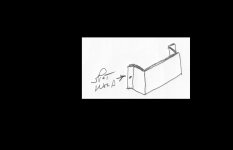
2) I'd simply like something along the lines of a 'clip on nut', but with a sleeve to cover the nut. Kind of like:

2) I'd simply like something along the lines of a 'clip on nut', but with a sleeve to cover the nut. Kind of like:
Fab it up and sell it make a fortune1) All of the pictures of perfectly dressed panels is going to trigger me to go down stairs are rip all of the wires out of my home panel and re-dress _everything_
2) I'd simply like something along the lines of a 'clip on nut', but with a sleeve to cover the nut. Kind of like:
View attachment 2581670
I would rather use that the. Zip ties
curt swartz
Senior Member
- Location
- San Jose, CA
- Occupation
- Electrical Contractor
There really is no commercial vs residential for panels. Loadcenters just get used more often than full panelboards in residentiall work due to cost and size. If you order panelboards from the factory either full assembled or with breakers included but loose the cost is reasonable.Guess you've never done a 66 space panel where all the wires come down from the top? Get's pretty crowded in that small side channel.
I wish someone would make larger boxes for residential use, not all resi panels need to fit between the studs.
I have only once used larger than a 42 circuit loadcenter in a home do to very limited space. If we need more than 42 circuits in 1 location we install (2) 42 circuit loadcenters side by side. We also frequently use 84 circuit panelboards in larger home especially if they have Homeworks lighting controls.
I used to do a lot of residential fire repair. You would go into a residence ( usually a total gut job) and look at the load center.There really is no commercial vs residential for panels. Loadcenters just get used more often than full panelboards in residentiall work due to cost and size. If you order panelboards from the factory either full assembled or with breakers included but loose the cost is reasonable.
I have only once used larger than a 42 circuit loadcenter in a home do to very limited space. If we need more than 42 circuits in 1 location we install (2) 42 circuit loadcenters side by side. We also frequently use 84 circuit panelboards in larger home especially if they have Homeworks lighting controls.
On some where all the insulation was burnt off it looked a solid bus of copper down each side of the enclosure.
Could only imagine how tightly those panel covers fit and how difficult it would be to physically trace a conductor through that mess.
We’ve all done it. Try removing a neutral buried under all the wires.
I even just cut them at an accessible point and put a wire nut on them and leave connected.

- Location
- Tennessee NEC:2017
- Occupation
- Semi-Retired Electrician
I wish I had taken a picture of this panel that I worked in years ago. The cabinet had a channel (for lack of a better word) that the cover screwed into. So no part of the screw was exposed when the cover was installed. I couldn't tell you if this was from the factory or someone modified it. This is the only one that I have seen.
Maybe a mounting sleeve would be a better term. Whatever you call it, the danger of the screw hitting a wire was removed by using this method.
Maybe a mounting sleeve would be a better term. Whatever you call it, the danger of the screw hitting a wire was removed by using this method.
Shorter screws are always an option. I’ve retapped many (where applicable) to 1/4-28 and used 3/8” length screwsI wish I had taken a picture of this panel that I worked in years ago. The cabinet had a channel (for lack of a better word) that the cover screwed into. So no part of the screw was exposed when the cover was installed. I couldn't tell you if this was from the factory or someone modified it. This is the only one that I have seen.
Maybe a mounting sleeve would be a better term. Whatever you call it, the danger of the screw hitting a wire was removed by using this method.

rambojoe
Senior Member
- Location
- phoenix az
- Occupation
- Wireman
Ive seen some scary gutters like that, some top hats too.. ooolllddd big, fat scary Dc cables- pressing against the covers...I wish I had taken a picture of this panel that I worked in years ago. The cabinet had a channel (for lack of a better word) that the cover screwed into. So no part of the screw was exposed when the cover was installed. I couldn't tell you if this was from the factory or someone modified it. This is the only one that I have seen.
Maybe a mounting sleeve would be a better term. Whatever you call it, the danger of the screw hitting a wire was removed by using this method.
I dont know, i feel its the responsibility of the one turning the screw...
Kinda like the old bill cosby schtik of "Dad, look- i almost stepped in this dog crap!"
Just ziptie it.
A 12 story ambulatory building that I worked in had at least 72 84 circuit panels with each panel having all but 1 or 2 single pole 20 pole breakers. Company policy was no shared grounded conductors and they ran 19 #10 Guage wires thru top of panels in 1" EMT. So each panel had approximately 170 #10 Guage wires. Even with a lot of ty rabs took up a lot of real estate. Being it was connected with a rich hospital at least 35% of the wires on bolt on circuit breakers were spares leading out to several JB'S.Guess you've never done a 66 space panel where all the wires come down from the top? Get's pretty crowded in that small side channel.
I wish someone would make larger boxes for residential use, not all resi panels need to fit between the studs.
After mounting a Resi panel between 2 wood studs and before installing wires, I drill 2 holes the size of a SER Pvc
Strap in the middle of the panel. With the panel empty I can swing a hammer and drive the nails into the stud.
Hot wires then pass thru keeping them away from the front.
Strap in the middle of the panel. With the panel empty I can swing a hammer and drive the nails into the stud.
Hot wires then pass thru keeping them away from the front.
Not following that scenario.After mounting a Resi panel between 2 wood studs and before installing wires, I drill 2 holes the size of a SER Pvc
Strap in the middle of the panel. With the panel empty I can swing a hammer and drive the nails into the stud.
Hot wires then pass thru keeping them away from the front.
Doesn’t the middle of the panel contain the buss??
I get it. You mean the center of the side of the enclosure, the 4” depth.Not following that scenario.
Doesn’t the middle of the panel contain the buss??
My bad.

busman
Senior Member
- Location
- Northern Virginia
- Occupation
- Master Electrician / Electrical Engineer
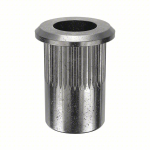
I am generally a Square D residential fan, but I've been finding the new Loadcenter tubs have tendency to strip out on first use (double cut 10/32 panel cover screws). My cheap solution is to drill it out and use rivet nuts instead. These give much more holding power than threading into sheet steel and with the proper length screw, there is no screw projection past the rivet nut.

kwired
Electron manager
- Location
- NE Nebraska
- Occupation
- EC
You don't need to apply full power from your impact driver when installing them. Square D is just about all I install and can't recall stripping out a new panel cover screw hole.I am generally a Square D residential fan, but I've been finding the new Loadcenter tubs have tendency to strip out on first use (double cut 10/32 panel cover screws). My cheap solution is to drill it out and use rivet nuts instead. These give much more holding power than threading into sheet steel and with the proper length screw, there is no screw projection past the rivet nut.
View attachment 2581685
Seen plenty of them in old installs but assuming it took some time before they became that way in most cases.

Joethemechanic
Senior Member
- Location
- Hazleton Pa
- Occupation
- Electro-Mechanical Technician. Industrial machinery
Yeah too many guys pick up the screw gun or an impact wrench and butcher stuff all up. Not just electrical, all kinds of machinery. Seems to be a young guy thingThat’s one of the reasons I put in our safety policy no putting on panel covers with a screw gun or drill. No guarantee that you still won’t drive a screw into a wire, but you may feel the screw resistance. Maybe just burn the tip of the screw, instead of a hard fault.
I had a bunch of bags of Square D panel cover screws that were maybe 1/2". I used the last ones to hold the cover on a trough that had a channel on the back to protect the conductors from the screws. I ordered new ones and they were all long like the ones that come with a new panel. I ended up having to cut them down. I looked for shorter ones, but didn't find any. I could have used machine screws but I wanted the heads to matchThey could also, for starters, simply provide shorter screws. You don't need 1" long screws to hold together 2 1/16" pieces of steel.

hbiss
EC, New York NEC: 2017
- Location
- Little Falls, New York NEC: 2017
- Occupation
- EC
-Hal