230v line to neutral single phase IEC motor

Status
Not open for further replies.

hfcarman

Member
Location
Joliet, I'll.
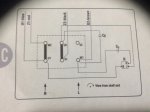
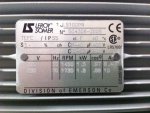
Trying to get some info on wiring of a 230v line to neutral IEC motor. Does this type of motor have the capability of being used on the standard USA 120/240 system. It is a Leroy Somer 230v single phase 50hz, 60hz, 1.8kw. Any info would be appreciated. I attached of picture of wiring diagram.
 

Attachments

  • IMG_0015.JPG
    IMG_0015.JPG
    141.3 KB · Views: 5
I don't believe the motor can tell the difference between 230v line to line or 230 v line to neutral. Of course line to line it will be 240v and that should not hurt the motor.
 
Diagram simply implies that it can be wired for either clockwise or counterclockwise rotation. Your BK choice :thumbsup:


The motor will run at 60Hz, though the torque might be less due to the voltage being lower in relation to the frequency. If this is a true 50Hz motor and specifically made for the 50Hz market only it will happily take 277 volts at 60Hz.
 
230v line to neutral single phase IEC motor

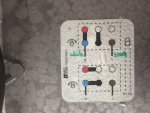
The only available power is a 120/240 three phase delta system. The reason I posted question is in regard to the line to neutral indication on the connection diagram. Here is a copy of the actual motor wiring I found.
 

Attachments

  • IMG_0017.jpg
    IMG_0017.jpg
    138.5 KB · Views: 5
The motor will not care if the supply is line line or line neutral.


I see caps, so as long as the motor is listed for 60Hz with those caps you are fine.
 
The only available power is a 120/240 three phase delta system. The reason I posted question is in regard to the line to neutral indication on the connection diagram. Here is a copy of the actual motor wiring I found.
In IEC land 230V single phase is line to neutral. The motor has no idea where it is in the world though, it only cares about how much voltage is hitting its windings.
 
230v line to neutral single phase IEC motor

So then hooking up two 120v lines to the line and the neutral terminals on the motor from the three phase delta system would get this motor running.
 
Isn't that how a standard 240v single phase motor runs, with 120v on each of the two legs
I take it you meant to hook up two of the ungrounded lines of your 240/120 system - that will give you 240 volts.

Also keep in mind the speed of that motor is dependent on frequency - it will run at faster speed if you apply 60 Hz instead of the 50 it is designed for, you will also have some issue with volts/frequency, for best performance if you change frequency you should change voltage by the same proportion - which is what is typically done with variable frequency drive applications.
 
Yes this is correct. Hook up two ungrounded lines from the 120/240 system to the Line(L) and Neutal(N) connections on the motor and the terminal jumpers as shown in picture will determine rotation.
 
Isn't that how a standard 240v single phase motor runs, with 120v on each of the two legs

Inside the motor the windings will see 120V at the center tap of the run windings, yes. It is still 240V line to line (or line to neutral if you are in IEC land) that needs to be applied to the motor, and it doesn't matter if it comes from A,B or B,C or C,A on your delta system.
 
Ok. This is how I hoped the motor hook up was, but with the caps and the voltage relay(R), I just wanted to make sure I wasn't going to destroy anything. Thank You
 
I take it you meant to hook up two of the ungrounded lines of your 240/120 system - that will give you 240 volts.

Also keep in mind the speed of that motor is dependent on frequency - it will run at faster speed if you apply 60 Hz instead of the 50 it is designed for, you will also have some issue with volts/frequency, for best performance if you change frequency you should change voltage by the same proportion - which is what is typically done with variable frequency drive applications.
I see Mbrooke only hinted at this back in post 3, but was right, that motor would probably be happier seeing closer to 277 volts input then 240 if applying 60 Hz, but still will also run at about 120% of nameplate speed. You probably won't want it to try to supply full output rating either. If this is driving a variable torque load like a centrifugal fan or pump it will be loaded more then it will at the 50 Hz speed.
 
I see Mbrooke only hinted at this back in post 3, but was right, that motor would probably be happier seeing closer to 277 volts input then 240 if applying 60 Hz, but still will also run at about 120% of nameplate speed. You probably won't want it to try to supply full output rating either. If this is driving a variable torque load like a centrifugal fan or pump it will be loaded more then it will at the 50 Hz speed.

One question though. If the motor is purely for 50Hz, at 60Hz those caps might over drive a winding.
 
Please post the name plate

euro 3 phase
400 vac paper std which is 230 to n
UK actual is 415 iirc 240 to n
western europe is 380, 220 to n

will run fine on US 240 L1-L2
just faster 60/50 x 50 Hz rated
power should be ~ the same, v goes up a bit, i goes down
torque will decrease T = 5252/rpm x P
 
Status
Not open for further replies.
Top