Wish they would just stop making type AC ( BX ) cable. Way too.many times have came across old BX that was installed in damp basements, unheated damp buildings etc where the steel jacket was rusted creating holes in jacket. I never had any faith with the flimsy bare #18 gauge wire providing a dependable!e ground. Never got to unwind one foot of armored #14 or 12 jacket from BX but guessing it would be over 6' in length so a 100' run of BX might consist of 600' of steel jacket. Would be nice to measure the ground resistance of 100' of steel jacket BX & MC cable and compare the difference.If AC (BX) was banned it wouldn't be in the code book would it? The only problem wit AC is the connectors have to be tight to have a good EG. Some people are sloppy. Plus AC is heavy with the steel jacket.

You are using an out of date browser. It may not display this or other websites correctly.
You should upgrade or use an alternative browser.
You should upgrade or use an alternative browser.
Correct way to extend BX cable
- Thread starter Rob2025
- Start date

LarryFine
Master Electrician Electric Contractor Richmond VA
- Location
- Henrico County, VA
- Occupation
- Electrical Contractor
The thin wire is only there to provide a turn-to-turn shunt, not an end-to-end pathway.I never had any faith with the flimsy bare #18 gauge wire providing a dependable!e ground. Never got to unwind one foot of armored #14 or 12 jacket from BX but guessing it would be over 6' in length so a 100' run of BX might consist of 600' of steel jacket. Would be nice to measure the ground resistance of 100' of steel jacket BX & MC cable and compare the difference.
Its purpose is to minimize the effects of exactly what you're describing.
Eddy_Current
Member
- Location
- Canada
We cannot get MC here. Our AC90 has an aluminum sheath, bare copper bond conductor, insulated circuit conductors and paper. No little metal strip. The paper isn’t around each insulated conductor like the images in post #19, rather it is loosely wrapped around all the conductors separating them from the sheath.So do you also have MC? Is the equipment ground always bare on your BX and Green on the MC?
I only see MC if it comes attached to equipment that is purchased from the US.
Eddie702
Licensed Electrician
- Location
- Western Massachusetts
- Occupation
- Electrician
People complain about AC cable and the ground path it does or doesn't provide. It's been around since the 20s. Not the most popular or used wiring method now but it seems to work.
pipe_bender
Senior Member
- Location
- Boston
- Occupation
- Electrician
I was working on a hospital a few years back and we had to use this special MC cable that had the AC cable 'bonding strip' and a Green EGC.People complain about AC cable and the ground path it does or doesn't provide. It's been around since the 20s. Not the most popular or used wiring method now but it seems to work.
As you probably know hospitals and medical buildings require a redundant EGC, OK but that means the MC sheath is not considered a EGC like EMT or AC cable it, so why only add the bonding strip back to Hospital MC ?
When I asked was told if you nick it just right the armor on regular MC will just glow red hot. It made me wonder why they don't always put the bonding strip in MC as I imagine they think the armor is just unlikely to become energized. But if it does it seems it wont clear a fault, the fault would need to travel back thru the spiral armor to the last metal box.

OldBroadcastTech
Senior Member
- Location
- Western IL
- Occupation
- Retired Broadcast Technician
It's a Great White North thing. Kinda like Colour-coding wires, eh ?I usually put the red head on and use the flimsy bare strip to hold the RH in place. I was wondering what a Marrette was myself
jmellc
Senior Member
- Location
- Durham, NC
- Occupation
- Facility Maintenance Tech. Licensed Electrician
I've seen a few existing ones here & there. Seemed to hold OK. Never saw any new ones on shelf.What is tarnashun? Those are interesting for sure. Never seen anything like it. I've learnt all kinds of stuff in this thread.

hbiss
EC, New York NEC: 2017
- Location
- Little Falls, New York NEC: 2017
- Occupation
- EC
HFC (Health Facilities Cable) is not MC. It's AC and that's why it uses the armor as a redundant EGC. Under no circumstances is the armor of MC cable allowed to be used as an EGC.I was working on a hospital a few years back and we had to use this special MC cable that had the AC cable 'bonding strip' and a Green EGC.
As you probably know hospitals and medical buildings require a redundant EGC, OK but that means the MC sheath is not considered a EGC like EMT or AC cable it, so why only add the bonding strip back to Hospital MC ?
When you asked??When I asked was told if you nick it just right the armor on regular MC will just glow red hot. It made me wonder why they don't always put the bonding strip in MC as I imagine they think the armor is just unlikely to become energized. But if it does it seems it wont clear a fault, the fault would need to travel back thru the spiral armor to the last metal box.
 All you have to do is nick it?? I just answered your question above as to why there is no bonding strip in MC . Because the armor does not carry any fault current. The green EGC is for that.
Then there is MCAP which does have a full size bare EGC under the armor because there is no green ground. It is like AC in that the armor is the EGC.
-Hal
LGee
Member
- Location
- British Columbia
- Occupation
- Electrician
Marrette is a brand name, it's like asking for a tissue and calling it a Kleenex.Never heard of a Marrette but found out its what Canadians call a pressure connector ( ya wire nut ) . Do not forget to use the red anti short bushings that come with every 250'coil of type AC ( ya BX ) cable. I was taught to cut armored jacket at a 45 degree angle even if you use a Roto spilt tool. We usually wrap the flimsy 18 gauge bare wire back around BX jacket.
pipe_bender
Senior Member
- Location
- Boston
- Occupation
- Electrician
I mean its not impossible for the sheath to end up carrying the fault current, hospital MC has the same bonding strip as AC. I guess they just think its unlikely that MC will short to the sheath in a non-hospital,Because the armor does not carry any fault current. The green EGC is for that.
I could think of several situations where MC cable is damaged, say yanked too hard thru a metal stud and the armor cuts into a hot conductor, but the EGC is intact...

JohnE
Senior Member
- Location
- Milford, MA
- Occupation
- Electrical Contractor, Inspector
I don't remember where I got them, maybe an Electrical Contractor free promotion, but in the mid '90's I got some sample packs of Marrette "wirenuts" that were almost identical to the Wirenut Red, Yellow, Orange and Blue wirenuts. They were fantastic. Same physical size, better range, and better finger grip than the Ideals. Subtle, but when I was twisting hundred a day, the difference was noticeable. And then send a significant quantity of each. I remember using them on my first house in '95.

Joethemechanic
Senior Member
- Location
- Hazleton Pa
- Occupation
- Electro-Mechanical Technician. Industrial machinery
Wasn't the MGM Grand fire the result of BX, MC, AC or whatever on a branch circuit supplying a cake display case?

electrofelon
Senior Member
- Location
- Cherry Valley NY, Seattle, WA
- Occupation
- Electrician
I complain about MC cable. Stupid waste of resources and all that labor making up the grounds. AC is the superior cable in my book.People complain about AC cable and the ground path it does or doesn't provide. It's been around since the 20s. Not the most popular or used wiring method now but it seems to work.
Eddie702
Licensed Electrician
- Location
- Western Massachusetts
- Occupation
- Electrician
Probably asked before but what are the different colors on BX cable (or is it MC) mean? I am assuming red is fire alarm?
electrofelon
Senior Member
- Location
- Cherry Valley NY, Seattle, WA
- Occupation
- Electrician
Also, i have never understood the philosophy that a metallic cable armor such as MC doesn't have to be suitable an an EGC. Day you have some physical damage or a nail or screw hits the cable. The sheath should be able to be a fault path. That would be like doing crappy EMT work and not tightening up the fittings or even butting the joints together claiming you have a wire EGC so you don't need to.
Joethemechanic
Senior Member
- Location
- Hazleton Pa
- Occupation
- Electro-Mechanical Technician. Industrial machinery
The 1980 MGM Grand Hotel fire was linked to a specific issue with the aluminum electrical conduit, which is similar to, and often colloquially called, Type AC (or "BX") cable, although the specific installation involved flexible metal conduit, likely made of aluminum. The issue was not with the cable type itself, but a combination of faulty installation and environmental factors:
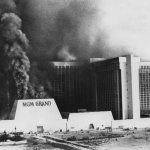
- Improper Grounding: The system did not have a separate ground wire and was designed to use the metal conduit itself as the primary grounding path.
- Galvanic Corrosion: A copper refrigeration line was improperly routed into the same wall soffit as the aluminum electrical conduit. Due to constant vibration from the refrigeration unit, the copper pipe rubbed against and caused galvanic corrosion of the aluminum conduit over time, eventually breaking the grounding path and exposing the electrical conductors inside.
- Wire Abrasion: The wires inside the flexible conduit were improperly installed, possibly leading to insulation degradation due to friction and vibration.
- Ground Fault: When the bare electrical conductor eventually came into contact with the ungrounded metal conduit, a short circuit (ground fault) occurred. The lack of a proper ground path meant the circuit breaker did not immediately trip, allowing the conduit to become energized, glow red-hot, and ignite nearby combustible materials.
Last edited:
electrofelon
Senior Member
- Location
- Cherry Valley NY, Seattle, WA
- Occupation
- Electrician
And that seems to exactly illustrate my point that a raceway should always be suitable as an EGC. A wire EGC would not have resulted in a different outcome.The 1980 MGM Grand Hotel fire was linked to a specific issue with the aluminum electrical conduit, which is similar to, and often colloquially called, Type AC (or "BX") cable, although the specific installation involved flexible metal conduit, likely made of aluminum. The issue was not with the cable type itself, but a combination of faulty installation and environmental factors:
Therefore, the type of cable or conduit was a factor only because of the specific, improper installation methods and material interactions that compromised its ability to function safely as a grounding path. The incident highlighted the importance of proper grounding techniques and the dangers of mixing different types of metals in electrical systems, leading to significant changes in fire and building codes.
- Improper Grounding: The system did not have a separate ground wire and was designed to use the metal conduit itself as the primary grounding path.
- Galvanic Corrosion: A copper refrigeration line was improperly routed into the same wall soffit as the aluminum electrical conduit. Due to constant vibration from the refrigeration unit, the copper pipe rubbed against and caused galvanic corrosion of the aluminum conduit over time, eventually breaking the grounding path and exposing the electrical conductors inside.
- Wire Abrasion: The wires inside the flexible conduit were improperly installed, possibly leading to insulation degradation due to friction and vibration.
- Ground Fault: When the bare electrical conductor eventually came into contact with the ungrounded metal conduit, a short circuit (ground fault) occurred. The lack of a proper ground path meant the circuit breaker did not immediately trip, allowing the conduit to become energized, glow red-hot, and ignite nearby combustible materials.
View attachment 2580833
Joethemechanic
Senior Member
- Location
- Hazleton Pa
- Occupation
- Electro-Mechanical Technician. Industrial machinery
I think it was 87 people dead, most from smoke inhalation. It was a display case for cake, cannoli, cookies all those little baked goodies you buy while you're checking out; I seem to remember something getting moved and that section of "greenfield" ended up in tension. But I think that's from stuff I read like 35 years ago.And that seems to exactly illustrate my point that a raceway should always be suitable as an EGC. A wire EGC would not have resulted in a different outcome.
The original story was a bellboy started the fire smoking marijuana
hbiss
EC, New York NEC: 2017
- Location
- Little Falls, New York NEC: 2017
- Occupation
- EC
How do you figure? If the Greenfield had an EGC and the armor was compromised in half, the boxes on both ends would still be connected to an EGC and a fault to the armor would have tripped the breaker.A wire EGC would not have resulted in a different outcome.
By the way, that's a hell of a fire to have started in a refrigerated display case...
-Hal
Eddie702
Licensed Electrician
- Location
- Western Massachusetts
- Occupation
- Electrician
Same thing would have happened with MC then. Maybe the answer is to have a bare equipment ground in any metal flex and it (the EG) would be in contact with the cable armor.