Ethernet Through 4 Twisted Pairs of Phone Wire?

Maybe you should have them run the fiber across the building if you want full throughput.
I wish I could get a straight answer from Frontier telling me if they are willing to run the fiber over to the office. 20 foot ceilings in here. I guess they could go across the front wall, but they still have to be above the 14 foot doors.

When I call them I talk to a lady that seems to default to the home internet install senario. Not to mention telling me I need 2 gig and wireless residential extenders. She didn't seem to grasp 10,000 square foot and 20 foot ceilings. What can you expect for a sales script reader drone?
 
I wish I could get a straight answer from Frontier telling me if they are willing to run the fiber over to the office. 20 foot ceilings in here. I guess they could go across the front wall, but they still have to be above the 14 foot doors.
Can you install a conduit for them to put the fiber cable in? That could make it easier for them to install. putting it over the doors on the wall, may not be so bad and give it some protection.
 
I'm talking about this stuff. It's already there and going exactly where I want to go. It's a lot of work saved and I'd have to get a scissor lift in here to run modern CAT cable.
Joe if you have the old red / green / yellow / black bell-system wire form the 1960's thats not twisted at and all bets are off.
I will share a 'hack my home' I did almost 10 years ago; we got a Roku that needed a internet connection, the wifi was weak at the time, internet is at other end of the home.
My current house has a vaulted ceiling in the living room and no basement, where I have my TV.
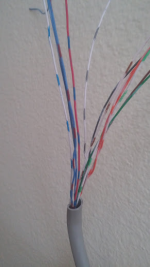
All I have behind my TV was a old phone jack and a COAX cable jack (both in use) but no RJ45 internet port, the house was built in the early 70's and here they used 6-pair cat 3 phone cable like this:
1770656349217.png
I used 4-pairs to a RJ45 jack (I kept one pair for the phone) and have run 100mb Ethernet to my Roku for years now. I never expected it to work. It works fine, streams movies in HD.
I'll probably get around to running some cat6 when I do some other work on the house, or perhaps wifi is good enough now so its moot.
Not somthing I'd recommend as a pro, but it works fine for me YMMV
 
Can you install a conduit for them to put the fiber cable in? That could make it easier for them to install. putting it over the doors on the wall, may not be so bad and give it some protection.
Yeah well I'm 64 and my achilles tendon is torn in two pieces, so high work without a bucket or a lift is out of the question. My ladder climbing days are pretty much over.

Joe if you have the old red / green / yellow / black bell-system wire form the 1960's thats not twisted at and all bets are off.
I will share a 'hack my home' I did almost 10 years ago; we got a Roku that needed a internet connection, the wifi was weak at the time, internet is at other end of the home.
My current house has a vaulted ceiling in the living room and no basement, where I have my TV.
All I have behind my TV was a old phone jack and a COAX cable jack (both in use) but no RJ45 internet port, the house was built in the early 70's and here they used 6-pair cat 3 phone cable like this:
View attachment 2581909
I used 4-pairs to a RJ45 jack (I kept one pair for the phone) and have run 100mb Ethernet to my Roku for years now. I never expected it to work. It works fine, streams movies in HD.
I'll probably get around to running some cat6 when I do some other work on the house, or perhaps wifi is good enough now so its moot.
Not somthing I'd recommend as a pro, but it works fine for me YMMV
You know now that I think about it, this office was expanded and updated in the 70's. I think there is a 25 pair running over here. I need to check to see if it's twisted at all
 
Paired telco wire, which is slightly twisted (2 per foot, give or take), will pass 100 meg ethernet for short distances, but I wouldn't rely on that for business use.

The providers will seldom bring their cable past the minimum-point-of-entry (MPoE), you can ask but expect a No. OTOH the Nano's are a good solution if they'll blast through the wall and they're fairly cheap on amazone so you could get some, try it, and return if they don't work.
 
. I think there is a 25 pair running over here.
When they switched to the blue/white, orange/white green/white etc.. color code and a gray jacket thats category 3.
But even the old 25 pair with brown jacket and solid colors before that had some twists.
I have seen a 100-pair cat-3 (4 binder group) go from a old 24-port patch panel in a office basement to upper floor office that was possibly unknowingly used for data.
It was a telco closet converted to server closet. The old Merlin (phone) system used RJ45's and was sitting in the closet still unplugged covered in dust.
In the upper floor office someone had installed a new 24 port patch panel where the 66 block was and it switched via jumpers to nice new cat5 for the offices. When I mentioned it nobody cared or knew what I was talking about.
I suspect they either did not want to deal with the elevator shaft and fire stop issues re-cabling so reused the old 100 pair or just did not know or care. It was probably like that for 20 years.
The splices are more of an issue than the cable so make sure you use a run with no splices or taps.
 
Last edited:
When they switched to the blue/white, orange/white green/white etc.. color code and a gray jacket thats category 3.
But even the old 25 pair with brown jacket and solid colors before that had some twists.
I have seen a 100-pair cat-3 (4 binder group) go from a old 24-port patch panel in a office basement to upper floor office that was possibly unknowingly used for data.
It was a telco closet converted to server closet. The old Merlin (phone) system used RJ45's and was sitting in the closet still unplugged covered in dust.
In the upper floor office someone had installed a new 24 port patch panel where the 66 block was and it switched via jumpers to nice new cat5 for the offices. When I mentioned it nobody cared or knew what I was talking about.
I suspect they either did not want to deal with the elevator shaft and fire stop issues re-cabling so reused the old 100 pair or just did not know or care. It was probably like that for 20 years.
The splices are more of an issue than the cable so make sure you use a run with no splices or taps.
There is something coming down right in the entry that was for the pay phone. That would be a perfect spot for a WAP.

Old timers around here told me this place was really state of the art communications back in the day. A couple of diff business band channels, one for trucks, one for shovel operators, another for supervisors, all being listened to at the same time here.

So I've got to look hard and see what exactly is going where and what is good and believe me I'm still finding more

1770671516639.png

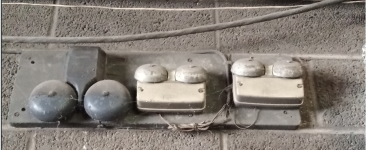
And lots of ringers. Two other places had them for the shop phones but all that was left when I got here was the wire and the marks on the wall.
 
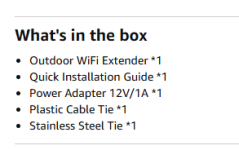
What if I use a WAP something like this with it's own wallwart for power. Is that more better for signal speed than relying on power over ethernet?

Screenshot 2026-02-10 133029.pngScreenshot 2026-02-10 133118.png

Is there any reason otherwise for not using poe? Is poe enough power for a large area?

And if I do buy ethernet cable, what is good for running in a commercial garage/office? Is there something good that I can use everywhere? I'm not going in any plenums, but if I'm going to buy a spool, who knows what the future brings.

The plan is to follow along the runs the telco used. Anyone see a problem with reusing their hooks? They are nice strong hooks, I'm sure I'm not the only one that remembers them
 
And if I do buy ethernet cable, what is good for running in a commercial garage/office? Is there something good that I can use everywhere? I'm not going in any plenums, but if I'm going to buy a spool, who knows what the future brings.
CAT5e is good for anything you are going to do. You don't want plenum but you do want riser that can be used for vertical runs. Stay away from Amazon Chinese junk too!
Is there any reason otherwise for not using poe? Is poe enough power for a large area?
Nothing to do with the size of the area, POE just saves you from running power separately to the APs which I'm sure you will appreciate.

The plan is to follow along the runs the telco used. Anyone see a problem with reusing their hooks? They are nice strong hooks, I'm sure I'm not the only one that remembers them
Those are called drive rings. Remember them? I have boxes of them and used them to run the ethernet cable around my basement a little while ago.

-Hal
 
What if I use a WAP something like this with it's own wallwart for power. Is that more better for signal speed than relying on power over ethernet?

View attachment 2581933View attachment 2581932

Is there any reason otherwise for not using poe? Is poe enough power for a large area?

And if I do buy ethernet cable, what is good for running in a commercial garage/office? Is there something good that I can use everywhere? I'm not going in any plenums, but if I'm going to buy a spool, who knows what the future brings.

The plan is to follow along the runs the telco used. Anyone see a problem with reusing their hooks? They are nice strong hooks, I'm sure I'm not the only one that remembers them
You would need a Poe switch, or a Poe injector, which could be at either end. If it’s a long run, it would be better to have the Poe injector at the end.
Hardly anybody runs cat 5e now, it’s mostly cat 6 or fiber. If you use cat 6, be sure you get cat 6 jacks and patch panels (if needed). The hooks are also known as “ bridal rings”.
 
...
The splices are more of an issue than the cable so make sure you use a run with no splices or taps.

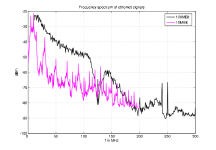
Much worse than an inline splice is a tap with a even a short length of twisted pair, and even with the ends of the wires open. This forms a "stub" off of the twisted pair transmission line.
The significant frequency spectrum of 100BASE-TX goes out to 125 MHz (see spectrum below). An open-ended stub of around 1.3 feet would be 1/4 wave at 125 MHz, effectively shorting the two wires together at this frequency. Any length longer than this would encroach on the main spectrum and therefore create severe degradation of the signal. And even shorter lengths could cause issues. 1000BASE-T is going to be a problem with a much shorter stub length.
 

Attachments

  • 1770757730011.png
    1770757730011.png
    31.8 KB · Views: 1
Last edited:
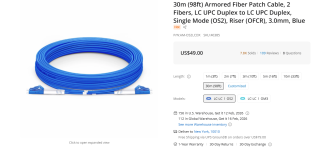
Could I just extend their fiber drop with this stuff and move everything to the office? Including their demarc/modem?
Their modem will probably only have an Ethernet output. There is several different types of fiber and connectors that they could be using. It’s been a long time since I was certified in fiber. Got certified twice over the years, hadn’t put in the first piece since! LOL!
 
You won’t need armored, my old boss had issues with adsl between his hunting lodges in South Georgia getting blown out by lightning all the time, so the local provider put in amored fiber between everything. Problem was, they didn’t bond the armor, so the modems were still getting blown out by lightning. Once they bonded the armor, the problem disappeared.
 
Top