I'm looking for thoughts and any operational feedback anyone may have on the following conundrum of mine.
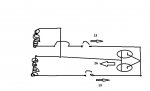
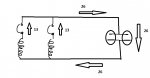
I have a generator that uses dual secondaries and a switch that allows the user to switch from 120/240 to 120 only. In the latter, the coils are connected in parallel, which removes the 240 phase to phase and replaces it with a single 120. This switch effectively puts the OCPDs (one in each leg) in parallel as well. These feed a 20A dual receptacle.
Each OCPD is 13.5A. When the coils are in series (i.e., 240 line to line with a center neutral), any current over 13.5 (on either leg) will trip the OCPD.
When the coils are in parallel, a current load as high as 27A (13.5 + 13.5) is the trip threshold. For the sake of argument, let's assume the designer/builder of the generator has properly sized everything internally to handle 27A. So we're not talking about frying the generator.
Now the conundrum: What protects a user from plugging a 20A cord (or, ahem...a 15A cord) into the receptacle, and subsequently overloading that cord to the tune of 26A? Even a somewhat savy consumer, looking at the wiring diagram showing the 13.5A breakers, might be misled.
I have a generator that uses dual secondaries and a switch that allows the user to switch from 120/240 to 120 only. In the latter, the coils are connected in parallel, which removes the 240 phase to phase and replaces it with a single 120. This switch effectively puts the OCPDs (one in each leg) in parallel as well. These feed a 20A dual receptacle.
Each OCPD is 13.5A. When the coils are in series (i.e., 240 line to line with a center neutral), any current over 13.5 (on either leg) will trip the OCPD.
When the coils are in parallel, a current load as high as 27A (13.5 + 13.5) is the trip threshold. For the sake of argument, let's assume the designer/builder of the generator has properly sized everything internally to handle 27A. So we're not talking about frying the generator.
Now the conundrum: What protects a user from plugging a 20A cord (or, ahem...a 15A cord) into the receptacle, and subsequently overloading that cord to the tune of 26A? Even a somewhat savy consumer, looking at the wiring diagram showing the 13.5A breakers, might be misled.