Why don't water heaters require GFCI protection

Are you asking about ground fault protection for people or just ground fault protection in general?
Very generally speaking on our typical grounded AC system in the US (TN-S) a plain inverse time breaker will provide some type of 'ground fault protection'.
A inverse time breaker generally trips in 2 cycles at three times its handle amps thats the Ground Fault Protection,
so a 30A breaker will trip instantly at a ~90A ground fault.
I dont see a personnel shock protection issue with a grounded fixed appliance connected to a wiring method that contains a equipment ground, as any fault should be cleared in ~2 cycles (33ms).
unless its a people protection issue like article 680.
It perplexes me why they think any grounded appliance needs 5mA GFCI people protection, though I could see an argument for ground fault protection of residential equipment at lower thresholds than a inverse time breaker provides, but not 5mA more like 30mA.

 
Are you asking about ground fault protection for people or just ground fault protection in general?
Very generally speaking on our typical grounded AC system in the US (TN-S) a plain inverse time breaker will provide some type of 'ground fault protection'.
A inverse time breaker generally trips in 2 cycles at three times its handle amps thats the Ground Fault Protection,
so a 30A breaker will trip instantly at a ~90A ground fault.
I dont see a personnel shock protection issue with a grounded fixed appliance connected to a wiring method that contains a equipment ground, as any fault should be cleared in ~2 cycles (33ms).
unless its a people protection issue like article 680.
It perplexes me why they think any grounded appliance needs 5mA GFCI people protection, though I could see an argument for ground fault protection of residential equipment at lower thresholds than a inverse time breaker provides, but not 5mA more like 30mA.
So, you're saying that a typical water heater, that has grounded metallic water piping, tank, etc., that is properly connected to a grounding conductor, doesn't pose a life safety risk since it should trip instantly? Am I understanding you correctly?

Are there water heaters that don't use metallic components? Probably not I'd guess.

How does the risk differ in a water heater from the items listed in 210.8(D) like Drinking water coolers, bottle fill stations, Sump pumps, and Dishwashers especially if they were all hardwired?

I understand the risk of receptacles where someone might use a cord without a grounding connection. But I'm not so clear on properly grounded hardwired connections. If what @tortuga says is true, would that not apply to any hardwired appliance. What is the rationale for GFCI protection of hardwired properly grounded appliances?

Rob G
Seattle
 
How does the risk differ in a water heater from the items listed in 210.8(D) like Drinking water coolers, bottle fill stations, Sump pumps, and Dishwashers especially if they were all hardwired?
People don't generally come in contact with water heaters like they would with water coolers and sump pumps. Dishwashers are in their own category because seals leak and drip water on the motor. So, instead of making the manufacturers make it so that doesn't happen, the NEC, in their infinite wisdom, chose to require dishwashers to be supplied by a GFCI that would trip when water caused enough leakage. Nothing I can see about personal safety.

-Hal
 
People don't generally come in contact with water heaters like they would with water coolers and sump pumps. Dishwashers are in their own category because seals leak and drip water on the motor. So, instead of making the manufacturers make it so that doesn't happen, the NEC, in their infinite wisdom, chose to require dishwashers to be supplied by a GFCI that would trip when water caused enough leakage. Nothing I can see about personal safety.

-Hal
You wouldn't consider a dishwasher something people normally come in contact with?

So with something like a sump pump, is the concern the proximity someone might be to the pump when there is a fault? If so then would there be logic in GFCI protecting a water heater that is close to a sink vs one that is a long ways away?

Rob G
Seattle
 
You wouldn't consider a dishwasher something people normally come in contact with?
I gave you the reason for the dishwasher GFCI. Nothing to do with people coming in contact with it.

If so then would there be logic in GFCI protecting a water heater that is close to a sink vs one that is a long ways away?
A water heater is grounded both by the EGC of the electrical supply and the water connections if metallic.
Also, a water heater normally isn't as accessible or "frequented" like appliances.

-Hal
 
Last edited:
Hardwired equipment ends up in the list in 210.8(D) after a history of electrocutions is shown. So water heaters have not crossed that point yet.
 
Hardwired and plug/ cord connected will yield different answers to GFCI protection.
If cord and plug connected the location of the receptacle may be a factor if GFCI protection is required.
 
Hardwired equipment ends up in the list in 210.8(D) after a history of electrocutions is shown. So water heaters have not crossed that point yet.
I have not read all the PI's as to why that happened, it would be interesting to see.
Water heaters don’t necessarily trip instantly, but the fault current would be flowing on a properly installed equipment ground.
Yeah I have seen that, the problems are the if series resistance of the ground fault is such that the 90 amps does not flow, if a heating element or part of a heating element is in series with the ground fault you might have 25A of current flowing away till the other element kicks on and trips the breakers overload.
and or that the ground fault current would be so large as to cause voltage rise on the metal parts.
Or that the magnitude of the fault current could evaporate the equipment ground..
I think thats among reasons heater manufacturers will include a breaker chart in the instructions that has a 25A breaker for the typical 50 gal 4500W water heater, the instantaneous trip would be then 75A vs 90A for a 30.
 
A inverse time breaker generally trips in 2 cycles at three times its handle amps thats the Ground Fault Protection,
so a 30A breaker will trip instantly at a ~90A ground fault.
I am looking a the TCC for QO breakers and the time to trip for a 3X fault is approximately 2.4 seconds...Other brands show about the same trip time for a 3x fault.
 
People don't generally come in contact with water heaters like they would with water coolers and sump pumps. Dishwashers are in their own category because seals leak and drip water on the motor. So, instead of making the manufacturers make it so that doesn't happen, the NEC, in their infinite wisdom, chose to require dishwashers to be supplied by a GFCI that would trip when water caused enough leakage. Nothing I can see about personal safety.

-Hal

I beg to differ.
I repaired a cold water inlet leak on mine this last weekend.
I checked it again last night, and, it wasn't leaking, so I gave it a big ol hug.

Jap>
 
Good question. Is there any evidence that water heaters without GFCI protection have caused injury or death?
Fair point, but there hasnt been any evidence for many of the other gfci requirements either 🤔...so if we are going with the "it just seems like a good idea" philosophy, doesnt it seem like a good idea? 😂. Ive seen elements fail so live failed elements directly in contact with water
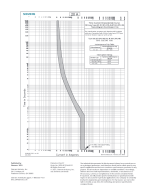
 
I am looking a the TCC for QO breakers and the time to trip for a 3X fault is approximately 2.4 seconds...Other brands show about the same trip time for a 3x fault.
Oops yes thanks for the correction Don. Upon looking up what I think is the Siemens TCC that covers the residential Siemens 20A breaker (pdf attached) it appears the bend in the curve I was thinking of is more like 300ms-400ms and 12 - 20x the handle rating,
So if my math is correct a dead short on Robs water heater would need a total circuit impedance of ~0.48 ohms (or less) to develop 500A to trip a 30A breaker to trip in equal to or less than 300-400 ms.
SIE_TCC-20A.pngr?
 

Attachments

  • SIE_TCC-20A.pdf
    77.2 KB · Views: 1
The frame is metal, so yeah there might be a little voltage on the frame if a heavy fault current is flowing, but I really
I have not read any peer reviewed research that shows the need to have 5mA ground fault protection for any fixed appliances hardwired to a EGC unless its a pool or other special situation. I could see lowering the threshold perhaps even to 30mA but 5mA seems excessive.
 
I have had several failed water heater elements, and every time the breaker would trip intermittently. Could stay on for hours or days before tripping.
Since the thermostat only breaks one leg, I see a lot of them have a high resistance fault to ground, and since one side of the element remains hot, it continues to heat until the thermal safety trips. My neighbor had a brand new one do that. I don’t know if the plumber didn’t wait until the tank was full before turning it back on, or wether it was a factory defect.
 
Top