Tesla EV charger/eaton breakers

I'm reluctant to blame the breakers because the breakers all function properly until the Tesla charging is introduced. I believe there is something in the relationship between the Tesla charging and the afci, GFCI, and GFCI breakers that is causing a problem. And if Eaton is not aware of it, they should be. If Eaton was aware of it, the consumers should have also been aware of it. I sincerely appreciate all the feedback and attention this has gotten. Hopefully at the very least it will help someone else in the future
As I said at the beginning, there are many thousands of homes where a Tesla EV is coexisting peacefully with Eaton AFCI breakers. And so especially if the breakers are replaced with new ones, that means it's likely something with the car that is making the difference.

Look, there's a difference between narrowing down "what's going on" and providing a practical solution. As far as solutions...

The AFCI detractors on this thread are surely correct that if you replaced the AFCIs with regular breakers, you'd have no more issues. Upside: easist and cheapest. Downside: you're out of code compliance, liability, blah blah blah.

You can replace the whole Eaton panel with a different brand with different AFCIs. Upside: likely to solve issue, 100% code compliant. Downside: more expensive, small chance you still have issue.

I've suggested repeatedly to test with a different car. If the problem only occurs with a particular car, then asking Tesla to look at the car, which is under warranty, makes sense. Upside: might solve the issue cheaply without being out of code compliance. *Necessary if your interest is to understand "what's going on".* Downside: whoever you get at Tesla might not be competent or diligent enough to find it, might shift blame, might be a big waste of time. Owner probably doesn't want to replace car (but maybe they do? 😄).

There's a possibility the EVSE is to blame. You could replace it. Upside: not as expensive as replacing the Eaton panel, let alone the car. Downside: arguably least likely to fix problem, pontential waste of time and money.
 
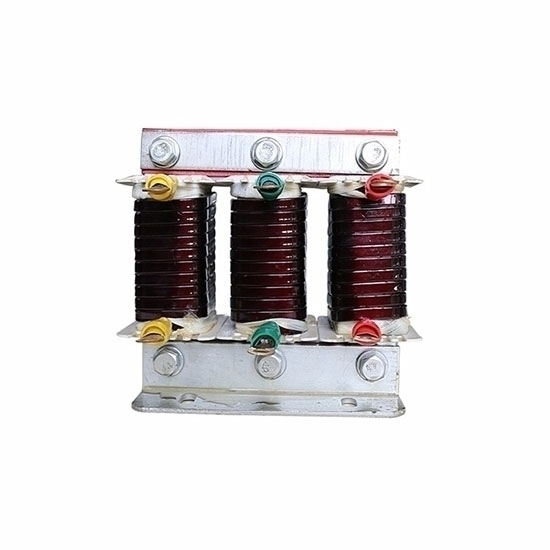
Install a line reactor on the charger.

Buy a three phase AC reactor, just use two poles for your charger. This one should be big enough. Need charger amperage rating.

 
I'm reluctant to blame the breakers because the breakers all function properly until the Tesla charging is introduced. I believe there is something in the relationship between the Tesla charging and the afci, GFCI, and GFCI breakers that is causing a problem. And if Eaton is not aware of it, they should be. If Eaton was aware of it, the consumers should have also been aware of it. I sincerely appreciate all the feedback and attention this has gotten. Hopefully at the very least it will help someone else in the future
Anything electronic causes issues with AFCIs. My hands on troubleshoots involved some power tools with soft starts, a Hitachi compound miter saw and a Bosh router, a new Samsung fridge and a big screen TV. Funny thing about the power tools, I plugged in an ancient Skill Saw that would draw a blue arc halfway around the armature and not trip, it was the switch mode power supplies in the tools with the soft starts that would cause the trip.

They trip on all sorts of random things. They trip when a policeman keys his radio mic in the neighborhood. Eaton, and all the other manufacturers are aware of problems. I posted an article from Electrical Contractor magazine about ten years ago where Eaton admitted they were beta testing AFCIs on the public. This isn't Tesla's fault. All you can do is swap them out with a newer generation and hope.
 
They trip on all sorts of random things. They trip when a policeman keys his radio mic in the neighborhood. Eaton, and all the other manufacturers are aware of problems. I posted an article from Electrical Contractor magazine about ten years ago where Eaton admitted they were beta testing AFCIs on the public.
I am stil waiting for a bunch of people to go to prison for this. I want to see manufacturer people, listing people, and CMPs held acountable and in orange jump suits. Round 'em up.....
 
Look, there's a difference between narrowing down "what's going on" and providing a practical solution. As far as solutions...
Arrgh, my head hurts! It only costs a few dollars to put a Siemens AFCI breaker in the panel to see if it trips. Get a known current manufactured Eaton breaker and see if that trips. That will tell you how to proceed, whether to just replace the breakers or the whole panel with a different brand. Forget the damn car. Tesla will have no idea what you are talking about and your customer isn't going to get a new one. It's on you dude, not Tesla or Eaton to figure this out.

-Hal
 
Arrgh, my head hurts! It only costs a few dollars to put a Siemens AFCI breaker in the panel to see if it trips. Get a known current manufactured Eaton breaker and see if that trips. That will tell you how to proceed, whether to just replace the breakers or the whole panel with a different brand. Forget the damn car. Tesla will have no idea what you are talking about and your customer isn't going to get a new one. It's on you dude, not Tesla or Eaton to figure this out.

-Hal
Well since I have an EV, it would take me not much more time and less money to show the customer if it's the car. YMMV.
 
Install a line reactor on the charger.

Buy a three phase AC reactor, just use two poles for your charger. This one should be big enough. Need charger amperage rating.

I read 5 of 6 pages and was also thinking about brining up an isolation transformer and wondering if it would make a difference, and there it is on page 6 ^^^.

The root cause of this is the fact that somewhere, someone decided to load "firmware" into a breaker. THAT is the problem. Dam software engineers. We love to give them hell and it is typically always warranted. :cool: The ICs will obsolete once a year, form/fit/replacement versions will vary, and in 5 years you will have 9 versions of the PCB with 13 alternate IC P/Ns and 137 different revisions of the firmware. The result is so many different configurations installed across the country that one can not possibly trouble shoot breaker to breaker and know that the internals are identical. This is standard operating procedure now with the rate of IC obsolescence, at least in our world of PCB design. It's more than job security, it's a quest. It's a quest for fun! I'm gonna have fun, and you're gonna have fun. We're all gonna have so much Euckin' fun we'll need plastic surgery to remove our gobbamn smiles! You'll be whistling 'Zip-A-Dee Doo-Dah' out of your a$$holes! -- Quote compliments of Clark Griswold. :D
 
And what if it is the car??? Is he going to go get a new car or change the breakers. You make no sense.

-Hal
I don't know why you see no value in being able to tell the customer that you know what's going on. It makes you able to say "I can keep asking Eaton to send new breakers but that isn't going to fix the problem. So here's a quote for a Siemens panel swap out if you don’t want to replace the car." It also allows you to say "This is not happening because of anything I might have installed improperly, or the equipment I chose to install for you."
 
But also I have run into a couple customers who would replace the car.
Spend $100,000 to replace the car rather than spend maybe $1000 to replace the panel. Must be smoking some good stuff out there.

I don't know why you see no value in being able to tell the customer that you know what's going on.
I think by now he should have figured that out... or then again maybe not.

-Hal
 
Spend $100,000 to replace the car rather than spend maybe $1000 to replace the panel. Must be smoking some good stuff out there.


I think by now he should have figured that out... or then again maybe not.

-Hal
After at least 4 weeks, I would have a new Tesla, and next maybe a new panel and breakers. Then mildly complained about getting a new car out of the deal.😀
 
I read 5 of 6 pages and was also thinking about brining up an isolation transformer and wondering if it would make a difference, and there it is on page 6 ^^^.

The root cause of this is the fact that somewhere, someone decided to load "firmware" into a breaker. THAT is the problem. Dam software engineers. We love to give them hell and it is typically always warranted. :cool: The ICs will obsolete once a year, form/fit/replacement versions will vary, and in 5 years you will have 9 versions of the PCB with 13 alternate IC P/Ns and 137 different revisions of the firmware.
Yeah your spot on I have considered this also, even gutted some defective AFCI's to confirm, same part # different innards, the issue here is manufacturers keeps the same sku so we think were getting the same part, its impossible to track defective breakers when they are all the same BR part#, as things become more electronic the code needs three changes ;
1) In article 240 require overcurrent protective devices to be uniquely identifiable based on firmware and hardware so they need to print a frimware revision on the breaker or use a new part #, they need to publish what they change.
2) Require overcurrent device firmware to be 'open-source', not patent free, open source, even if a fuse or breaker is patented experts can still open and examine the mechanical parts of a breaker, firmware is totally closed off from experts. They need to publish the firmware for peer review so indepent experts can examine the 'source code'.
3) Allow a 30mA GFPE breaker as a substitute for AFCI breakers when a qualified person determines there are conditions that are causing false positive or nuisance trips and the manufacturer is unable to resolve the issue.

I have spoken to a firmware engineer about this and they suggest #2

Something like
210.12 Exception No. X:
Where arc-fault circuit-interrupter protection is required and a listed AFCI device has been installed but exhibits documented unwanted tripping that cannot be corrected, and the manufacturer of the AFCI device has been informed, the AFCI device shall be permitted to be replaced with a listed Residual Current Device (RCD) or if a listed RCD is unavailable a listed ground-fault protection of equipment (GFPE) or device not exceeding 30 mA...
 
I have spoken to a firmware engineer about this and they suggest #2
Both 1 and 2 are manufacturing issues, they should not be included in the NEC.

Exception#2 is unenforceable. What is the definition of "unwanted tripping". What does it mean to inform the manufacturer? Do you need to give the manufacturer time to correct the issues. or can you replace the breaker immediately after notification?

I am glad our state still uses the 2017 edition.
 
Both 1 and 2 are manufacturing issues, they should not be included in the NEC.
Many places in Article 240 dictate manufacturer markings, and have for over 100 years, even shapes such as 240.50(C) requiring a hexagonal configuration for certain plug fuses, manufactures have no option other than to make 15A and lower plug fuse with a NEC required hexagonal configuration.
The NEC has a long history or specifying the required markings manufacturers apply to products, such as specifying the slash ratings on breakers, markings on fuses 240.60(C) 240.83 etc. Requiring a firmware revision for an electronic breaker would be an addition inline with past practice.
 
Top