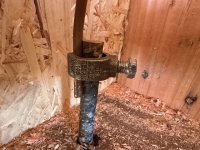
Russell Ensslin
Member
- Location
- Olivehurst California



Yes it is required to be accessible after installation.I agree, it's common. I require it to be accessible. I get heavy pushback on that, but it's a pretty clear requirement.


In the parent text of 110.14, but does not apply to where the product is listed for the application.Does anyone know if there is an NEC dissimilar metals rule?
Dissimilar metals get fastened together all of the time. For example we bond copper conductors directly to steel or aluminum boxes and enclosures with plated screws.The acorn clamp fastens the dissimilar metals directly

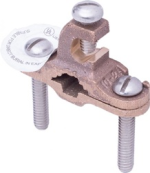
But there are types like shown in OP that are listed for use with rebar, even though the copper and steel are in direct contact with one another when using that type. May need to dig further into instructions? I can see them not being all that suitable if they would be in presence of an electrolyte. Keep them dry and they probably last very long time.I see more issue with dissimilar metals when using Aluminum to copper or steel. But even copper to steel would require a listed connector such as this for rebar connection. Similar ones used for pipe connection.
View attachment 2581023
Most of the acorn clamps are marked "DB" for direct burial. Those with that marking are also suitable for concrete encasement.May need to dig further into instructions?
Most of the acorn clamps are marked "DB" for direct burial. Those with that marking are also suitable for concrete encasement.
I understand most are DB rated.Has anyone dug into the conductor types listed for these clamps? I seem to remember seeing some labeling for one that was listed for something like #8=2 stranded and not solid conductors.
Southwire ground rod clamps are used for connecting conductors to ground rods or rebar. This copper alloy clamp is suitable for direct burial. This clamp is specified for use with #10 SOL/STR - #2 STR Wire.
- cULus listed
- Wire range: # 10 SOL/STR - # 2 STR
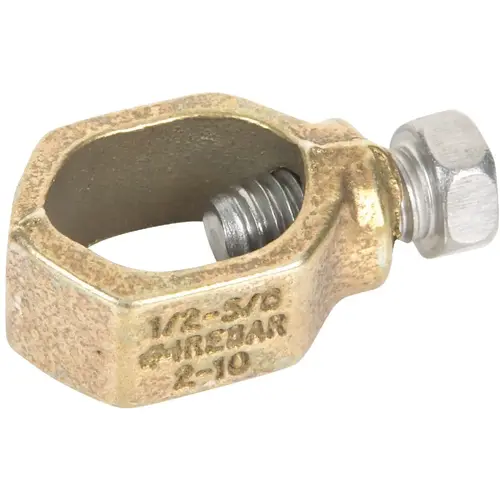
It's likely because under normal conditions there is no issue with copper and steel touching each other. Put that in a corrosive environment and then there may be a problem.How does this clamp (with a listing) allow the copper conductor to be acceptable to be in contact with the steel rebar but other connection types need to have separate "ports" for the dissimilar metals so they won't be in contact with one another?
Do you really think all it takes to get a product Listed is some money?What did they do to get that listing other than pay some fees to the listing agency?