Does volt amps = watts?

Status
Not open for further replies.
Mike03a3 said:
The plain English definition of the word factor isn't relevant to this discussion.

We can, and do, "redefine English" by compiling dictionaries of words and phrases used in Scientific, Engineering, Medical, Legal and countless other professions and occupations. Look at all the threads on these boards that revolve around how the NEC defines or uses words.

In this case, we are not discussing the English word factor, we are discussing the technical term Power Factor. Since it is defined as the cosine of the phase angle between the current and voltage, the value certainly can be either 0 or 1. You would not disregard a variable in an equation simply because it has no effect on the result in the unique circumstance where the value of the variable happens to be 1.

So you maintain that the Power Factor is not originated from the mathematical term Factor.

You further argue that the numerical value of 1 has meaning in a multiplication.

Yet you even further argue that the simple rules of formula simplification, where in a long string of equation you eliminate or simplify the values that do not change the result is a meaningless excercise.

I propose that I would even disregard the power factor 0.999999999 if I want to calculate to a single decimal accuracy. In practical engineering or technical service a 10.000001kW would have no meaning compared to 10kW.
 
Laszlo:

In practical engineering or technical service a 10.000001kW would have no meaning compared to 10kW.

No math major here but would it have the same basic meaning?

10.000001kw = 10kw
 
weressl said:
So you maintain that the Power Factor is not originated from the mathematical term Factor.
Not at all. I maintain that it's origin simply is not relevant, any more than the fact that factor is from the Latin word facere.
As I said, are not discussing the English word factor, we are discussing the technical term Power Factor.

You further argue that the numerical value of 1 has meaning in a multiplication..
That is not what I said. I said that one does not ignore a variable in an equation simply because one possible value does not change the final result.
This entire discussion arose from a question about KW compared to KVA, where someone responded that KW = KVA * Power Factor. In the simple case of a sine wave, the power factor is the absolute value of the cosine of the phase angle between the current and the voltage. As you pointed out, the Greek letter Phi is commonly used to represent the phase angle, thus:

KW = KVA * |cos Φ|

The variable we call Power Factor most certainly has meaning in this equation.


How would you have us solve this?


if |cos Φ| = 1
KW = KVA


else
KW = KVA * |cos Φ|


endif

Pretty silly, don't you think?

Yet you even further argue that the simple rules of formula simplification, where in a long string of equation you eliminate or simplify the values that do not change the result is a meaningless excercise. .
Ah, now comes the red herring. I'm not discussing HOW you solve equations. I'm merely pointing out that one does not ignore variables in the process. Like it or not, 1 is a possible value of the cosine of an angle.

 
And since Pf = W/VA, every AC load has a power factor, even if that power factor equals 1.

I think we are banging our heads against the wall here though. Weressl is fully aware that every AC load has a power factor, and I think we are simply arguing semantics at this point.

But it is kinda fun;)
 
weressl said:
I propose that I would even disregard the power factor 0.999999999 if I want to calculate to a single decimal accuracy. In practical engineering or technical service a 10.000001kW would have no meaning compared to 10kW.

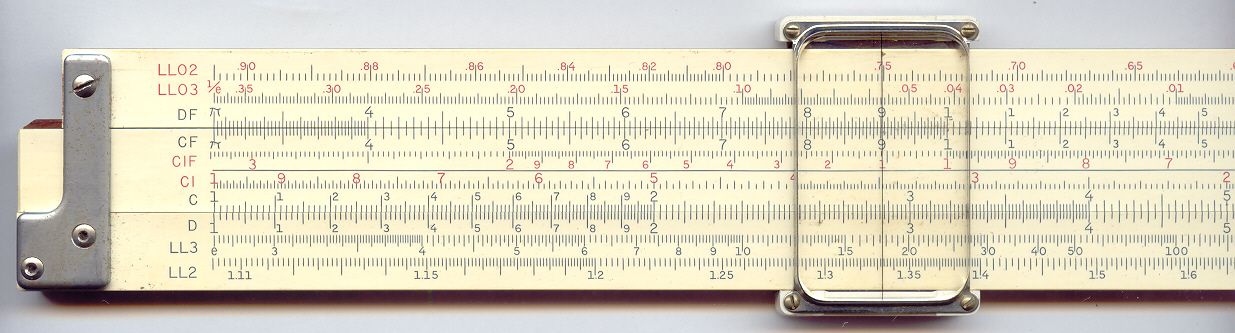
You're typing at someone who majored in EE using this as his calculator:
0109-ke681318-01-front-left.jpg


I'm not in the habit of mixing numbers with large variations in the number of significant digits in solving any equation.
 
Smoke and dust:

Smoke and dust:

weressl said:
So you maintain that the Power Factor is not originated from the mathematical term Factor.

You further argue that the numerical value of 1 has meaning in a multiplication.

Yet you even further argue that the simple rules of formula simplification, where in a long string of equation you eliminate or simplify the values that do not change the result is a meaningless excercise.

I propose that I would even disregard the power factor 0.999999999 if I want to calculate to a single decimal accuracy. In practical engineering or technical service a 10.000001kW would have no meaning compared to 10kW.

Laszlo,

This is much ado about nothing. These arguments do not change the fact that the definition of PF allows the values of 0 and 1. It has nothing to do with precision or rounding. You are straining at gnats!

This fact is so obvious that I cannot understand your reluctance to accept it. There is nothing in the definition that precludes these values, and the term "unity PF" is widely used, so why do you resist this simple notion??

In summary, let me say,

All AC loads exhibit a PF ranging from 0 to 1.

PF may be ignored with a resistive load, but it still exists. You cannot say a resistive load has no PF!

PF is undefined for DC circuits.
 
If you go out fishing, and don't catch any fish, then when you get back home, can you really say that you had gone fishing?

As I see it, 'power factor' has several related but different meanings (these are not dictionary definitions, but how I've seen the term used). One meaning is the term in the equation relating the KW and KVA of a system. Another meaning is the quality of a system in which KVA does not equal KW.

The equation relating the KW and KVA of a system has a power factor term. When the power factor term of the equation is unity, then by the first definition above, the system has a power factor of unity. By the _second_ definition above, the system does not have a power factor.

It is entirely reasonable English to say "When the load power factor is one, the load does not have a power factor." *grin*

-Jon
 
Mike03a3 said:
You're typing at someone who majored in EE using this as his calculator:
0109-ke681318-01-front-left.jpg


I'm not in the habit of mixing numbers with large variations in the number of significant digits in solving any equation.

Man I have not seen one of these since I went to my desk and pulled out the drawer..:grin: :D
Hope that does not mark our age..
 
Mike03a3 said:
Not at all. I maintain that it's origin simply is not relevant, any more than the fact that factor is from the Latin word facere.
As I said, are not discussing the English word factor, we are discussing the technical term Power Factor.


That is not what I said. I said that one does not ignore a variable in an equation simply because one possible value does not change the final result.
This entire discussion arose from a question about KW compared to KVA, where someone responded that KW = KVA * Power Factor. In the simple case of a sine wave, the power factor is the absolute value of the cosine of the phase angle between the current and the voltage. As you pointed out, the Greek letter Phi is commonly used to represent the phase angle, thus:

KW = KVA * |cos Φ|

The variable we call Power Factor most certainly has meaning in this equation.


How would you have us solve this?


if |cos Φ| = 1
KW = KVA


else
KW = KVA * |cos Φ|


endif

Pretty silly, don't you think?


Ah, now comes the red herring. I'm not discussing HOW you solve equations. I'm merely pointing out that one does not ignore variables in the process. Like it or not, 1 is a possible value of the cosine of an angle.

No red herring at all. If you read carefuly my answer was yes AND no. Never argued that 1 is not a possible value, only that is meaningless in practical terms. I further maintain that what we call 1 is never 1 but we are going to ignore the infinitestimaly small differences such as 0.9999999999 or -0.9999999999 in practical calculations. In an analog Universe there is only one absolute number and that is 0.

An engineer should ignore it, a scientist can't. Practical and theoretical meets.

In the equation,

V is the Voltage Factor
I is the Current Factor
and
pf. is the Power Factor.
 
winnie said:
If you go out fishing, and don't catch any fish, then when you get back home, can you really say that you had gone fishing?

As I see it, 'power factor' has several related but different meanings (these are not dictionary definitions, but how I've seen the term used). One meaning is the term in the equation relating the KW and KVA of a system. Another meaning is the quality of a system in which KVA does not equal KW.

The equation relating the KW and KVA of a system has a power factor term. When the power factor term of the equation is unity, then by the first definition above, the system has a power factor of unity. By the _second_ definition above, the system does not have a power factor.

It is entirely reasonable English to say "When the load power factor is one, the load does not have a power factor." *grin*

-Jon

Actually, there is only one meaning. The Power Factor is the ratio between KW and KVA. The equation using the cosine of the phase angle between V and A is one component of the power factor. Distortion is another, and the basis of your "second definition". In my past, when I was a Director of Engineering for a major computer manufacturer, we created power factor by the truckload. Back in those days, switching power supplies had a power factor around 0.65, unless they were really bad. You can imagine what happens when you put hundreds or even thousands to work in one building.
 
Mike03a3 said:
You're typing at someone who majored in EE using this as his calculator:
0109-ke681318-01-front-left.jpg


I'm not in the habit of mixing numbers with large variations in the number of significant digits in solving any equation.

Thanks for this perfect illustration.

Mine was a K&F with IVORY board - before hunting elephants became illegal - and bamboo core. Beautiful piece. The benefits of slide rule is that you get a sense of magnitude that no calculator can duplicate.
 
Mike03a3 said:
Actually, there is only one meaning. The Power Factor is the ratio between KW and KVA. The equation using the cosine of the phase angle between V and A is one component of the power factor. Distortion is another, and the basis of your "second definition". In my past, when I was a Director of Engineering for a major computer manufacturer, we created power factor by the truckload. Back in those days, switching power supplies had a power factor around 0.65, unless they were really bad. You can imagine what happens when you put hundreds or even thousands to work in one building.

This just plainly untrue. Power factor IS the Cosine of the U and I angle. The ripple effect is the result of harmonic vectors that are calculated separately for each harmonic component and simplified calculations fudge it as an integral value. The power factor remains the same for each harmonic component, as the X/R does not change.
 
weressl said:
Thanks for this perfect illustration.

Mine was a K&F with IVORY board - before hunting elephants became illegal - and bamboo core. Beautiful piece. The benefits of slide rule is that you get a sense of magnitude that no calculator can duplicate.

That is a picture I grabbed from Google Images - my K&E is yellow and, if my ancient memory isn't having a senior moment, has an aluminum core.

The benefits of slide rule is that you get a sense of magnitude that no calculator can duplicate.

We have finally reached agreement. :grin:
I made my daughter use my slide rule when I was tutoring her in physics, precisely for that reason. I think those of us who learned with slide rules instinctively have a good sense of the magnitude of the answer. The slide rule just gives us a few significant digits, the exponent is in our head. My observation of people educated by calculators is that they tend to be overly quick to believe the calculator and miss by decimal place or two from time to time.
 
weressl said:
This just plainly untrue. Power factor IS the Cosine of the U and I angle.
Actually, according to the IEEE Dictionary of Electrical Terms, IEEE Std-100, power factor is the ratio of total watts to the total root-mean-square (RMS) volt-amperes, in per-phase quantities.
 
weressl said:
rattus said:
Laszlo,

PF may be ignored with a resistive load, but it still exists. You cannot say a resistive load has no PF!

I don't believe I said that. My answer was yes AND no.

Laszlo, let me refresh your memory:

"No. A heater would have no power factor as it is purely resistive load. Inductive loads such as transformers and induction motors have power factors. Synchronous motors have no power factors either, so they are used sometimes to correct power factors in the plants."

I responded in so many words that a resistive load carries a PF of one although I understood what you meant. That is what started this little exchange.
 
Status
Not open for further replies.
Top