
You are using an out of date browser. It may not display this or other websites correctly.
You should upgrade or use an alternative browser.
You should upgrade or use an alternative browser.
Tesla EV charger/eaton breakers
- Thread starter yo_ryco
- Start date


ramsy
NoFixNoPay Electric
- Location
- LA basin, CA
- Occupation
- Service Electrician
Page 7 of Tesla Gen 3 listed instructions prohibit Eaton BR equipmentEaton is claiming they have never heard of this before, and at this point is not able to offer any reasoning or solution.
WARNING: Do not use Eaton BR branch breakers for Universal Wall Connector when the Electrical Panelboard
is made of Aluminum. Recommend instead using Eaton BRH branch breakers.
My clients set their Tesla dashboard to 24 Amps, which charges slowly overnightHe dialed the charger back to 80% as recommended by Eaton. After about 30 minutes of charging, a total of 10 breakers have tripped
curt swartz
Senior Member
- Location
- San Jose, CA
- Occupation
- Electrical Contractor
It does not prohibit BR equipment. It is saying if you have a BR loadcenter with an aluminum buss you need to use a 22K breaker instead of a 10K breaker. That makes zero sense. I doubt the buss clip is different on 10K and 22K breakers.Page 7 of Tesla Gen 3 listed instructions prohibit Eaton BR equipment
WARNING: Do not use Eaton BR branch breakers for Universal Wall Connector when the Electrical Panelboard
is made of Aluminum. Recommend instead using Eaton BRH branch breakers.
My clients set their Tesla dashboard to 24 Amps, which charges slowly overnight
Even if it was, that would not change what the OP is experiencing unless the buss bar is burning up.
On new construction we always set the chargers on 60 amps (48 amp charge rate) and tell the customers to let the car charge at the highest rate it is capable of. Telling the customer not to go over 24 amps defeats the purpose of have a wall charger. The cords that come with Tesla and many other cars are capable of 32 amps.
curt swartz
Senior Member
- Location
- San Jose, CA
- Occupation
- Electrical Contractor
To the OP.
I didn't read every post in detail but have you checked the voltages while the car is charging? Preferably charging at its highest charge rate.
It could be the voltage is dipping and causing the breakers to drop out.
Is the house heated with electric heat? Maybe its kicking on and the combination of simultaneous loads are triggering a voltage drop. Maybe a neighbor on the same transformer has large loads kicking on.
I didn't read every post in detail but have you checked the voltages while the car is charging? Preferably charging at its highest charge rate.
It could be the voltage is dipping and causing the breakers to drop out.
Is the house heated with electric heat? Maybe its kicking on and the combination of simultaneous loads are triggering a voltage drop. Maybe a neighbor on the same transformer has large loads kicking on.
ramsy
NoFixNoPay Electric
- Location
- LA basin, CA
- Occupation
- Service Electrician
The installer’s job is to follow listed instructions, not ask why. 110.3(B)It does not prohibit BR equipment. It is saying if you have a BR loadcenter with an aluminum buss
Tin-plated is still Aluminum, so BR will be prohibited, since Eaton no longer makes a copper bus for residential Panelboards.
ramsy
NoFixNoPay Electric
- Location
- LA basin, CA
- Occupation
- Service Electrician
New construction works better without occupancy.On new construction we always set the chargers on 60 amps (48 amp charge rate)
The unicorns are dancing and the sun is shining, until people move in, hook up their IOT, and xFCI trips out.
curt swartz
Senior Member
- Location
- San Jose, CA
- Occupation
- Electrical Contractor
Please read this statement 10 times.The installer’s job is to follow listed instructions, not ask why. 110.3(B)
Tin-plated is still Aluminum, so BR will be prohibited, since Eaton no longer makes a copper bus for residential Panelboards.
WARNING: Do not use Eaton BR branch breakers for Universal Wall Connector when the Electrical Panelboard
is made of Aluminum. Recommend instead using Eaton BRH branch breakers.
It does not prohibit BR loadcenters with AL bussing. It says not to use BR breakers in Loadcenters with AL bussing but BRH breakers are ok.
ramsy
NoFixNoPay Electric
- Location
- LA basin, CA
- Occupation
- Service Electrician
This WARNING was added very recently.WARNING: Do not use Eaton BR branch breakers for Universal Wall Connector when the Electrical Panelboard is made of Aluminum. Recommend instead using Eaton BRH branch breakers.
If you’re in a pickle, you can still CYA by printing versions of the same manual, without this warning shown.
Client will be forced to remove xFCI junk, as the corrupt UL/NFPA system intended.
Watch out for call backs, if BRH bolt on internals may be similar to BR plug on.It says not to use BR breakers in Loadcenters with AL bussing but BRH breakers are ok.
curt swartz
Senior Member
- Location
- San Jose, CA
- Occupation
- Electrical Contractor
There is no such thing as a BRH bolt-in. A BRH is a 22K version of a standard BR plug-in breaker.Watch out for call backs, if BRH bolt on internals may be similar to BR plug on.
jaggedben
Senior Member
- Location
- Northern California
- Occupation
- Solar and Energy Storage Installer
Almost seems like that has something to do with an instantaneous trip incident rather than a busbar/breaker overheating issue. But then, I'm trying to make it make sense, which might be unwarranted.There is no such thing as a BRH bolt-in. A BRH is a 22K version of a standard BR plug-in breaker.
pipe_bender
Senior Member
- Location
- Boston
- Occupation
- Electrician
Get a cheap thermal camera, no need for fancy, my boss has the same issue really upset customer, Eaton AFCI's tripping, Tesla charger, 5 year old panel he installed. The customer had a know it all neighbor with a IR camera and thermal scanned the panel busbar was at 121°C after the car was charging 1/2 hour, you could smell the panel cooking.
I was sent to replace the the panel to copper bus SQD QO. My boss offered other solutions as the panel was only 5 years old and the customer insisted, and said he would gladly pay:
"I just spent 100k on a car and you wanted to save $300 on the panel?"
customer asked specifically for SQD QO, buss in that is copper and 225A. One thing is I dont like the QO the AFCI breakers;
Al bus before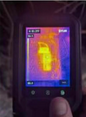 copper bus after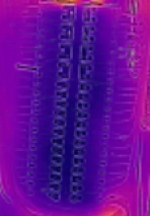
I was sent to replace the the panel to copper bus SQD QO. My boss offered other solutions as the panel was only 5 years old and the customer insisted, and said he would gladly pay:
"I just spent 100k on a car and you wanted to save $300 on the panel?"
customer asked specifically for SQD QO, buss in that is copper and 225A. One thing is I dont like the QO the AFCI breakers;
Al bus before
copper bus after curt swartz
Senior Member
- Location
- San Jose, CA
- Occupation
- Electrical Contractor
But the trip rating is the same on the BR and BRH. Just the case is stronger to contain the internal parts under a bolted fault. Would love to hear Tesla's reasoning.Almost seems like that has something to do with an instantaneous trip incident rather than a busbar/breaker overheating issue. But then, I'm trying to make it make sense, which might be unwarranted.
ramsy
NoFixNoPay Electric
- Location
- LA basin, CA
- Occupation
- Service Electrician
If Eaton BR is defective during continuous loads, there should be a recall...my boss has the same issue really upset customer, Eaton AFCI's tripping, Tesla charger, 5 year old panel he installed. ..1/2 hour, you could smell the panel cooking.
I was sent to replace the the panel to copper bus SQD QO.
Investigation may also revoke the NRTL listing, just like FPE was revoked.
If nothing happens, we may expect more insurance policies to ad Eaton BR to their list for cancellation and non-renewal.
pipe_bender
Senior Member
- Location
- Boston
- Occupation
- Electrician
AL bus is fine for the manufactured home or low income on a tight budget, light resi load, and customer drives a used civic or Nissan Verssa .
A Tesla Model S AWD starts at what now $87k? Model X Plaid starts at $108k?
And my boss wanted to save a few bucks on a Aluminum bus? Customer was correct.
EVSE's owners are upper middle class or upper class hi-end market.
Problems with EVSE's all include the word 'aluminum' this and that, the new good quality EV receptacles say 'CU Only'.
The difference between copper and aluminum buss is $300 or less, I'd say sell the customer what they want, a hi-end copper buss rated 225A with solar ready. They are happy to pay.
My boss's problem is that our supply house got lazy and behind in stocking copper bus panels and the switch to aluminum buss was not clear to him.
A Tesla Model S AWD starts at what now $87k? Model X Plaid starts at $108k?
And my boss wanted to save a few bucks on a Aluminum bus? Customer was correct.
EVSE's owners are upper middle class or upper class hi-end market.
Problems with EVSE's all include the word 'aluminum' this and that, the new good quality EV receptacles say 'CU Only'.
The difference between copper and aluminum buss is $300 or less, I'd say sell the customer what they want, a hi-end copper buss rated 225A with solar ready. They are happy to pay.
My boss's problem is that our supply house got lazy and behind in stocking copper bus panels and the switch to aluminum buss was not clear to him.

JohnE
Senior Member
- Location
- Milford, MA
- Occupation
- Electrical Contractor, Inspector
As far as who is paying, the homeowner should pay. I'm assuming the OP wired the house initially. Tesla charger isn't compatible with BR panel with AL bussing and/ or BR breakers - then customer needs to pay to upgrade. Panel is listed and code compliant. Nobody is going to be "happy" here, but it is what is is. Nobody did anything wrong. It's just the circumstances that have collided. Of course, my patience is not what it was int he past....
yo_ryco
Member
- Location
- Pennsylvania
- Occupation
- electrician
Thank you all for the responses and insight. I have not seen any evidence of damage to the buss bar or anything that indicates overheating. Maybe we need to switch to a mfr that offers copper buss in their panels and that is certainly something to look at. The equipment installed in this home is the same as what we install in every residential job we do. We were asked to run a 60a line from the panel to the garage for a future EV charger. The home is also equipped with a large electric wall oven, the HVAC is a heat pump...there are other large loads that when running do not cause an issue. The only issue raised when the ev is being charged, and now we have proven that dialing back the charger does not affect anything.
The customer supplied and installed his own charger. Now Eaton is asking me to go back to the house and verify the gen. Of the breakers....I don't know how often Eaton updates their breakers, but I do know this charger is at least three years old..point being, I highly doubt I have installed all breakers that just happen to all be three years old.
We also have the issue that when the charger is in use, the manual test buttons on all breakers in both panels do not operate. I believe there is a noise issue coming from either the charger itself or the car. Suppose I swap out the panel for one with a copper buss and the same issue occurs...where do we go from there?
The customer supplied and installed his own charger. Now Eaton is asking me to go back to the house and verify the gen. Of the breakers....I don't know how often Eaton updates their breakers, but I do know this charger is at least three years old..point being, I highly doubt I have installed all breakers that just happen to all be three years old.
We also have the issue that when the charger is in use, the manual test buttons on all breakers in both panels do not operate. I believe there is a noise issue coming from either the charger itself or the car. Suppose I swap out the panel for one with a copper buss and the same issue occurs...where do we go from there?
curt swartz
Senior Member
- Location
- San Jose, CA
- Occupation
- Electrical Contractor
I think this thread drifted off too much with the AL vs CU buss. The buss material is not going to make AFCI's trip unless the buss is actually failing.
Not sure if the OP has tried changing the breaker feeding the charger. I would definitely try that but would also be taking voltage and current measurements while the car is charging.
Not sure if the OP has tried changing the breaker feeding the charger. I would definitely try that but would also be taking voltage and current measurements while the car is charging.

ptonsparky
Tom
- Occupation
- EC - retired
None of Manual test buttons working certainly adds a flavor to the mix.
They work if the charging is off?
They work if the charging is off?
jaggedben
Senior Member
- Location
- Northern California
- Occupation
- Solar and Energy Storage Installer
Yeah the aluminum bus has zilch to do with why the AFCIs are tripping.